

10 Books Every Aspiring Conservationist Should Read, with Mark Kenyon


If someone asked me to name my favorite thing about producing the Mountain & Prairie podcast, my answer would be simple: The network of curious, hard-working, accomplished, and humble friends that I’ve made as a result of our shared interests and substantive conversations.
Mark Kenyon is a perfect example.
He and I initially connected thanks to our shared love of reading. A few years later, he joined me on the podcast for a wonderful conversation about his amazing book That Wild Country: An Epic Journey through the Past, Present, and Future of America’s Public Lands. Even though we’re both busy with young families and demanding (yet fun) careers, we’ve managed to stay in touch via the occasional text about book recommendations and interesting ideas.
So, last week, when Mark floated the idea of a discussion about books and conservation on his wildly popular and thoughtful podcast Wired to Hunt, I jumped at the opportunity. We decided to each pick five books about conservation and bring them to the podcast recording for a sort of two-man book club.
The result is the podcast episode and books embedded below: 10 Books Every Aspiring Conservationist Should Read
Mark is one of the most voracious readers I know– his taste in books is similar enough to mine that I trust his opinions but different enough that I always learn something new from his recommendations and insights. While Mark is best known for his extensive knowledge of whitetail deer hunting, he has read, studied, and written extensively on a wide range of topics, including public lands, history, natural resources, wildlife managment, and much more. And most importantly, he’s just a damn interesting and nice dude that I enjoy chatting with.
Mark and I chatted for more than two hours and probably could’ve gone for even longer had our bladders not forced us to wrap up the conversation. As you’d imagine, it was difficult to pick just ten books about such a wide-ranging topic, so consider our list to be just a starting point.
I thoroughly enjoyed this discussion, and I greatly appreciate Mark’s invitation. I hope that you enjoy the conversation and perhaps find a few new titles that will give you a greater appreciation for the important and endlessly fascinating topic of conservation in the West and beyond.
Listen to the Podcast:
Spotify:
Apple Podcasts:
Read the Books:

The Wilderness Warrior: Theodore Roosevelt and the Crusade for America by Douglas Brinkley

American Serengeti: The Last Big Animals of the Great Plains by Dan Flores

Losing Eden: An Environmental History of the American West by Sara Dant

A Sand County Almanac by Aldo Leopold

Downriver: Into the Future of Water in the West by Heather Hansman

Encounters with the Archdruid by John McPhee

For the Love of Land: Global Case Studies of Grazing in Nature’s Image by Jim Howell

The Sixth Extinction: An Unnatural History by Elizabeth Kolbert

All the Wild That Remains: Edward Abbey, Wallace Stegner, and the American West by David Gessner

The Overstory by Richard Powers
Head over to Ed’s Book Recommendation page for hundreds of titles, or sign up for his bimonthly book email:
Alvin Dedeaux – Living His Dream


Alvin Dedeaux is a renowned Austin-based fly fishing guide who is one of the Lone Star State’s most sought-after experts in the pursuit of everything from Guadelupe Bass in Central Texas to Redfish on the Texas coast. Alvin is an ambassador for well-known brands such as Howler Brothers and Yeti, and he’s twice been a finalist for Orvis’s Guide of the Year award. And on top of all of that, Alvin produces informative and entertaining videos on his popular Youtube channel, where anglers of all experience levels can learn from Alvin’s decades of experience.
Alvin was born and raised in Houston, and he has been a committed fisherman, hunter, and all-around outdoorsman for as long as he can remember. At age 12, he began teaching himself to fly fish, and what started as a hobby quickly became one of the most important aspects of his life– a passion that remains the centerpiece of his personal and professional lives to this day. Alvin’s story has many fascinating chapters, and each one could be its own three-hour podcast episode– he’s owned a construction company, been a singer in a very successful touring band, worked at the world-famous Austin Angler, and is now the head guide and owner All Water Guides. With a background like that, it’s no surprise that Alvin has become one of the most well-known fly guides in the country.
Alvin and I connected virtually and had a fun hour-long conversation about all aspects of his life and career. We started out chatting about his upbringing in Texas, and how fly fishing has been a mainstay in his life throughout all its various stages. We talk about his decision to leave college to pursue life as an entrepreneur, and his path to becoming professionally involved in fishing. We discuss his formative years working at the Austin Angler, and how that particular shop started the careers of some of the country’s most well-respected guides. He offers excellent insights into finding one’s dream job, the importance of conservation in Texas, and how COVID has affected Texas’s valuable fishing resources. We also discuss his popular Youtube channel and why he devotes so much time and energy toward sharing his wisdom. And, as you’d expect, Alvin offers some excellent book and music recommendations.
I loved talking to Alvin, and felt like we only scratched the surface of his wildly unique life. Be sure to check on the episode notes for tons of links to everything we discussed. Hopefully we can do a part 2 at some point in the future, but, until then, enjoy this fun conversation with Alvin Dedeaux!
Photos courtesy of Alvin Dedeaux
—
Download on Apple Podcasts
—
Download on Spotify
—
Download on Google Podcasts
—
Download on Overcast
EPISODE NOTES
Topics Discussed:
- 4:00 – Alvin’s background and childhood
- 6:00 – Alvin discusses how fly fishing entered his life
- 8:00 – Alvin talks about his decision to leave college
- 16:00 – Alvin talks about his job at the Austin Angler, his first job in the fly fishing industry
- 23:15 – Alvin discusses how he began guiding in Colorado
- 27:45 – Alvin talks about how long it took for him to feel like he had a sustainable business going in the fly fishing industry
- 32:00 – Alvin explains why he became interested in the use of social media for his business
- 37:00 – Alvin talks about finding the one thing you’d “eat shit all day” for (aka dream jobs)
- 45:00 – Alvin explains how COVID-19 impacted his business and limited fishery resources
- 51:00 – Alvin gives advice for anybody to become more conservation minded
- 53:45 – Alvin talks about how he got connected with Howler Brothers
- 57:45 – Alvin’s book and music recommendations
Information Referenced:
- Alvin Dedeaux
- Sunfish
- Eagle Claw
- Fly rod weighting system
- Martin
- University of Texas
- Texas A&M
- Austin Angler
- JT Van Zandt
- Dave Mangum
- Jim Adams
- Mina Hemingway
- Ernest Hemingway
- Adams & Sons fly shop
- Bozeman Angler
- Simms
- Joe Robinson
- Dave and Emily Whitlock
- Zap-a-gap
- Texas Hill Country
- Mike Thompson
- Yvon Chouindard
- Vermillion Brothers
- Taimen fish (Mongolia)
- Kamchatka, Russia
- Vail, CO
- Bill Perry
- Fly Fishing Outfitters
- Orvis
- Beaver Creek, CO
- Texas Parks and Wildlife Foundation
- Jay Kleberg
- Rick Wittenbraker
- Howler Brothers
- Yeti
- Banning Collins
- Empire of the Summer Moon by S. C. Gwynne
- John Adams by David McCullough
- Benjamin Franklin by Walter Isaacson
- Blood and Thunder by Hampton Sides
- Slayer
- Metallica
- Soundgarden
- Snoop Dogg
- Bob Marley
Enjoy this episode? Then you might like these too:
- Reflections On My First Elk Hunt, with Adam Gall
- Matt Barber & Joel Doub, Part 2 – Tales from an Entrepreneurial Adventure
- Monte Burke – Exploring Obsession
- Callan Wink – A New Voice for the New West
- Hal Herring – A Man of Words & Wild Places
- Mark Kenyon – A Passion for Public Lands
- Chris Dombrowski – Words, Water & the West
- Hampton Sides – Live at the Aspen Institute
Visit the podcast page for a full list of episodes where you can filter episodes by topic and guests’ vocations.

Riddy Arman – Artistic Authenticity


Riddy Arman is a singer-songwriter who lives in Montana’s Mission Valley, a rural agricultural community in the state’s northwestern corner. Riddy’s self-titled debut album was released in 2021 and has received praise from renowned institutions such as Rolling Stone, as well as from many highly respected fellow musicians, including Colter Wall. Riddy and her music are highly influenced by the wide-open spaces of Montana, and she brings a deep level of authenticity and emotion to all aspects of her craft– from the lyrics, to the melodies, to her live performances.
Born and raised in Ohio, Riddy left home after high school and began a long, winding, and interesting journey that took her to North Carolina for a year of college, to New York City where she worked as a model, and on an extended hitchhiking and train-hopping journey around the United States, just to name a few. She began writing and playing music in earnest while living on a farm in rural Virginia and eventually moved to Montana, a place she had long felt drawn toward. After a lot of hard work, creative experimentation, and determination, Riddy has figured out how to cultivate a successful music career far from the hustle and bustle of Nashville and deeply connected to the Montana landscapes that she loves.
Riddy and I connected earlier this week and had a fascinating conversion about everything from her winding career path to her current success in the music business. We started out talking about her childhood in Ohio and how she unexpectedly ended up in New York City working as a model. We discussed some of her craziest experiences from traveling around the United States and when and why she decided to get serious about music. She talks about her commitment to be authentic, how she manages to stay calm, even when she’s extremely nervous, and how she has managed to build a music career so far away from Nashville. We discuss the value of quiet time, mindfulness, the importance of mentors, favorite books, and much more.
Be sure to check out the episode notes for links to everything we discuss. Hope you enjoy.
Photos by Elisabeth Kokesh

This episode is brought to you thanks to the generous support of Ranchlands.
Visit www.ranchlands.com to learn more about their top-notch vacations, leather goods and apparel, or to explore their excellent blog, the “Ranchlands Review.”
THANK YOU, Ranchlands!
—
Download on Apple Podcasts
—
Download on Spotify
—
Download on Google Podcasts
—
Download on Overcast
EPISODE NOTES
Topics Discussed:
- 5:30 – Where Riddy grew up
- 7:50 – Riddy’s connection to agriculture
- 10:15 – Dropping out of college
- 12:30 – Moving to New York City and modeling
- 16:00 – Music and writing while in NYC
- 17:15 – Decision to leave NYC
- 19:00 – Traveling, riding trains, hitchhiking
- 20:30 – Raised to be independent
- 23:00 – Lessons learned from the adventures of traveling
- 27:00 – Moving to Virginia, focusing on agriculture
- 29:00 – Settling down, connecting with the land
- 32:45 – Finding value in quiet time
- 34:15 – Sticking with music for good
- 35:30 – Riddy’s writing process
- 37:45 – Transition to performing
- 40:45 – Dealing with nervousness
- 44:00 – Breathing and other ways to calm down
- 47:15 – Riddy’s deep connection with Montana
- 51:30 – Building a music career from rural Montana
- 56:30 – Process of being authentic and putting herself out there
- 58:30 – Artists that Riddy admires
- 1:01:45 – Advice for creatives
- 1:03:50 – Favorite books
Information Referenced:
- Riddy Arman
- Maumee, Ohio
- Warren Wilson College
- Swannanoa, NC
- Chris Douglas episode
- Freedom by Sebastian Junger
- Ranchlands Review article by Anna LoPinto
- Wim Hof
- What Doesn’t Kill Us by Scott Carney
- Mission Valley, Montana
- Chris Acker
- La Honda Records
- Gillian Welch
- Avett Brothers
- Toa of Equus by Linda Kohanov
- Ranier Maria Rocka
Enjoy this episode? Then you might like these too:
- Shane Doyle – Reverence for the Past, Hope for the Future
- Antonia Malchik – Exploring Culture & Complexity
- Nickolas Butler – The Craft of Creativity
- Kelsey Johnson – Chasing Her Artistic Ambitions
- Iris Gardner – Living with Intention
- Live in Bozeman!
- Jessica Ilalaole – Creating Home in the High Desert
- Morgan Irons – Finding Her Muse
Visit the podcast page for a full list of episodes where you can filter episodes by topic and guests’ vocations.
Yemi Mobolade – Community Builder


Yemi Mobolade is an entrepreneur, public servant, and community leader who devotes his seemingly limitless energy toward the betterment of Colorado Springs, Colorado. Born and raised in Nigeria, Yemi immigrated to the United States for college and eventually landed in Colorado Springs, where he has fully devoted himself to serving the community. He’s a co-founder and partner in two wildly successful restaurants, he’s served in various capacities within the city’s government and economic development arms, and he’s deeply involved in numerous non-profit organizations. On top of all of that, he’s a devoted husband and father of three beautiful children.
Yemi and I are neighbors, and our kids have been classmates and buddies for several years– so I’ve had the opportunity to personally interact with him in a variety of settings over a long period of time. Ever since first meeting Yemi, I have been extremely impressed with his positivity, leadership skills, and deep commitment to our community. Whether he’s touting the economic upside of doing business in Colorado Springs or figuring out creative solutions for his restaurants to thrive in the pandemic, I’ve always been intrigued by Yemi– everything from his personal backstory to why he is so obsessed with community building. So I was happy to finally sit down with him to discuss all of this.
We met up at his office on a Sunday afternoon for an inspiring conversation about everything from his early days in Nigeria to his upcoming plans to run for mayor of Colorado Springs. We start out discussing his move to the United States from Nigeria, and he talks about his perceptions of America from the outside looking in. We talk about his education, his commitment to his faith, and how he spent parts of his early career starting churches in various parts of the United States. We discuss his deep love for the city of Colorado Springs, and why he has decided to throw his hat in the ring for mayor. We discuss his heroes, his favorite books on leadership, and how his wife and children positively influence his desire to serve.
I really appreciate Yemi taking the time to chat, and I greatly appreciate his commitment to serving our community. There are lots of important lessons to be learned from Yemi, so I hope you enjoy.
Photos courtesy of Yemi Mobolade
—
Download on Apple Podcasts
—
Download on Spotify
—
Download on Google Podcasts
—
Download on Overcast
EPISODE NOTES
Topics Discussed:
- 4:45 – Yemi’s childhood in Nigeria
- 11:45 – What it was like when Yemi came to the US.
- 13:15 – Yemi’s journey of self-discovery
- 18:15 – How Yemi ended up in Colorado Springs
- 13:30 – Why Yemi appreciates and builds community
- 25:30 – Yemi’s political plans
- 31:45 – How Yemi plans to maintain his ideals within politics
- 35:00 – Yemi’s goals for the growth of Colorado Springs
- 39:00 – The impact of Yemi’s children on his life
- 44:15 – Leaders that Yemi admires
- 56:30 – Yemi’s book recommendations
Information Referenced:
- Lagos, Nigeria
- South Bend, Indiana
- Christian Missionary Alliance
- Good Neighbors Meeting House
- The Wild Goose Meeting House
- COS I Love You
- El Pomar Foundation Fellowship
- Abraham Lincoln
- Doris Kearns Goodwin
- Joshua Wolf Shenk
- Theodore Roosevelt
- Sebastian Junger
- Adam Grant
- Delia Owens
- J.K. Rolling
Enjoy this episode? Then you might like these too:
- Shane Doyle – Reverence for the Past, Hope for the Future
- Matt Pierson – Finding New Solutions for Food Insecurity
- Juanita Vero, Part 2 – A Deep Desire to Serve
- James Decker – Inspired Leadership for the New West
- Gabe Vasquez – Advocate for Equity in the Outdoors
- Becky Edwards – Amplifying the Power of Women in the West
- Jason Gardner – A Life of Purpose & Service
Visit the podcast page for a full list of episodes where you can filter episodes by topic and guests’ vocations.
Chris Burkard, Part 2 – Seeking Beauty Through Adventure


Photo Credit: Ryan Valasek
Chris Burkard is a prolific photographer, filmmaker, and author who is known for diving headfirst into epic adventures, documenting them with his camera, and producing one-of-kind stories that resonate deeply with millions of people around the world. He’s bikepacked across Iceland in winter, scouted cold-water surf breaks in British Columbia, and explored some of the lesser-known corners of the American West—just to name a few. In all his work, Chris combines his abundant positive energy with curiosity and authenticity, which has earned him the admiration of fellow accomplished artists, well-known brands, and nearly four million Instagram followers.
Earlier this week, Chris released his newest book titled Wayward– a collection of some of his best and never-before-seen photographs from some of the wildest places on earth. Wayward also features extensive written stories that detail his fascinating career path and the challenges, mistakes, and adventures that made him the artist he is today. I was lucky enough to receive an advanced copy of the book, and I read it in one sitting and thoroughly enjoyed it. The photographs are obviously stunning, but what I really appreciated was Chris’s willingness to share the many lessons he’s learned along his professional journey– lessons that I (and maybe you) can apply to your own creative endeavors.
If you’ve been listening to Mountain & Prairie for the past few years, then you surely remember my first conversation with Chris during the first few weeks of the pandemic. I was thrilled to have Chris join me again, this time for an inspiring conversation about Wayward, creativity, adventure, fatherhood, and more. We talked about what he’s learned during the pandemic, the process of writing Wayward, and why, in this high-tech world, he remains committed to publishing physical books. We discuss the importance of being yourself, how he overcomes self-doubt, and who he trusts to give him honest feedback. Chris also talks about how he evaluates risk, discusses how working with Patagonia helped him to find his voice as a photographer, explains his passion for sharing his experiences with others, and much more. Be sure to check the episode notes for a full list of everything we discuss and links to all the information.
A huge thanks to Chris for making the time to chat with me again, especially during such a busy travel schedule. And whether you’re interested in beautiful photos or learning lessons from an accomplished creative, I encourage you to check out Wayward.
Thanks for listening. Hope you enjoy.

Photos courtesy of Chris Burkard
—
Download on Apple Podcasts
—
Download on Spotify
—
Download on Google Podcasts
—
Download on Overcast
—
EPISODE NOTES
Topics Discussed:
- 5:00 – How the pandemic has been for Chris and his family
- 9:25 – Process of writing the book
- 14:00 – Thoughts when looking back at his early work
- 17:30 – Early challenges and localism
- 23:45 – Patagonia’s role in Chris’s artistic evolution
- 27:40 – Importance of having the confidence to be yourself
- 31:30 – Overcoming self-doubt
- 33:45 – People Chris trusts to give honest opinions
- 36:45 – How Chris transitions from hardcore adventures back into “real life”
- 40:30 – Reevaluation of risk as he gets older
- 42:40 – Lessons from suffering
- 44:00 – Why Chris continues to focus his creative energy on books
- 54:00 – Importance of sharing the experiences with others
- 58:30 – Projects in the works
Information Referenced:
- Chris Burkard
- Wayward by Chris Burkard [Amazon / Bookshop]
- The Constant Gardener by John Le Carre [Amazon / Bookshop]
- California Surf Project by Chris Burkard [Amazon / Bookshop]
- Patagonia
- Surfer Magazine
- Keith Ladzinski
- Distant Shores by Chris Burkard [Amazon / Bookshop]
- John Muir
- Ansel Adams
- Edward Weston
- Edward Abbey
- Jimmy Chin
- There and Back by Jimmy Chin [Amazon / Bookshop]
- Corey Rich
- Paul Nicklen
- Hampton Sides
Enjoy this episode? Then you might like these too:
- Pete McBride – A Passion for Water & Wild Places
- Hampton Sides, Part 3 – Tales from a Most Excellent Adventure
- Peter Heller – Chasing the Flow
- Iris Gardner – Living with Intention
- Heather Hansman, Part 2 – The Fascinating Story of Skiing’s Past, Present, & Future
- Kelsey Johnson – Chasing Her Artistic Ambitions
- Duke Phillips IV – Living with the Land
2021 Reads

A comprehensive list of every book I recommended in 2021, taken directly from my bimonthly book recommendations email.
Thirteen Moons by Charles Fraiser – I don’t read as much fiction as I should, but when I do, I’m drawn to epic, sweeping novels set in landscapes that I know and love. Thirteen Moons is one of those books– it’s set in the Appalachian Mountains of North Carolina and follows the life of a teenage orphan who is adopted by a Cherokee Chief. The book spans several notable historical periods, including the Trail of Tears and the Civil War, and it highlights the respective heartbreaks and horrors in that unique way that only novels can. But what I loved most about this book were his depictions of the lush, temperate landscape where I experienced my first serious-to-me outdoor adventures. Frazier (who also wrote Cold Mountain) is a master of describing the sights, smells, and sounds of the rhododendron-covered coves of the North Carolina mountains– if someone can do it better, I need to read their work immediately. [Another epic novel that you need to read is Painted Horses by Malcolm Brooks.]
Team Of Teams: New Rules of Engagement for a Complex World by Gen. Stanley McChrystal – I’m slightly obsessed with elite military leaders, so McChrystal’s writings and media appearances always command my full attention. I mean, the guy only eats one meal a day and runs seven miles every day… how could I not be obsessed? This book explains the foundational shift in the U.S. military’s leadership structure during the Iraq war of the 2000s. Technological advances rendered the U.S.’s tried-and-true top-down leadership model ineffective against an outgunned but tough and nimble insurgent force. As the war raged on, McChrystal had no choice but to upend traditional models and establish a more fluid, more open, more trusting system for distributing, analyzing, and responding to quickly changing information. The book is exceptionally well written, complex yet understandable, and offered me a new approach to leading and being led in today’s fast-paced, information-overloaded world. [The best leadership book I’ve ever read is Endurance: Shackleton’s Incredible Voyage by Alfred Lansing.]
I Hate Running And You Can Too: How To Get Started, Keep Going, And Make Sense Of An Irrational Passion by Brendan Leonard – The uber-prolific Brendan Leonard is at it again, this time with optimistic and hilarious encouragement for runners of all stripes– from even-keeled 5K enthusiasts to out-of-their-gourds 100-miler masochists, and everyone in between. Combining his trademark hand-drawn charts with insightful lessons from his own running adventures, Brendan explains why a commitment to the sometimes-silly practice of running is a worthy pursuit. While I love (and need) the encouragement for running, I believe the book’s lessons can be applied to any “irrational passion”– just substitute “writing” or “acting” or “creating” wherever the word “running” appears. Voilá, you’ve got yourself a customized book chock-full of level-headed, positive-minded encouragement to pursue whatever crazy, challenging passion is consuming you. I was lucky enough to receive an advanced copy– the book will be officially released on March 16th. [And speaking of encouragement for creative projects, Brendan’s Make It Till You Make It is a book I revisit often.]
Caste: The Origins of Our Discontents by Isabel Wilkerson – While I always prefer books to marinate in my brain for a few months before making bold claims about them, I can confidently say that Caste redefined my framework for thinking about race and class here in the U.S. I grew up in the rural south, where there were very clear delineations between subsets of the population– divisions often based on skin color. But after reading Wilkerson’s analysis, I have a more substantive, holistic understanding of those divisions– divisions created by what she defines as a caste system. Wilkerson combines a broad range of world and U.S. history with masterful analogies to make a strong case that racial divides here in the U.S. are a symptom of a larger, deeply rooted hierarchal social structure. I’m admittedly poorly read in subjects related to race and socioeconomic disparity, but I’m looking forward to continuing my exploration with books that will expand on Wilkerson’s point of view– and most importantly, challenge my own. [I’m currently being challenged by Roxanne Dunbar-Ortiz’s An Indigenous Peoples’ History of the United States. Full recommendation coming in my April email.]
Wild Like Flowers: The Restoration Of Relationship Through Regeneration by Daniel Firth Griffith – Regenerative Agriculture is all the rage these days, finally getting its due in mainstream publications such as the New York Times and Wall Street Journal. While there are plenty of resources for understanding the technical details of regenerative farming and ranching, Wild Like Flowers provides thoughtful, poetic insights into the philosophies behind the practices. I was honored to blurb the book, so I’ll let that serve as my official recommendation: “Daniel Griffith masterfully weaves together history, philosophy, ecology, and literature into one poetic narrative that speaks directly to those of us who deeply love the land. Wild Like Flowers is one of those rare books that simultaneously inspires, educates, and awakens the reader to the promise of regenerative agriculture and its ability to heal our land, our planet, and, ultimately, ourselves.” [For a deeper dive into regenerative ag, check out Jim Howell’s For the Love of Land: Global Case Studies of Grazing in Nature’s Image.]
On Having No Head: Zen and the Rediscovery of the Obvious by Douglas Edison Harding – Here’s a niche subject: If you’ve ever wanted to delve into the philosophy of “non-dual awareness,” you’ll gain a lot from this book. But if you are currently wondering, “What the hell is non-dual awareness” and/or “did Ed get another concussion?,” I’d encourage you to skip this one. For those still with me: the book is quick, dense, and mind-stretching, and it offers an unconventional approach to understanding the illusion of “self.” So if you enjoy running your brain through the wringer with these types of thought exercises, or if you have experience with non-dual mindfulness practices, I think you’ll find this book fascinating. Or, if your interest is ever-so-slightly piqued, read Sam Harris’s Waking Up for an intro to the subject. OR… if you think this is all foolishness, but could still use some down-to-earth spiritual encouragement from a certified legend of a human being, check out McConaughey’s Greenlights.
Spirit Run: A 6,000-Mile Marathon Through North America’s Stolen Land by Noé Álvarez – A good buddy sent me this book, insisting that I’d love it. I did. It’s the true story of Noé Álvarez, a first-generation American of Mexican descent who walks away from a full scholarship at a well-regarded liberal arts college to run the length of North America. And the run was not some kind of high-dollar adventure travel “glamping” trip– it was a hardcore, barebones grind alongside Native American runners who approached the endurance challenge with the reverence of a religious quest. While I enjoyed the adventure narrative that chronicled the run, what has stuck with me is Álvarez’s descriptions of his parents’ lives– their harrowing journey to the U.S., the backbreaking work of processing fruit for minimum wage, and their perpetual struggle to avoid falling apart, both financially and physically. An eye-opening, perspective-shifting book for sure. [For a memorable adventure tale based in the Mexican wildlands, check out God’s Middle Finger: Into the Lawless Heart of the Sierra Madre by Richard Grant]
The Home Place: Memoirs of a Colored Man’s Love Affair with Nature by J. Drew Lanham – I was honored to be asked to interview Dr. Lanham for a virtual conference here in Colorado, so I quickly got to work absorbing all of his books and articles. He’s a birder, naturalist, hunter-conservationist, professor, poet, writer, and Ph.D.– a fascinating guy, to say the least. The Home Place is his personal story of growing up in rural South Carolina, a story that delves into his family’s deep connections to the land and natural world. He also explores the sometimes opposing family forces that shaped him into “A mystical type-A… an oil and water amalgam whose soul is pulled to opposite poles.” One of my favorite aspects of Dr. Lanham’s story is how he walked away from a sure-fire career in engineering to pursue his passion for wildlife, despite the uncertainty and societal/racial pressures to follow the “normal path.” An inspiring, enlightening, and memorable book. [If birds are your thing, I also recommend David Gessner’s Soaring with Fidel: An Osprey Odyssey from Cape Cod to Cuba and Beyond.
Sparrow Envy: Field Guide to Birds and Lesser Beasts by J. Drew Lanham – This is Dr. Lanham’s most recent book, a collection of poems, short stories, and meditations that run the gamut from eastern meadowlarks to whitetail deer, racial injustice to practical advice for birders. I’m generally intimidated and/or confused by poetry, but I connected with Sparrow Envy in an unexpected way. The book refined some of my own incomplete and evolving ideas regarding race and inclusion, while also rekindling my commitment to teaching my daughters about our backyard birds. Just as a powerful novel can sometimes communicate truths in a deeper, more visceral way, Dr. Lanham’s poems provided much-needed insights across a range of topics that are important to me. [Two other books of poetry I’ve loved are Ragged Anthem by Chris Dombrowski and One Sentence Journal by Chris La Tray]
Hell’s Angels: A Strange and Terrible Saga by Hunter S. Thompson – Despite never having read anything by him, I’ve disappeared down many a Thompson-inspired internet rabbit hole, gawking at his raucous lifestyle and prolific writing with an odd mix of admiration, aversion, and awe. I finally decided to turn off Youtube and open this book, and I was taken aback by his completely unique writing style. I’ve never experienced anything like his blend of pacing, sense of humor, journalistic bent, and personal boldness. In Hell’s Angels, Thompson embeds himself into the notorious motorcycle gang and travels around California with the outlaws for many months during the 1960s. If you know anything about Hunter S. Thompson and the Hell’s Angels, then you can probably guess what types of chaos ensue, and Thompson’s ability to tell such a crazy story is second to none. The book offers fascinating history into post-WWII America, a fun entry point into Thompson’s body of work, and a strange behind-the-scenes look into Thompson’s insane lifestyle. [After reading Hell’s Angels, you may need to cleanse the mental and spiritual pallette. I recommend Radical Acceptance: Embracing Your Life with the Heart of a Buddha by Tara Brach.]
The Dichotomy of Leadership: Balancing the Challenges of Extreme Ownership to Lead and Win by Jocko Willink and Leif Babin – And here it is, the obligatory military book. Dichotomy is the follow-up to their first book, Extreme Ownership: How U.S. Navy Seals Lead and Win, which is one of the most influential books I’ve read in the past decade. While Extreme Ownership focuses on the easy-to-misinterpret idea that leaders must take full responsibility for EVERYTHING, Dichotomy focuses on that confounding, very large gray area of leadership– situations that require flexibility and finesse. They examine the fluid situations where a simple yes-or-no, black-or-white prescriptive solution will simply not work. As with Extreme Ownership, the authors offer real-life lessons from the battlefield countered with real-life case studies from the business world. These guys’ experiences as highly decorated SEALs and renowned leadership consultants give them a unique perspective into leadership across the spectrum, and their theories are equally humble, effective, and wise. [Another influential military-focused book was Boyd: The Fighter Pilot Who Changed the Art of War by Robert Coram.]
Two of my buddies recently released beautifully crafted coffee table books that I’ll be proud to display for decades to come. For those of you connected to the tidal marshes and salt air of the Carolina coast, I recommend Undertones: Gifts of a Southern Tide by Douglas Cutting and Nan Young Carey. For those who love to venture into the wide-open spaces for days or weeks on end– or just want to read about it and look at stunning photos– I check out The Camping Life: Inspiration and Ideas for Endless Adventures by Brendan Leonard and Forest Woodward.
Quiet Desperation, Savage Delight: Sheltering with Thoreau in the Age of Crisis by David Gessner – The uber-prolific David Gessner is at it again, this time diving deep into the life of one of his most significant literary and personal influences: Henry David Thoreau. But rather than write a book on some obscure, yet-to-be-analyzed aspect of Thoreau, Gessner extracts the most valuable ideas from Thoreau’s life and offers them to us, the readers, as tools for dealing with this nutty world we’re living in. The book begins in March 2020, just as society was realizing the threat of COVID, and follows Gessner through the rest of the year, as he attempts to find his way through the ensuing madness using Henry’s wisdom as a guide. He obviously digs into important Thoreau-ish themes such as self-reliance and civil disobedience, but also meanders into many other prescient topics– our overly connected electronic world, climate change, the creative process, his famed waterfront writing shack, and more. A timely, wise, important, hilarious, irreverent, and useful book that could not have entered my life at a better time. [For another take on global pandemics, check out Peter Heller’s The Dog Stars.]
A World Without Email: Reimagining Work in an Age of Communication Overload by Cal Newport – Through his books, blog, and podcast, Cal Newport has been the Obi-Wan to my Luke in providing me the tools to fight off the ever-increasing onslaught of information overload. A PhD-level computer scientist by trade, Newport understands the value of technology but fairly and clearly analyzes its downsides, especially when it comes to social media and email. The first half of this book is Newport’s thorough and convincing argument detailing why email is inefficient, as well as some history on how it became the ubiquitous tool that dominates so much of our days. The second half offers some reasonable alternatives to email, mostly through case studies of businesses that have managed to bypass the “hyperactive hive mind” work culture that email encourages. [Newport’s book Deep Work: Rules for Focused Success in a Distracted World is one of the most important books I’ve read.]
Effortless: Make It Easier to Do What Matters Most by Greg McKeown – As you can probably tell from this title and the one above, I’m becoming obsessed with decreasing distraction. My goal is to focus much less on nonsense and significantly more on the important-to-me, truly enjoyable projects that fill my to-do list. In this quick and easy-to-read follow-up to his best-selling book Essentialism, McKeown offers specific techniques for accomplishing the most important tasks in your life, but without the whole “nose to the grindstone” tough-guy mentality. While I didn’t think that it offered any new-to-me, perspective-shifting ideas, it did offer many fresh, actionable tactics and thought exercises that have proven to be beneficial. I particularly connected with the ideas in the chapters “Invert: What If This Could Be Easy” and “Start: The First Obvious Action,” but I underlined sections in every chapter. [One of the best productivity books I’ve read in years was Atomic Habits by James Clear.]
Sidecountry: Tales of Death and Life from the Back Roads of Sports by John Branch: If you’re not a sports fan but have found yourself engrossed by a New York Times sports story, odds are, that story was written by John Branch. Branch says he likes to write about “ordinary people tangled in something extraordinary,” and sports just happens to be the common theme that binds all of his work together. Whether writing about the first ascent of the Dawn Wall on Yosemite’s El Capítan, the super-intense world of competitive dog grooming, or even the death of Kobe Bryant, Branch always gives the reader an unexpected perspective on a story that they may not have even known they wanted to read. Sidecountry is a collection of Branch’s twenty favorite stories from his career at the Times, including his Pulitzer Prize-winning story Snowfall. A perfect book to pick up for a quick chapter or to read all the way through. [You can listen to my conversation with John, or, for another excellent book of past stories, read Hampton Sides’ Americana: Dispatches from the New Frontier.]
Blood Is Not The Water by Mara Panich – As many of you longtime subscribers may have noticed, books of poetry are ever-so-slowly appearing more frequently on this list. I’m still in the learning phase and don’t have many of my own opinions about poetry. But, if someone I respect recommends a specific book of poetry, I read it. This book was recommended by friend, poet, and author Chris La Tray, who– whether he knows it or not– has exposed me to many new and challenging ideas. While I’m no expert, Blood Is Not The Water gave me the feeling of spending some time inside the mind of a strong, tough, creative, unapologetic, deep-thinking woman who has thought intensely about we humans can find our place in this weird world. I’ll look forward to revisiting these poems in the years to come. [Chris also recommended Braided Creek: A Conversation in Poetry by Jim Harrison and Ted Kooser, which has a permanent spot on my desk.]
Freedom by Sebastian Junger – I will read anything that Sebastian Junger writes. This short-n-sweet book is really more of a long essay, and it digs into the question of what the ridiculously overused word “freedom” actually means. In a style that is completely unique to Junger, he efficiently melds ideas from history, sociology, war journalism, sports, and more to offer up a well-crafted examination of what it means to be truly free. The book is built around the story of Junger’s 400-mile hike of an East Coast railroad line, which he completed with a few friends and his dog. Are they free to do whatever they want and go wherever they please? Or are they bound by reliance on each other for food and safety, and therefore not free at all? In the end, it doesn’t seem that Junger has a hard-and-fast definition of freedom– just like all things related to humans, it’s complicated. But I did love this quote: “…the inside joke about freedom… is that you’re always trading obedience to one thing for obedience to another.” [Junger’s book Tribe: On Homecoming and Belonging is one of my all-time favorites.]
Pushed Out: Contested Development and Rural Gentrification in the US West by Ryanne Pilgeram – Full disclosure, I have not yet finished this book, but it is incredibly impactful– it’s a book I’ve been hoping someone would write for many, many years. Ever since Europeans set foot in the American West, there has been a cartoonish level of feast and famine– frantic extraction of resources followed by a bust that leaves the boomers running for the coasts and a huge mess in their wakes. Pilgeram is a college professor who brings her academic expertise to help us readers understand how these wild cycles impact rural communities, specifically examining how economically depressed towns respond when they become havens for tourism and second homes. Pilgeram has a talent for presenting dense, academic research in an engaging and fun-to-read style, and I think this book should be required reading for anyone who works in land conservation in the West. [For more on the idea of “Boomers” and “Stickers,” read Wendell Berry’s It All Turns on Affection: The Jefferson Lecture and Other Essays.]
Godspeed by Nickolas Butler – This novel came highly recommended by a trusted friend who said, “Ed, I know you don’t read much fiction, but you’ll love this. Trust me.” And trustworthy he was– I cranked through the entire book in just a few days. Set in my old stomping grounds of Jackson Hole, Godspeed has all of the components that make for a great story– action, suspense, wild landscapes, complex characters striving toward a goal against all odds. It also touches on many challenges facing the modern-day West, including income inequality, rural gentrification, and substance abuse. But at its core, it’s a book about ambition, greed, and that classic yet mostly unattainable American fantasy of striking it rich and ending up on Easy Street. If you’re looking to be entertained and educated, I highly recommend this book. [Another western-based novel that I really enjoyed was Callan Wink’s August.]
Sugar in the Blood: A Family’s Story of Slavery and Empire by Andrea Stuart – I’ve recently become obsessed with sugar, mostly because the sight of a distant pack of Sour Patch Kids instantly transforms my well-behaved young daughters into wild beasts. I had a hunch that the history of sugar would be somewhere between disturbing and horrifying, and this book confirms that, yes, it’s horrifying. Stuart traces her family’s lineage back to the 17th Century when her ancestor immigrated to Barbados to build a new life in the new world. From there, the business of sugar shaped her family tree for centuries to come. While I loved this book and all of its storylines, its descriptions of the horrors of slavery and the slave trade are permanently burned into my psyche. I was surprised to learn how the Caribbean sugar business perfected the model of plantation-based agriculture– a model that would go on to be the basis for the slave-based economy of the American South. A powerful, memorable book that filled some big gaps in my understanding of history. [For another fascinating read about a rough business, check out The Fish That Ate the Whale: The Life and Times of America’s Banana King by Rich Cohen]
Think Again: The Power of Knowing What You Don’t Know by Adam Grant (audiobook) – I’m not sure when Adam Grant started working on this book, but its publication could not have come at a better time. It’s about the importance of changing our mind– of being perpetually curious, always seeking out new ideas, and being willing, even excited, to adjust our mental models when new information is presented. One of my favorite parts of the book is his discussion of imposter syndrome and how doubting oneself can create a level of humility and curiosity that keeps individuals sharp and intellectually humble. Overall, I’m in complete agreement with Grant’s ideas on this topic– the whole reason I read all these dang books is to eliminate blind spots and change my mind on topics as needed. As Sam Harris says, “I don’t want to be wrong for a moment longer than I have to be.” I hope that many people will read (or listen to) this book. We’d all be better off if everyone were slightly more curious and flexible in their thinking. [Michael Pollan’s How to Change Your Mind offers a drastically different approach to flexible thinking.]
Discipline Equals Freedom: Field Manual by Jocko Willink (audiobook) – I read the paper version of this book several years ago and enjoyed it– hard-nosed advice from a former Navy SEAL about how to live a more disciplined life. But a few months ago, I revisited it in audio format, and I have become obsessed. No exaggeration, I have listened to the book’s “Part One” at least ten times over the past few months. If you’re not familiar with Jocko, you’d be justified if your first impression was something along the lines of “Wow, this guy is intense” or “This is a little over the top.” I even had similar first thoughts. But as I’ve piped Jocko’s voice into my head for many hours over many weeks, his wisdom regarding leadership, discipline, and living a meaningful life are proving to be straightforward and effective. He offers no “hacks” or shortcuts, just firm, time-and-battle-tested wisdom– wisdom that is directly benefiting me today. [Another powerful audio recording that I’ve listened to many, many times is Don’t Bite the Hook by Pema Chodron.]
Close Range: Wyoming Stories and Bad Dirt: Wyoming Stories 2 by Annie Proulx – When time is tight or I’m just too damn tired to read for extended periods of time, I turn to short story compilations to keep my reading momentum moving forward. Someone gave me these books back in early July, I’ve thoroughly enjoyed reading a story or two either before bed or as I’m lying on the sofa nursing sore legs. The most popular story from these two volumes is Brokeback Mountain, which is obviously an exceptional piece of writing. But the story that I continue to think and wonder about is The Hellhole, the first story in Volume 2. I even dreamed about it. In all of these stories, Proulx merges her poetic writing style with her deep connection to the Wyoming landscape to create stories that are fun to read… but continue to rattle around in my brain for many weeks later. I’m looking forward to exploring more of her novels. [A few other short story compilations for your consideration: Sidecountry by John Branch, Americana by Hampton Sides, A Man’s Life by Mark Jenkins, The Best of Outside by Outside Magazine, Pecked to Death by Ducks by Tim Cahill, and Kick Ass: Selected Columns of Carl Hiaasen.]
A Walking Life: Reclaiming Our Health and Our Freedom One Step at a Time by Antonia Malchik – It’s no secret that here in America, we are deeply mired in an impressive mess of societal crises. While there is obviously no one-size-fits-all panacea, a recommitment to the simple act of walking could be an excellent place to start. In this informative and wide-ranging book, Malchik explores the importance of walking from physical, mental, and societal perspectives. She also investigates how we humans’ transition from bipedal mobility to car-centric transportation has eroded our health and communities. Malchik’s writing style reminds me a bit of Bill Bryson’s— she seamlessly transitions from one fascinating topic to another, bringing the reader along for an engaging journey across a wide range of topics that go far beyond the book’s primary subject matter. [For more on community and mental health, check out Lost Connections: Why You’re Depressed and How to Find Hope by Johann Hari.]
The Guide by Peter Heller – If you’ve ever driven the off-the-beaten-path road from Colorado’s Taylor Reservoir to Crested Butte, then you know the spectacular setting for this novel. Even in real life, it’s a prime location for an action-packed thriller– the landscape is remote, rugged, at times suffocating, and mostly owned by the 1%-of-the-1%. I love everything Peter Heller writes– both fiction and nonfiction– but The Guide may be my favorite to date. It combines Heller’s uncanny ability to describe western terrain and the art of fly fishing with his gift of writing a suspenseful, page-turner of a tale. The story is also structured around several present-day, front-of-mind storylines, including a global pandemic and the weird obsessions of odd-ball billionaires. I cranked through this book in a single day, an accomplishment that speaks less to my reading speed than to the super-addictive quality of this book. [For insights into Heller’s writing process, check out my 2019 conversation with him.]
The Exotic: Intrigue and Cultural Ruin in the Age of Imperialism by Hampton Sides – Just when I’d begrudgingly accepted the grim reality that I would have to wait at least two more years for Sides’ next book, he goes and releases The Exotic. It’s much shorter than his typical 400+ page tomes but much longer than a magazine article, giving the reader a chance to soak in Sides’ one-of-a-kind historical storytelling in just a few hours of reading. The Exotic details the life and unbelievable adventures of Mai, who was the first Polynesian to set foot on British soil. In 1774, Mai hitched a ride to England with Captain James Cook, where he spent several years hobnobbing with the highest of high society, including King George. Despite being a commoner in his Polynesian culture, Mai was a genuine celebrity in Europe, which made his eventual return to the South Pacific quite jarring, at times comical, and eventually tragic. A wonderfully entertaining tale about a little-known historical figure whose story deserved to be told. The Exotic is available exclusively on Scribd. [Another of my favorite Sides books is Hellhound on His Trail: The Electrifying Account of the Largest Manhunt in American History.]
Arbitrary Stupid Goal by Tamara Shopsin – A big thanks to my pal Brendan for recommending this fantastic book– there is a 0% chance I would’ve read it without his enthusiastic endorsement. I’ve never encountered a book quite like it. Everything from its meandering, time-jumping storyline to the seemingly random number of words on each page created a completely unique-to-me reading experience. It’s the hilarious and surprisingly touching story of the author’s upbringing in New York City’s frenetic Greenwich Village, a community defined by one-of-a-kind characters and some of the more bizarre tales I can remember reading. But buried within the craziness are some impactful lessons about community, family, creativity, and purpose– lessons that are still rattling around in my head two months later. I’m not sure how Shopsin convinced a publisher to take a chance on such an unorthodox book, but she did and I’m glad and my life is better for having read it. [Another weird and hilarious book is David Sedaris’s When You Are Engulfed in Flames.]
Gunfight: My Battle Against the Industry That Radicalized America by Ryan Busse – For many years, Ryan Busse was one of the country’s top gun salesmen. Over the course of his career, he transformed a small, fledgling gun company into an internationally recognized brand and was repeatedly recognized by the NRA as a top-performing firearms executive. But Busse’s love of public lands and conservation, combined with his dogged refusal to be bullied or told what to think, led to an awakening of sorts– a realization that the firearms industry had transformed from a sportsman-centered business into a politically driven machine that uses decisiveness and fear to grow profits. To be clear: This is not an anti-gun book. Rather, it’s a nuanced examination of how and why the gun industry moved toward such extreme rhetoric, written by a uniquely qualified insider. If you’re sick of binary thinking and looking for a thoughtful explanation of guns and gun culture, I highly recommend you give Gunfight a read. [And if my simple mention of the word “gun” infuriates you from either a left or right-wing perspective, please don’t email me. Instead, read All the Rage: Buddhist Wisdom on Anger and Acceptance.]
Shotgun Lovesongs by Nickolas Butler – Okay, I’m now officially a Nickolas Butler superfan. Back in August, I read, loved, and recommended Godspeed, his most recent novel. I’m now plowing through all of his work, starting with Shotgun Lovesongs, his debut novel. It’s the story of four friends who grew up together in small-town Wisconsin– men who are now in their mid-thirties and are working their way through the familiar challenges that accompany the ebb and flow of life as a grown-up. I’ve never been to Wisconsin, nor am I a member of an inseparable cohort of brother-like childhood friends. Still, Butler’s masterful storytelling made me feel a deep connection to all of the characters, as well as Wisconsin. I was fully consumed by the story from page five onward, and, as all great novels do, it explored specific themes (friendship, community, love, work) more thoroughly and intensely than any nonfiction work could ever do. I’m excited to dig into more Butler novels in the coming months. [A novel I think about daily is Steinbeck’s The Grapes of Wrath.]
Powder Days: Ski Bums, Ski Towns and the Future of Chasing Snow by Heather Hansman – For many years, I’ve wished that someone would write a book about the social, economic, and environmental complexities of ski communities– so I’m thankful that Heather Hansman apparently read my mind and did it. Hansman is the perfect person to write this book. She’s an accomplished outdoor journalist who also logged many years as a bonafide ski bum in resort communities around the West. Drawing on her past personal experiences scraping by in ski towns coupled with present-day journalistic research in areas ranging from Jackson Hole to Silverton, Hansman investigates all aspects of American ski culture, from its post-WWII historical roots to today’s issues of climate change and income inequality. Whether you’re a hardcore skier (I am not) or a curious observer of the evolving culture of the outdoor recreation (I am), I wholeheartedly recommend this educational, entertaining, insightful, witty, and timely book. [For deep insights into another obsessive sport, read Monte Burke’s Lords of the Fly: Madness, Obsession, and the Hunt for the World Record Tarpon.)
The Hearts of Men by Nickolas Butler – This is the third Nickolas Butler novel I’ve read in the past five months, and once again, he knocks it out of the park. The Hearts of Men traces the lives of two young boys into adulthood– from their early, formative experiences at a Wisconsin summer camp, all the way through the Vietnam War and deep into middle age. In all of his work, Butler has a remarkable ability to dig deep into emotional, sometimes-hard-to-talk-about concerns that can consume the psyches of men– ideas around duty, work ethic, bravery, loyalty, community, and the depths of friendship. (At least these are some of the things that rattle around in my man-brain, but I could be projecting.) At times intense, at other times heartbreaking, Butler uses his characters and the Wisconsin landscape to explore relatable, important ideas about people, relationships, and our complex lives– ideas that are best understood through masterfully crafted fiction just like this. [I’ll go ahead and re-recommend the other Butler novels I’ve read: Godspeed and Shotgun Lovesongs.]
The Molecule of More: How a Single Chemical in Your Brain Drives Love, Sex, and Creativity–And Will Determine the Fate of the Human Race by Michael E Long and Daniel Z Lieberman – Could this be the world’s longest subtitle? Seems excessive. But don’t let the cover’s wordiness scare you off. I found this book to be a quick read and highly educational, and it gave me some new insights into why we humans act as crazy as we do. On a very primitive, biological level, we’re programmed to crave specific things and activities, and dopamine is the culprit inside our noggins that powers all of our incessant impulses. The book is organized around areas of life that often reveal humans’ nuttiest behavior–love, drugs, politics, etc.–and then the authors break down dopamine’s role in encouraging said nuttiness. I learned a lot from this book, but would’ve loved a deeper dive into dopamine’s involvement with our addiction phones/internet/social media, although that topic would likely need to be a book unto itself. [For a detailed audio introduction to dopamine and its effects, check out this Stanford professor Andrew Huberman’s podcast on the topic.]
A Decade of Howler Brothers – I’ve had the great fortune of getting to know some of the all-stars behind the Austin, TX-based brand Howler Brothers– a one-of-a-kind, outrageously creative outdoor apparel company that blends “surf culture mixed with vintage western wear mixed with streetwear mixed with tiki gods mixed with fly fishing all set to the soudtrack of a dub reggae mariachi country band.” This five-pound behemoth of a coffee table book is a celebration of Howler’s first ten years in business. It features 300 pages of photography, art, design, and words from renowned fly fishing guide JT Van Zandt and Howler’s founders Chase Heard and Andy Stepanian. The team at Howler have served as great inspiration to me that it is indeed possible to meld together seemingly outlandish and unrelated passions into one single vision– a vision that can resonate with a surprisingly large tribe of like-minded weirdos, if presented with humor, humility, and authenticity. I consider this less of a “book” and more of an instruction manual for creative thinking and sharing your own original ideas with the world. [If running and creativity are your things, check out I Hate Running and You Can Too by Brendan Leonard.]
Four Thousand Weeks: Time Management for Mortals by Oliver Burkeman – For the last few years, I’ve become more and more skeptical of the omnipresent productivity gurus and their promises of “inbox zero” and other increasingly ridiculous “life hacks.” In this book, Burkeman respectfully yet thoroughly destroys the foundational ideals of uber-productivity cults. He makes a strong case that the very act of endlessly seeking to squeeze more and more out of every minute is the main source of many people’s anxiety and discontent. My two main takeaways are: 1) Tight constraints– on time, attention, and options– will lead to more contentment over the long haul than having the freedom to do whatever the hell you want whenever you choose, and 2) The pursuit of “getting it all done” is a game that you cannot win, so focus on prioritization, quit frantically rushing, and don’t take yourself so seriously. It’s more of a philosophical treatise than a “tools & tactics” manual, and I’m sure I will reread it in the coming months. Highly recommend!
Taking the Leap: Freeing Ourselves from Old Habits and Fears by Pema Chodron – I’ve said it many times, but I firmly believe that Pema is one of the wisest humans ever to walk the earth. She has an uncanny ability to present complex, sometimes woo-woo, ideas around mindfulness and spirituality in a relatable and easily understandable manner, even for a lunk like me. Taking the Leap follows the format of many of her other books– relatively short but powerful chapters that can be read individually or as a whole. Using Buddhist principles (without being preachy or indoctrinating), she offers up ideas that have helped me become more aware of just how wild and out of control my mind is. Most importantly, she offers actionable insights that have allowed me to (sometimes) not get caught up in the chaos of my consciousness. I owe Pema a lot… as does my wife, because my wife is the one who has to deal with me on a daily basis! [If you are new to Pema and looking for a good entry point, I recommend When Things Fall Apart: Heartfelt Advice for Difficult Times.]
7 Treasures of Awakening: The Benefits of Mindfulness by Joseph Goldstein – This book was sitting mostly unread on my Kindle, originally downloaded in 2014. It’s a lengthy excerpt from Goldstein’s well-known book Mindfulness: A Practical Guide to Awakening. I’m not sure what prompted me to start reading it again, but I’m glad I did. Goldstein is one of the United States’ most admired mindfulness teachers, receiving top praise from everyone from the most committed Buddhists to the most vocal atheists. If you are new to mindfulness or Buddhist theory, I would suggest you steer clear of this book for the time being–I’m guessing that when I started it back in 2014, I promptly spaced out in the midst of all the Dharma jargon. But now, nearly eight years later and more deeply entrenched in mindfulness lingo, I found the book very meaningful and useful, even for a non-Buddhist like me. [You can listen to some lectures from Goldstein on Sam Harris’s meditation app, which you can try out for free for seven days.]
Relentless Solution Focus: Train Your Mind to Conquer Stress, Pressure, and Underperformance and Organize Tomorrow Today: 8 Ways to Retrain Your Mind to Optimize Performance at Work and in Life both by Jason Selk and various co-authors – As mentioned above, for the past few years, I’ve made a concerted effort to avoid self-help-type books–certain people (i.e., I) can get quickly sucked down a rabbit hole of seeking out the latest and greatest system that promises to solve all of their (i.e., my) problems. Selk is a well-regarded Major League Baseball sports psychologist, and both of these books are mostly focused on training yourself to be “relentlessly” committed to action and finding solutions, rather than getting hung up in the cycle of over-thinking and complaining. Like any ideas, Selk’s are worthless without execution, but I’ve had surprising success implementing a few of his techniques into my professional and personal lives over the past eight weeks. His ideas are simple, nothing groundbreaking here, but something about his presentation struck a chord with me, and perhaps they will with you too. [And completely unrelated to this book or any on this list, but it popped in my head so I want to recommended it: The Last American Man by Elizabeth Gilbert. One of my all-time favs.]
Reflections On My First Elk Hunt, with Adam Gall

Longtime Mountain & Prairie listeners will remember Adam Gall– he’s a Colorado-based hunting guide who, along with his wife Ana, owns Timber to Table Guide Service. Adam is a highly regarded expert in the pursuit of elk and mule deer, and he offers a variety of outfitting services ranging from public land hunts for experienced hunters to private land hunts for beginners. In my first episode with Adam, we discussed his career path to guiding, which included stints as a wolf biologist and science teacher, as well as his advocacy for public lands and wildlife conservation.
In early January, I had the pleasure of joining Adam for my first-ever elk hunt, and this episode is a discussion about that extremely powerful experience. I had wanted to hunt elk ever since moving to the Rocky Mountains back in 2005, but I never took the necessary steps to learn how to do it. While I do have limited experience with bird hunting, I had zero experience hunting with a rifle. The idea of starting big game hunting from scratch was intimidating and overwhelming– plus, I have way-too-many other hobbies that fill my time– so elk hunting has been on the back burner for more than 16 years. But after getting to know Adam, learning about his skills as a teacher, and admiring his calm demeanor and reverence for wildlife, I decided that he was just the person to introduce me to the sport of elk hunting.
To be completely transparent, I was very nervous about all aspects of the hunt– my shooting proficiency, my ability to kill the elk quickly, quartering the animal, and processing the meat. I have the utmost respect for the skills required to be a responsible and effective big game hunter, so I was intent on approaching the entire endeavor with a high level of seriousness and focus. From the moment I arrived in Hotchkiss until we had processed the last pound of meat, Adam and Ana were exceptional teachers–we had a successful hunt and I left Hotchkiss with a new-found, life-changing appreciation for everything that is required to procure meat for my family.
The purpose of this episode is to provide instruction and insight for people like me– individuals who are interested in big game hunting and procuring meat but have no idea where or how to start. Even if you’ve never shot a gun, there will be useful information in this episode. Adam and I discuss all aspects of the hunt–from shooting practice at the gun range on the first day all the way to processing the meat into burger, steaks, and roasts four days later. I discuss the overwhelming emotions I felt after killing such a majestic animal, and the eye-opening experience of learning about specific cuts of meat with Ana. We discuss how Adam’s experience as a teacher makes him such an effective guide, and the importance of approaching hunting with respect, reverence, and curiosity. We talk about game management, food systems, private lands’ role in wildlife health, and much more.
I hope you enjoy this conversation as much as I did. Hopefully, it will give you the encouragement to pursue hunting if it is of interest to you. Hunting is obviously not for everyone, but as a person who eats and enjoys meat, I am very grateful to have had the opportunity to participate in all the tasks that are required to put clean, healthy meat on my family’s table.
Thanks again to Adam and Ana for the once-in-a-lifetime experience, and thanks to you for listening. Enjoy!
Photos by Ed and Adam


—
—
Download on Apple Podcasts
—
Download on Spotify
—
Download on Google Podcasts
—
Download on Overcast
—
EPISODE NOTES
Topics Discussed:
- 4:45 – Thanks to Adam and Ana
- 6:15 – Why Adam enjoys teaching first-time hunters
- 8:15 – Adam’s background as a teacher
- 10:30 – Balancing fun and seriousness
- 16:15 – Details of the beginner’s private land meat hunt
- 21:45 – Importance of game management on private lands
- 23:45 – Hunt preparation
- 32:15 – Morning of the hunt
- 34:45 – The kill
- 37:45 – Respect for the taking a life
- 44:45 – Quartering the animal and processing the meat
- 54:45 – A foundational shift in perspective
- 58:00 – Cooking resources and ideas
- 59:45 – Closing thoughts
Information Referenced:
- Adam’s first M&P episode
- Timber to Table Guide Service
- Dark Timber Lodge
- Hotchkiss, Colorado
- Paonia, Colorado
- Colorado Parks and Wildlfe
- Colorado Parks and Wildlife – Big Game Hunting
- Backcountry Hunters and Anglers
- Ryan Busse episode
- Kate Kavanaugh episode
- Buck, Buck, Moose: Recipes and Techniques for Cooking Deer, Elk, Moose, Antelope and Other Antlered Things by Hank Shaw – Amazon / Bookshop
Enjoy this episode? Then you might like these too:
- Ryan Busse – Standing His Ground
- Iris Gardner – Living with Intention
- Rachel VandeVoort – Harnessing the Power of Outdoor Recreation
- Dan Prenzlow – Generous Service, Humble Leadership
- Kate Kavanaugh – Regeneration & Restoration
- Mark Kenyon – A Passion for Public Lands
- Matt Skoglund – Adventures in Bison Ranching
- Chris Dombrowski – Words, Water & the West
- Jessica Wahl Turner – Outdoor Recreation & Rural Economies
18 Book Recs For My 18-Year-Old Self

A brief history of how and why reading became so important to me, followed by 18 specific book recommendations and the lessons learned from each. If you want to skip my rambling and go straight to the books, jump on down to Part 2.
Part 1: The Backstory
I’ve always enjoyed reading but didn’t take it seriously until the ripe old age of 31. Back then, my wife and I had recently moved to Costa Rica, where I didn’t have a cell phone, internet access was sporadic at best, and our half-broken television only beamed in three channels. My hyperactive brain has always needed near-constant stimulation, so reading books was my only real option for intellectual input.
So I began reading, and reading a lot.1

I first went down a rabbit hole of Theodore Roosevelt biographies, which only reinforced my obsession with reading—TR read at least a book a day, even while President. Then I dug deep into subjects I would’ve never previously read for leisure—the history of Central America, critiques of US financial markets, new-to-me ideas on spirituality, obscure travelogues, and the occasional novel. This was before e-books were a thing, so I’d borrow books from my wife’s coworkers and beg our friends visiting from the US to load up their suitcases. Whatever I could get my hands on, I would read.
And an unexpected thing began to happen: The more I read, the less I knew. With each book completed, I realized that many of my closely held ideas and beliefs were built on an intellectual foundation that was shaky at best, uninformed and ignorant at worst. Most of what I “knew” was based on nothing more than the influence of communities I had found myself in by happenstance and/or my place of birth—not on a wide array of diverse and well-informed nuanced perspectives. It became clear that, despite being “well-educated,” I had only been operating with a small fraction of the available information. I had so much more to learn.
When I reflect back to those 12 months in Costa Rica, I think of it as the year I “woke up.” Before moving down there, I’d never really traveled internationally, so immersing myself in a foreign culture shook me up in a good way. That was also our first year of marriage, and my wife’s level-headedness, astonishing brainpower, and compassionate questioning rubbed off on me. And after layering on the hundreds of new ideas from dozens of mind-expanding books, I can confidently say that I returned to the US at the end of that year a much different, much better person—more curious, more humble, and more sure of just how little I actually knew.

In the years since, I’ve continued to approach reading with a level of seriousness that could rightly be described as weird and/or obsessive. I have no dreams of being a Jeopardy champ, so I’m not interested in gathering information for information’s sake. But I unabashedly seek out wisdom, and I’ve found books to be the most efficient wisdom-delivery system on earth.2 While I have long since forgotten much of the specific information in the books I’ve read, many of their overarching lessons remain firmly embedded in my brain, serving as a trusted guide through this increasingly nutty world.
Here and now, at age 44, I’m very happy (and relieved) with how things are working out both professionally and personally. But I often wonder “What if I’d started reading seriously at age 18?” Could I have saved myself many of the headaches and idiotic mistakes that I made from age 18-30? Would I have moved out West sooner? Quit that bullshit job at Merrill Lynch sooner? Skipped the college-years sloppiness and more quickly committed myself to the doctrine of the Strenuous Life? Would I have voted differently? Traveled more? Ditched the boring acquaintances? Worked harder to find what TR called “work worth doing”?

Who knows.
But if I could talk to my 18-year-old self, my advice would be simple: Commit to serious reading, and commit to it NOW. Not reading for good grades, but reading for life, for yourself. Read books that make you uncomfortable, books whose ideas fly in the face of everything you’ve been taught. Gather as much information and as many perspectives as possible, then make up your own mind. Don’t be a contrarian or a know-it-all asshole, but respectfully question everything. Read to understand just how much you don’t know. Fully commit to curiosity, which will produce genuine humility, which is an invaluable personality trait, especially these days.
“Okay, you know-it-all, white-haired old man, what the hell should I read?” my 18-year-old self may ask. And I’d respond aggressively: Start with the titles below, smart ass! Not for the facts and figures on their pages—you’ll eventually forget most of that stuff. But for the larger life lessons that each book imbues. And when you finish these 18, follow your newfound curiosity and pick 18 more. Read those, then repeat. Do not stop.
—
So, I’ll be right here, waiting around for time travel to become a reality so I can take this list back to 1996.3 But until then, I hope you, kind human who has read this far, will enjoy reading a few of these titles and perhaps learn a lesson or two in the process.
Part 2: The Books & Lessons
(in no particular order)

The River of Doubt: Theodore Roosevelt’s Darkest Journey by Candice Millard [Amazon | Bookshop]
Lesson: You will be surprised at how much you can fit into a day/week/month/year with adequate focus and enthusiasm.

Don’t Bite the Hook: Finding Freedom from Anger, Resentment, and Other Destructive Emotions by Pema Chodron [Amazon | Bookshop] This is an audiobook only.
Lesson: You are not at the mercy of your crazy-ass mind.

The Grapes of Wrath by John Steinbeck [Amazon | Bookshop]
Lesson: The “American Dream” is not as simple as you have been led to believe.

The Practice: Shipping Creative Work by Seth Godin [Amazon | Bookshop]
Lesson: Produce creative work, put it out into the world, repeat. And start right now.

Blood and Thunder: The Epic Story of Kit Carson and the Conquest of the American West by Hampton Sides [Amazon | Bookshop]
Lesson: A master storyteller can make even the densest topics accessible and endlessly fascinating.

Boyd: The Fighter Pilot Who Changed the Art of War by Robert Coram [Amazon | Bookshop]
Lesson: True innovators rarely adhere to social norms and/or the professional status quo.

Sugar in the Blood: A Family’s Story of Slavery and Empire by Andrea Stuart [Amazon | Bookshop]
Lesson: The “history” you were taught in school left out most of the story. Ask yourself why, then proactively seek out the missing pieces.

Deep Work: Rules for Focused Success in a Distracted World by Cal Newport [Amazon | Bookshop]
Lesson: The ability to focus is a superpower.

Caste: The Origins of Our Discontents by Isabel Wilkerson [Amazon | Bookshop]
Lesson: Your life experience would be vastly different, likely unrecognizable, had you been born with different colored skin.

Barbarian Days: A Surfing Life by William Finnegan [Amazon | Bookshop]
Lesson: Adventure and travel will make your life infinitely richer. Also, start surfing immediately.

Atomic Habits: An Easy & Proven Way to Build Good Habits & Break Bad Ones by James Clear [Amazon | Bookshop]
Lesson: There are few things more powerful than consistent, small actions over an extended period of time.

Losing Eden: An Environmental History of the American West by Sara Dant [Amazon | Bookshop]
Lesson: There’s a lot more to the American West than cowboys and Indians, mountain climbing and fly fishing.

Getting Stoned with Savages: A Trip Through the Islands of Fiji and Vanuatu by J. Maarten Troost [Amazon | Bookshop]
Lesson: Despite what the university’s career services people tell you, it is perfectly acceptable, perhaps even advisable, to pick up and move to a developing country immediately after grad school.

Think Again: The Power of Knowing What You Don’t Know by Adam Grant [Amazon | Bookshop]
Lesson: Do not become “stuck in your ways”—that’s a miserable approach to life. Cultivate curiosity, develop a perpetually open mind, and remain intellectually humble.

Discipline Equals Freedom: Field Manual by Jocko Willink [Amazon | Bookshop]
Lesson: Discipline is the foundation upon which all success is built. Self-discipline is difficult and there are no shortcuts.

Life Work by Donald Hall [Amazon | Bookshop]
Lesson: There are plenty of people out there who are truly obsessed with their work and love it. Make every effort to surround yourself with those kinds of people.

Che: A Revolutionary Life by John Lee Anderson [Amazon | Bookshop]
Lesson: The difference between hero and villain is all a matter of perspective.

The Art of Taking Action: Lessons from Japanese Psychology by Gregg Krech [Amazon | Publisher’s Site]
Lesson: If you are feeling anxious/unsure/depressed/angry/worried, quit ruminating and take action NOW.
Notes
1 Looking back, it was actually kind of weird how much I read. It could possibly be classified as “obsessive.” For better and/or worse, my default personality setting is all-or-nothing.
2 Experience delivers wisdom most effectively, but it’s not necessarily efficient. Substantive conservations with wise people is another way to gain wisdom, which is exactly why I started my podcast.
3 Since many of these books were published post-1996, I’d technically have to take the physical books with me as well, assuming there’s room in the Delorean.
If you enjoy these kinds of posts, please consider supporting Mountain & Prairie via Patreon. Support options start at as little as $2 per month!

Elliott Woods – Stories from Dangerous Places


Elliott Woods is a Montana-based veteran and multimedia journalist who has reported for publications including Outside, The Wall Street Journal, The New York Times, and many more. His most recent project is a podcast called Third Squad, which tells the powerful story of “one journalist, 12 Marines and two decades of war.” Back in 2011, Elliott was an embedded journalist with a group of Marines who were positioned deep in one of Afghanistan’s most dangerous regions. Nearly a decade later, Elliott embarked on a cross-country road trip to reunite with the surviving members of the team and discuss how that violent deployment impacted their lives. Third Squad tells the stories of these Marines, offering raw insights into the impact of war on individual soldiers, both on the battlefield and back at home.
Elliott was born and raised on the east coast, and as a kid, he never had strong ambitions to join the military. However, after an unsuccessful stint in college left him lacking purpose and low on options, he decided to join the National Guard. Elliott was eventually deployed to Iraq, where he served for a year as an Army combat engineer. When Elliott had finished serving and returned to college at the University of Virginia, he approached his education with a new focus and purpose, and it was there that he discovered writing and journalism. As a journalist, Elliott has traveled everywhere from war-torn regions of the globe to well-known conflicts in the American West– from the Gaza Strip to the front lines of the Keystone XL Pipeline protests. Whether reporting on public lands, outdoor adventure, or war, Elliott brings focus and intensity to all of his projects.
Elliott and I met years ago, so it was great to reconnect and have an in-depth conversation about his life and career. We started out by discussing his upbringing in Maryland and Pennsylvania, and how he developed a love of the outdoors at an early age. We discuss his education, his failed first attempt at college, and his path to the military. We discuss his time in Iraq, his career as a journalist, and the origins of the Third Squad podcast. We talk about the current state of journalism, and Elliott discusses why he feels the need to cover stories that involve dangerous people and places. We talk about hero culture, the importance of having a purpose, how the natural world has been a healing force in his life, and Elliott offers up some excellent book recommendations.
I encourage all of you to check out Third Squad, as well as Elliott’s 2016 TED Talk that I reference in the conversation. There are links to everything in the episode notes. Thanks to Elliott for all of his hard work and for joining me for such an important conversation. Enjoy.
Photos courtesy of Elliott Woods.
—
Download on Apple Podcasts
—
Download on Spotify
—
Download on Google Podcasts
—
Download on Overcast
—
EPISODE NOTES
Topics Discussed:
- 4:00 – Elliott’s childhood and how he got into the military
- 12:00 – Elliott discusses what it was like having joined the military weeks before 9/11/2001
- 15:00 – Elliott talks about reintegrating to normal life as a student after his deployment in Iraq
- 22:30 – Elliott discusses the importance of having a mission in his life
- 29:00 – Elliott talks about why he disagrees with “hero culture” in the US
- 34:30 – Elliott talks about his mentality when writing about powerful or dangerous people
- 43:00 – Elliott talks about “solution journalism” and the need to highlight problems in journalism
- 53:45 – Elliott discusses the impact Montana and nature has had on him
- 58:15 – Elliott’s book recommendations
- 1:04:00 – Elliott’s parting words of wisdom
Information Referenced:
- Elliott’s podcast: Third Squad
- Elliott’s TED talk: Finding Fulfilment in the Aftermath of War
- Gaithersburg, MD
- Bethesda Naval Hospital
- Lewisburg, PA
- Susquehanna River
- Georgetown Prep
- Valley Forge Military Academy
- Fordham University
- Fort Leonard Wood
- Virginia Commonwealth University
- Saddam Hussein
- Mosul, Iraq
- University of Virginia
- Virginia Quarterly Review
- Mad Libs
- Greg Gianforte
- Sebastian Junger
- Existentialism
- Miguel de Cervantes Saavedra
- Absaroka-Beartooth Wilderness
- Livingston, MT
- Wilson Rawls
- Gary Paulsen
- Kurt Vonnegut
- Svetlana Alexievich
- Tim O’Brien
- Abe Streep
Enjoy this episode? Then you might like these too:
- Jason Gardner – A Life of Purpose & Service
- John Branch – Seeking the Extraordinary in the Ordinary
- Antonia Malchik – Exploring Culture & Complexity
- Ryan Busse – Standing His Ground
- George Hodgin – Mission-Driven Entrepreneur
- Hal Herring – A Man of Words & Wild Places
- Heather Hansman, Part 2 – The Fascinating Story of Skiing’s Past, Present, & Future
Heather Hansman, Part 2 – The Fascinating Story of Skiing’s Past, Present & Future

Heather Hansman is a Seattle-based writer and editor, as well as the author of the excellent new book Powder Days: Ski Bums, Ski Towns, and the Future of Chasing Snow. Longtime listeners will remember Heather’s first appearance on the podcast, when we discussed her book Downriver, one of my favorite books about the complicated subject of water in the West. Heather has an uncanny ability to distill complex, sometimes-messy topics into fun-to-read narratives that are equally educational and entertaining. And she’s done it once again with Powder Days— it’s a thoughtful and thorough examination of ski culture, the ski industry, and the myriad of challenges that can accompany life in ski communities.
Heather was born and raised on the east coast, but headed West immediately after college, where she spent many winters living and working in ski towns throughout the Rocky Mountains. She eventually left the ski bum lifestyle behind to pursue a career in journalism but has remained closely connected to skiing and the ski culture for all of her adult life. Given her professional success as a journalist and her personal love of skiing, Heather is uniquely qualified to offer this nuanced, in-depth look at skiing and its impact on the culture, economy, and environment of mountain towns throughout the United States.
Heather and I connected a few days before Powder Days‘ publication date to talk about the book and the many important topics that it addresses. We start out discussing why she chose to write a book about the ski industry, and how the many issues and challenges facing ski communities are representative of broader issues facing the American West. We discuss the history of skiing in the United States and how the industry has grown and transformed over the past 70 years. We discuss income inequality in ski towns, as well as the prevalence of mental health and substance abuse problems that often plague these communities. We discuss the psychological profiles of sensation-seeking skiers, the big business of skiing and ski resorts, equity in outdoor recreation, climate change’s effect on skiing, and much more.
Whether you’re a skier or not, I highly recommend you check out Powder Days. It’s a must-read for anyone interested in understanding the economic and social forces shaping the modern-day American West. And for more information on Heather, you can check out our first episode– there’s a link in the episode notes.
Big thanks to Heather for writing yet another wonderful book, and thanks to all of you for listening. Enjoy!
Photos courtesy of Heather Hansman.
—
Download on Apple Podcasts
—
Download on Spotify
—
Download on Google Podcasts
—
Download on Overcast
—
EPISODE NOTES
Topics Discussed:
- 4:30 – Why Heather chose to write a book about skiing
- 8:00 – “Ski bum” defined
- 12:00 – Heather’s time as a ski bum and when she decided to leave that world
- 15:00 – The psychological profile of obsessed skiers
- 18:00 – The appeal of seeking adventure in the mountains
- 19:40 – History of the ski industry in the US
- 23:00 – Changes in the business of skiing
- 27:00 – Extreme economic inequality in ski towns
- 30:30 – What is the future of economic sustainability in ski towns
- 33:30 -Gini coefficient and more on inequality
- 38:20 – Climate change and the ski industry
- 41:30 – Predicting the future of skiing related to climate
- 43:00 – Feeling that came with revisiting the ski world
- 45:00 – The need for ski bums to engage in the community
- 48:30 – Booze and mental health in mountain communities
- 51:20 – Goals and reasons for writing this book
- 55:00 – Heather’s current projects
- 56:00 – Good books
Information Referenced:
- Heather Hansman
- “Ski Bum”
- Beaver Creek
- Arapahoe Basin
- Five personality traits
- Sensation seeking
- Ryan Burke – Jackson Hole
- Steamboat Springs
- 10th Mountain Division
- Vail Resorts
- Alterra
- Aspen, Colorado
- Gini coefficient
- Auden Schendler episode
- Heather’s Outside column
- Firewatcher’s Daughter
- Firekeeper’s Daughter by Angeline Boulley – Bookshop / Amazon
- Great Circle by Maggie Shipstead – Bookshop / Amazon
Enjoy this episode? Then you might like these too:
- John Branch – Seeking the Extraordinary in the Ordinary
- Luke Smithwick – A Life in High Places
- Hampton Sides, Part 3 – Tales from a Most Excellent Adventure
- Kelsey Johnson – Chasing Her Artistic Ambitions
- Iris Gardner – Living with Intention
- Jessica Wahl Turner – Outdoor Recreation & Rural Economies
- Chris Burkard – The Art of Suffering
- Kate Kavanaugh – Regeneration & Restoration
- Sara Dant – A Deep Dive Into the History of the West
Matt Pierson – Finding New Solutions for Food Insecurity


Matt Pierson is a fifth-generation Montana rancher who owns and operates Highland Livestock Company alongside his wife and two sons. He’s also the founder and President of the Producer Partnership, a newly formed non-profit organization that brings together farmers and ranchers with the goal of ending hunger in Montana. Since its start in spring of 2020, the Producer Partnership has given away tens of thousands of pounds of beef to Montana food banks and is creating replicable, scalable solutions for fighting hunger throughout the West and beyond.
The idea for the Producer Partnership was born in early 2020, just as the COVID-19 pandemic was roiling communities and economies across the globe. With many Montana residents out of work and food banks struggling to keep up with the unprecedented demand, Matt decided to donate the meat from a cow he was planning to cull to his local food bank. He quickly recognized the direct positive impact that his donation had on the community, so he reached out to friends to drum up more donations. Within a month, he had directed 10,000 pounds of ground beef to area food banks. He kept going, and by the end of 2020, that number had risen to more than 53,000 pounds of beef. Through creativity, hard work, and an unyielding commitment to G.S.D. (“Getting Stuff Done”), Matt and his team at the Producer Partnership have created a new model for solving food insecurity in Montana.
Matt and I connected virtually for a wide-ranging conversation that will be inspiring and educational for anyone interested in impactful, purpose-driven work. We started out discussing his family’s long history in Montana, and then we moved into details of how the Producer Partnership began. We talked about the challenges around processing meat both during the early stages of the pandemic and now, as well as the cutting-edge meat processing facility that the Producer Partnership is currently building. We discussed the scalability and replicability of the Producer Partnership model, and how he expects the organization to evolve in the coming years. Matt discussed the importance of community; why he chooses to volunteer for causes ranging from youth soccer to Trout Unlimited; the future of agriculture; how he defines success in his ranching operation; and much more.
This is an inspiring episode, and I know you’ll enjoy it. Go to producerpartnership.com to learn more about Matt and his work– and donate or buy some gear if you are so inclined. Enjoy!
Photos courtesy of the Producer Partnership
—
Download on Apple Podcasts
—
Download on Spotify
—
Download on Google Podcasts
—
Download on Overcast
—

This episode is brought to you by The Arthur M. Blank Family Foundation and its Montana-based AMB West Philanthropies, both of which embody the values-based approach to philanthropy and business of their Chairman Arthur M. Blank
EPISODE NOTES
Topics Discussed:
- 3:50 – Matt’s family history in Montana
- 4:50 – The beginnings of the Producer Partnership
- 8:20 – Logistics during the early days of the Producer Partnership
- 10:20 – Media begins to pick up the Producer Partnership story
- 12:00 – “GSD” – Getting Stuff Done
- 14:00 – First year success
- 15:50 – Managing the Producer Partnership and the family ranch
- 18:20 – Executing the idea of building a new processing facility
- 22:00 – Adding value to all steps of the process
- 26:20 – Realities of building a first-of-its-kind federally approved processing facility
- 30:00 – Role for the Producer Partnership post-COVID
- 32:00 – Potential for replicability
- 39:00 – The importance of community
- 43:00 – How Matt judges success in ranching
- 47:45 – How Matt thinks agriculture will evolve in the coming years
- 52:00 – The unexpected surprise of creating a non-profit
- 56:00 – Importance of being a problem solver, thinking independently
- 57:30 – Favorite books
- 1:00:30 – Words of wisdom
- 1:02:30 – Overcoming the labor challenges
Information Referenced:
- The Producer Partnership
- DONATE to the Producer Partnership
- Producer Partnership Merch
- Livingston, Montana
- Yellowstone River Beef Processing
- Livingston Food Resource Center
- Missoula Food Bank
- Montana Food Bank Network
- 501(c)(3)
- Matt Skoglund – Episodes 1 & 2
- John Deer film, featuring Matt
- Lonesome Dove by Larry McMurtry – Bookshop / Amazon
- Lonesome Dove movie
- Everything Your Coach Never Told You Because You’re a Girl by Dan Blank – Bookshop / Amazon
- Arthur M. Blank Family Foundation
- AMB West Philanthropies
Enjoy this episode? Then you might like these too:
- NEW WEST DISPATCH: Matt Skoglund – Ranching in the Age of COVID
- Lesli Allison & Tuda Libby Crews – Durable Conservation in the West… and Beyond
- Daniela Ibarra-Howell – Healing the Land Holistically
- Kate Kavanaugh – Regeneration & Restoration
- Duke Phillips III – A Vision for the New West
- Duke Phillips IV – Living with the Land
- Alexis Bonogofsky – Taking a Stand for the West
- Shane Doyle – Reverence for the Past, Hope for the Future
Ryan Busse – Standing His Ground


Ryan Busse is a Montana-based conservationist, public lands advocate, and former top-performing firearms executive. He’s also the author of the new book Gunfight: My Battle Against the Industry that Radicalized America, which has received advanced praise from everyone from Publishers Weekly to Senator Jon Tester. Ryan is a life-long hunter and angler, as well as a proud gun owner, and he brings a unique, nuanced perspective to our country’s ongoing debate about guns and the Second Amendment. Gunfight is in no way an “anti-gun” book– rather, it’s an insider’s examination of how and why the firearms industry transformed from a sportsman-centered business into a politically driven machine that uses decisiveness and fear to grow profits exponentially. From a broader perspective, Gunfight helped me to understand how we ended up at this bizarre moment in history– a moment defined by anger, misinformation, tribalism, and binary thinking.
Ryan was born in western Kansas and grew up on his family’s ranch, where most of his childhood was centered around hunting, fishing, and a close connection to the land. After college, Ryan focused his energy on building a career in the sporting goods industry, first working for an optics company and then moving into the firearms business. Ryan found his calling as a gun salesman, and, over the course of his career, he helped transform a small firearms company named Kimber into an internationally recognized brand. But as you’ll hear in our conversation, Ryan’s advocacy for public lands and conservation created a rift between him and the firearms industry– a rift that eventually exposed the industry’s authoritarian power structure that does not tolerate independent thinking or deviations from industry dogma. Ryan refused to be bullied or told what to think, and he eventually quit his lucrative job selling guns and decided to tell his story and that of the industry’s transformation. The result is his book Gunfight, which we are discussing here today.

I was lucky enough to receive an advanced copy of Gunfight, and I was thrilled to have a chance to discuss it with Ryan. We started out talking about his upbringing on his family’s Kansas ranch and how his father introduced him to the writings of conservation luminaries, including Aldo Leopold and Theodore Roosevelt. We then discussed his life-long love of hunting and guns, and why he chose to pursue a career in the gun industry. We discussed the exact moment when he realized that his personal devotion to public lands was at odds with his industry’s stance and the unraveling that occurred over the course of the following years. We talk about why gun sales soar during Democratic administrations, the industry’s shift from hunting rifles to assault rifles, some very disturbing stories from industry events, Ryan’s public land advocacy, the positive influence of his wife, and much more.
I thoroughly enjoyed this conversation, and I learned a lot. I really appreciate Ryan taking the time to chat, and I hope you find it enlightening. Be sure to check out the episode notes for a complete list of topics and links to everything we discussed. Enjoy!
Photos courtesy of Ryan Busse
—
Download on Apple Podcasts
—
Download on Spotify
—
Download on Google Podcasts
—
Download on Overcast
—
EPISODE NOTES
Topics Discussed:
- 5:00 – Ryan’s background
- 8:30 – Ryan discusses his father and his impact on Ryan’s conservation ethic
- 12:45 – Ryan talks about what he was like in high school
- 15:00 – Ryan discusses when he felt like his role in the firearms/optics industry was a good career path for him
- 17:00 – Ryan tells the story of the experience that made him second guess his career
- 22:00 – Following his falling out with the leaders in firearms industry, Ryan explained why he stayed in the industry
- 26:00 – Ryan describes an uncomfortable moment when he went to an NRA conference
- 32:30 – Ryan describes a moment where a journalist showed up to an interview armed with an AR-15
- 37:30 – Ryan discusses the phenomenon that gun ownership/purchases sky rocket during Democratic presidential administrations
- 41:30 – Ryan explores why gun enthusiasts or industry personnel may disagree with him
- 45:30 – Ryan talks about his wife
- 48:00 – Ryan talks about Backcountry Hunters and Anglers and his role with them
- 1:02:30 – Ryan’s book recommendations
- 1:05:00 – Ryan’s parting words of wisdom
Information Referenced:
- Ryan Busse
- Burlington, CO
- Burris Optics
- Kimber
- The Conservation Reserve Program
- Smith & Wesson
- Adam Grant
- Badger Two-Medicine area
- Cheney Energy Plan
- Trout Unlimited
- Roan Plateau
- National Riffle Association
- National Shooting Sports Foundation
- AR-15
- Assault Weapons Ban of 1994
- Q-Anon
- Sam Harris
- Backcountry Hunters and Anglers
- National Audubon Society
- Martin Heinrich
- Timothy Egan
- Patrick Radden Keefe
Enjoy this episode? Then you might like these too:
- Hal Herring – A Man of Words & Wild Places
- Adam Gall – A Reverence for Wildlife & Wild Places
- Rachel VandeVoort – Harnessing the Power of Outdoor Recreation
- Mark Kenyon – A Passion for Public Lands
- Antonia Malchik – Exploring Culture & Complexity
- Gabe Vasquez – Advocate for Equity in the Outdoors
- Dan Prenzlow – Generous Service, Humble Leadership
- Alexis Bonogofsky – Taking a Stand for the West
- Adam Foss – Lessons Learned From a Life Afield
Lesli Allison & Tuda Libby Crews – Durable Conservation in the West… and Beyond


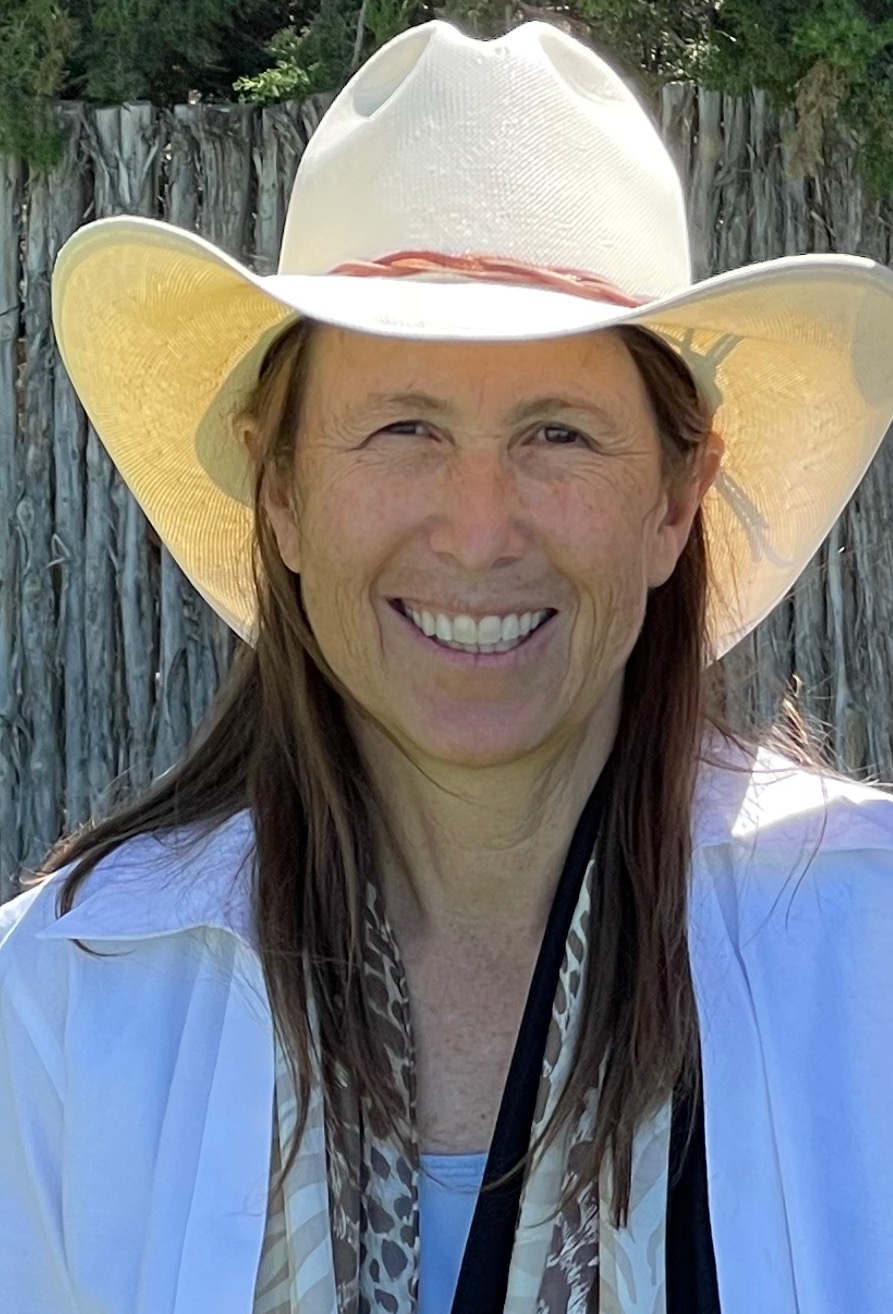
Lesli Allison and Tuda Libby Crews join me to discuss the critical role of private and working lands in achieving durable conservation outcomes in the United States. Lesli is a founding member and the Executive Director of the Western Landowners Alliance, a nonprofit organization that advances policies and practices that sustain working lands, connected landscapes, and native species. Tuda is a rancher and owner of Ute Creek Cattle Company, a conservation-focused ranching operation in northeastern New Mexico that has been in Tuda’s family for more than 200 years. Whether discussing on-the-ground stewardship practices or the intricacies of federal conservation policy, Lesli and Tuda are uniquely qualified to offer informed and thoughtful perspectives on all aspects of private land in the West.
While ranchers, farmers, and conservation stakeholders have long understood the critical importance of private land stewardship and conservation, the Biden administration’s 30×30 conservation goal has brought the topic to the forefront of American politics and mainstream media. 30×30 has prompted challenging conversations about what it means to conserve land, and it has sparked healthy debates about the government’s role in private land stewardship. 30×30 is a bold initiative and its implications for private landowners, particularly agricultural producers, are enormously complex– we’ll never find sufficient answers in pithy Tweets or surface-level news stories. So, I was excited to have Lesli and Tuda join me for an in-depth, hour-long conversation about 30×30 and private lands’ role in large-scale conservation.
Lesli, Tuda, and I connected via Zoom and enjoyed a wide-ranging conversation, covering everything from Tuda’s family history in New Mexico to the intricacies and realities of the 30×30 initiative. We started out discussing the vital role private lands play in conservation and environmental health here in the United States. Tuda talks about her family’s process of restoring her family’s ranch in New Mexico and the many environmental benefits that they have experienced. We obviously dig into 30×30, discussing its pros and cons and its opportunities and challenges. We talk about the importance of garnering local support for all land-related initiatives, and they each discuss their thoughts on the odds of success for an initiative as ambitious as 30×30. And as usual, they each offer up some excellent book recommendations that I think you’ll enjoy.
Please check out the episode notes for a full list of topics we discuss and links to all of the information we reference. Enjoy!
Photos courtesy of the Salazar Center, Lesli Allison, and Tuda Libby Crews.
—
Download on Apple Podcasts
—
Download on Spotify
—
Download on Google Podcasts
—
Download on Overcast
—

This episode is brought to you in partnership with Colorado State University’s Salazar Center for North American Conservation.
On Sept. 28-29, 2021 the Salazar Center will host its third annual International Symposium on Conservation Impact. The virtual event will serve as the first major public convening focused on next steps for the Biden administration’s America the Beautiful initiative, with Secretary of Agriculture Tom Vilsack, Secretary of Interior Deb Haaland, and White House Council on Environmental Quality Chair Brenda Mallory joining on the second day.
The two-day event will also feature researchers, practitioners, and political leaders from Canada, Mexico, and Indigenous territories, who—along with their U.S. counterparts—will explore the state of progress toward large landscape conservation goals throughout North America, and highlight lessons learned from other national-level efforts, such as Canada’s Pathway to Target One. In this context, the symposium will address critical themes such as transboundary partnerships, Indigenous leadership, and climate impacts, with former Vice President Al Gore providing remarks on the urgency of efforts to mitigate climate change.
Please follow the link in the episode notes to learn more, or go directly to salazarcenter.colostate.edu. Thank you.
—
EPISODE NOTES
Topics Discussed:
- 4:40 – Lesli’s introduction
- 6:25 – Tuda’s introduction
- 9:55 – Lesli discusses private lands’ role in conservation
- 13:25 – Tuda describes her ranch and her family’s conservation work there
- 19:40 – Lesli talks about performing private land conservation work at scale
- 24:40 – Tuda describes her process of arriving at creative land stewardship solutions
- 28:55 – Lesli and Tuda discuss 30 by 30
- 39:40 – Lesli discusses means of protecting agricultural property from subdivision
- 44:10 – Nodding towards public land conservation efforts, Leslie and Tuda discuss was to garner public support for private land stewardship efforts
- 51:40 – Lesli and Tuda talk about how they see our odds for success in these efforts
- 55:40 – Book recommendations
- 59:40 – Lesli mentions what WLA is doing from a media perspective
Information Referenced:
- Salazar Center
- Western Landowners Alliance
- Ute Creek Cattle Company
- Saltcedar (tamarisk)
- 30 by 30
- Nikki Silvestri
- Chaffee County
- Scott Momaday
- Aldo Leopold
- David Epstein
- John Steinbeck
- Timothy Egan
- Norman MacLean
- Dan Dagget
- Tracy Kidder
- Khaled Hosseini
Enjoy this episode? Then you might like these too:
- Dr. David Hewitt – The Science of Wildlife Conservation
- Carlos Fernandez – The Power of Partnerships
- Daniela Ibarra-Howell – Healing the Land Holistically
- NEW WEST DISPATCH – Marci McLean & Cora Neumann on COVID’s Impact on Native Communities
- NEW WEST DISPATCH: Matt Skoglund – Ranching in the Age of COVID
- Duke Phillips III – A Vision for the New West
- Duke Phillips IV – Living with the Land
- Russ Schnitzer – A Life Devoted to Western Landscapes
Hampton Sides, Part 3 – Tales from a Most Excellent Adventure

Hampton Sides is a historian and New York Times bestselling author who is best known for his engaging works of narrative nonfiction, including the books Blood and Thunder, Ghost Soldiers, On Desperate Ground, and more. His latest project is an ebook and audiobook titled The Exotic: Intrigue and Cultural Ruin in the Age of Imperialism, which details the life and unbelievable adventures of a man named Mai, who was the first Polynesian to set foot on British soil. The Exotic is much shorter than Hampton’s previous books but much longer than a magazine article, giving the reader a chance to enjoy Hampton’s one-of-a-kind historical storytelling in only a few hours of reading.
Longtime listeners of Mountain & Prairie will remember Hampton’s two previous appearances on the podcast. The first was an in-depth discussion of his book Blood and Thunder and the history of the American West, which was recorded live and on stage at the Aspen Institute. In his second appearance, we focused on his writing and research process, and his career progression from journalist at Outside magazine to becoming a best-selling historian. Today’s conversation takes us far beyond the American West, everywhere from remote islands in the South Pacific to King George’s court in England. So if you’re a fan of adventure, history, and profiles of Indigenous people who have often been overlooked by mainstream history, you’ll love this book.
Hampton and I connected virtually and had a fun conversation about the book and his process for writing it. We talked a lot about Mai’s unbelievable journey from Polynesia to England and back again, as well as the opportunities and challenges of exploring history from an Indigenous perspective. We talked about Hampton’s process for researching the book and how COVID has forced him to adjust his usual approach. Hampton was actually in the South Pacific researching the book in March 2020 when the pandemic hit, which, as you’ll hear, added an extra layer of adventure to an already adventurous trip. And as usual, Hampton offers up some great book recommendations that I think you’ll enjoy.
The Exotic is available exclusively on Scribd, which is an online service that gives you instant access to ebooks, audiobooks, articles, podcasts, and more. I’ve thoroughly enjoyed Scribd over the past few weeks, and I’d encourage you to give it a shot. You can access it for free for 30 days by following this link. And I’m not being paid for this endorsement– I’m just a fan of what Scribd is doing and the unique forms of writing that they are bringing to the world.
I hope you enjoy this episode, and I hope you’ll invest a few hours reading The Exotic. And if you haven’t already, go back and listen to my past episodes with Hampton– they are fun and educational conversations. Thanks so much.
Hampton’s headshot by Sergio Salvador.
—
Download on Apple Podcasts
—
Download on Spotify
—
Download on Google Podcasts
—
Download on Overcast
—
EPISODE NOTES
Topics Discussed:
- 4:00 – How Mai got Hampton’s attention
- 11:45 – Hampton discusses who Mai was
- 22:00 – Hampton walks us through what Mai did while he was in England
- 31:30 – Hampton explains what happens when Mai returns home
- 36:30 – Hampton describes doing his research while COVID-19 took off and discusses how the pandemic affected his writing
- 43:30 – Hampton talks about Captain Cook
- 51:15 – Hampton’s book recommendations
Information Referenced:
- Hampton Sides
- Hampton’s first and second M&P episodes
- 30-day free trial of Scribd
- Context about Mai
- Captain James Cook
- Scribd
- Sir Joshua Reynolds
- John Magnier
- Tahiti
- Raiatea
- Bora Bora
- Captain Samuel Wallace
- Motavai Bay
- Tobias Furneaux
- Jean-Jaques Rousseau
- Sir Joseph Banks
- The Kew Gardens
- King George III
- Dr. Thomas Dimsdale
- Samuel Johnson
- James Boswell
- Hyde Park
- Captain William Bligh
- Louis Antoine de Bougainville
- Bougainvillea
Enjoy this episode? Then you might like these too:
- Hampton Sides – Live at the Aspen Institute
- Hampton Sides, Part 2 – How to Tell a Damn Good Story
- Peter Heller – Chasing the Flow
- William deBuys – Sage of the Southwest
- Heather Hansman – Demystifying Water in the West
- Chris Dombrowski – Words, Water & the West
- Sara Dant – A Deep Dive Into the History of the West
- Hal Herring – A Man of Words & Wild Places
- Nickolas Butler – The Craft of Creativity
Luke Smithwick – A Life in High Places

Luke Smithwick is a professional alpinist, ski mountaineer, and mountain guide best known for his cutting-edge climbs and descents in the world’s wildest mountain ranges. Luke is based in Victor, Idaho, in the shadow of the legendary Teton Range, but he spends large portions of each year deep in the Himalayas, guiding clients on remote peaks or pursuing personal climbing and skiing objectives on 7-8,000-meter peaks. He is currently hard at work on a multi-year skiing project called The Himalaya 500, which is his personal quest to ski 500 aesthetic ski lines throughout the greater Himalayan Range.
Luke was born and raised in North Carolina, and he moved to Colorado for college, where he attended CU Boulder and studied environmental biology and cultural anthropology. When not in class, Luke immersed himself in outdoor sports and soon began working as a guide– first a river guide on Colorado’s Upper Arkansas River and then a climbing guide. After graduation, Luke completely committed himself to the mountains, and his adventures have since taken him everywhere from the Alaska Range to his current work in the Himalayas. His company, Himalaya Alpine Guides, focuses on trips to some of the lesser-known (and less crowded) peaks in the Himalayan Range, where his clients can enjoy completely unique climbing and cultural experiences that cannot be found on more mainstream, well-known mountains.
Luke and I went to high school together back in the mid-1990s, and I was a couple of grades ahead of him. After graduation, we lost touch but have reconnected during the past few years thanks to shared interests and common friends. I was so happy that he joined me on the podcast, because I had lots of questions about how a guy from small-town North Carolina has become one of the world’s most accomplished Himalayan skiers. We had a wonderful conversation, discussing everything from his career trajectory to this season’s climbing objectives. We talked about how he picks ski lines, how climate change is affecting the Himalayas, the unique nature of his guiding company, how he trains, why he has made his home in the American West, and his deep respect for the people, history, and cultures of the Himalayas.
I loved catching up with my old friend Luke. I was blown away by all he has accomplished in the past 20 years, and I have the utmost respect for his understated, humble approach to life, learning, and adventure. Be sure to check the episode notes for links to everything we discussed. Enjoy!
Photos courtesy of Luke Smithwick.
—
Download on Apple Podcasts
—
Download on Spotify
—
Download on Google Podcasts
—
Download on Overcast
—
EPISODE NOTES
Topics Discussed:
- 4:00 – Luke walks us through his trajectory post high school and how he became a professional outdoor guide
- 7:30 – Luke talks about his work and his guide company in the Himalayas
- 9:45 – Luke explains why he focuses on a deep understanding of mountain ranges instead of just the principle summits of a range
- 13:15 – Luke discusses how he finds his clientele
- 15:30 – Luke explains the importance of local relationships for his business
- 17:45 – Luke discusses his project, the Himalaya 500
- 21:15 – Luke explains how he picks his ski lines
- 23:00 – Luke talks about the information age and its impact on the availability of “secret spots”
- 25:00 – Luke talks about the people he has met in his travels around the Himalaya
- 27:45 – Luke talks about how current action in Afghanistan may affect his work
- 28:45 – Luke discusses the impacts of climate change that he sees in his work
- 32:00 – Luke explains how he trains for his work and play in the mountains in order to make it a sustainable lifestyle
- 36:00 – Luke talks about his current 8,000 meter peak goal
- 39:00 – Luke discusses how he balances humility and the need for self-promotion in his field
- 44:45 – Luke talks about training for alpine trips in his forties
- 48:00 – Luke talks about his family
- 49:15 – Luke discusses his hometown and the significance of Boy Scouts in his upbringing
- 51:30 – Luke’s book recommendations
- 53:30 – Luke’s film recommendations
- 54:30 – Luke talks about the most powerful experience in his life
- 56:45 – Luke’s parting words of wisdom
Information Referenced:
- Luke Smithwick
- Arkansas River Valley
- Colorado Outward Bound School
- Woodberry Forest School
- Berthoud Pass
- Rollins Pass
- Denali
- Anchorage, AK
- Aconcagua
- Tibet
- Manali, India
- Sherpa
- Nepal
- Khumbu Region of Nepal
- K2
- Karakoram
- Pakistan
- Bhutan
- Tamotsu Nakamura
- Islamabad
- GLOFs (glacial lake outburst floods)
- Indo-Gangetic
- Hunza, Pakistan
- Dhaulagiri
- Kashmir
- Victor, ID
- Laurinburg, NC
- Tarboro, NC
- Kathmandu
- McNair Evans
- Camp Sea Gull
- Herman Hesse
- Barry Lopez
- Roadhouse
Enjoy this episode? Then you might like these too:
- Mitsu Iwasaki – Adventure, Advocacy, & Alpinism
- Mike Foote – Perfection Is In the Process
- Steve Casimiro – Voice of Adventure
- Rachel VandeVoort – Harnessing the Power of Outdoor Recreation
- Kyle Richardson – Mountains & Music
- Live in Bozeman – Cate Havstad, Jillian Lukiwski, Becca Skinner & Juanita Vero
- Jessica Lewis – Doing More With Less
Shane Doyle – Reverence for the Past, Hope for the Future

Shane Doyle is a Montana-based scholar, teacher, and community advocate whose work focuses on the history and heritage of Native American tribes of the Northern Great Plains. Shane is an enrolled member of the Apsáalooke Nation (also known as the Crow Tribe), and he holds a doctorate in Curriculum and Instruction from Montana State University. His unique personal and professional experiences, combined with his deep curiosity and seemingly endless energy, have made Shane a well-known leader in many fields, including education, land use advocacy, and the arts.
Shane grew up in Crow Agency, Montana, and he did not have an interest in history until college, when a road trip with a professor opened his eyes to Montana’s rich Native American past. From that moment onward, Shane’s curiosity has continued to grow, and he has built his career around making Native American history a cultural mainstay in everything from Montana’s educational system to governmental land management decisions. Whether designing educational curriculums, making films, or singing Northern Plains tribal music, Shane is always focused on serving his community.
Whether you’re a long-time listener or this is your first episode, I know you’ll enjoy getting to know Shane. We started out discussing his youth on the Crow reservation, and he talks about that fateful road trip when he fell in love with history. We talk about his family and the important life lessons that he learned from his grandmother. We discuss the history of the Apsáalooke, and the importance of the Crazy Mountains from a cultural and historical perspective. We also discuss his consulting business Native Nexus, some of his film projects, and his plans for the future. And Shane obviously has plenty of excellent book recommendations, so be sure to check out the episode notes for links to all of those.
As you’ll hear in this conversation, Shane is doing so much excellent work and has many more projects in the pipeline. I’ll look forward to a part 2 with Shane in the future so we can hear updates on everything that he’s working on. Hope you enjoy!
Photos courtesy of Shane Doyle.
—
Download on Apple Podcasts
—
Download on Spotify
—
Download on Google Podcasts
—
Download on Overcast
—
This episode is brought to you by The Arthur M. Blank Family Foundation and its Montana-based AMB West Philanthropies, both of which embody the values-based approach to philanthropy and business of their Chairman Arthur M. Blank
EPISODE NOTES
Topics Discussed:
- 3:15 – Shane’s childhood and how he pursued Indigenous history in his youth
- 7:45 – Shane describes how he engaged in studying the Indigenous history of Montana
- 10:30 – Shane discusses Asaalooke Nation history
- 14:30 – Shane discusses his thoughts regarding a history of broken treaties
- 18:15 – Shane talks about the service element of his work
- 21:00 – Shane discusses the significance of the Crazy Mountain Range, including his own experience fasting in that mountain range
- 27:15 – Shane explains regularity of his meditation ceremonies
- 30:15 – Shane mentions some resources for people interested in Northern Plains Indigenous culture
- 34:00 – Shane discusses the book he is writing, Messages from Medicine Wheel Country
- 38:00 – Shane talks about his film regarding the Crazy Mountains
- 41:45 – Shane explains how folks can get involved in the protection of the Crazy Mountains
- 43:30 – Shane discusses his business, Native Nexus
- 47:15 – Shane talks about where he thinks his career is going next
- 51:45 – Shane’s book recommendations
- 55:45 – Shane’s film recommendations, as well as some films he feels less enthusiastic about
- 1:01:30 – Shane’s parting words of wisdom
Information Referenced:
- Arthur M. Blank Family Foundation
- AMB West Philanthropies
- Apsáalooke Nation (Crow Tribe)
- Film: Awaxaawippíia: The Crow Nation’s Sacred Ties
- Crazy Mountains
- Native Nexus
- Crow Agency, MT
- Little Bighorn River
- Battle of Little Bighorn
- Flathead Lake
- Blackfeet Nation
- Cheyenne Nation
- Lakota Nation
- Confederated Salish and Kootenai Tribes of the Flathead Reservation
- Bighorn Range
- Musselshell, MT
- Black Hills
- Three Forks Headwaters of the Missouri River
- Fort Laramie
- Virginia City
- Plenty Coups
- John G. Neihardt
- Joseph Medicine Crow
- Alma Hogan Snell
- Sun Dance
- Sweat Lodge
- Frederick E. Hoxie
- Elliot West
- Fred W. Voget
- Little Big Man
- The Outlaw Josey Wales
- Reservation Dogs
- The Revenant
- Killers of the Flower Moon
- Osage Nation
- James Welch
- Frederick Voget Lefthand
- Nathaniel Philbrick
Enjoy this episode? Then you might like these too:
- Marci McLean & Cora Neumann on COVID’s Impact on Native Communities
- Chris Douglas – An Unexpected Artistic Journey
- Juanita Vero, Part 2 – A Deep Desire to Serve
- Becky Edwards – Amplifying the Power of Women in the West
- Rachel VandeVoort – Harnessing the Power of Outdoor Recreation
- Hal Herring – A Man of Words & Wild Places
- Antonia Malchik – Exploring Culture & Complexity
- Len Necefer – Indigenous Advocate
- Callan Wink – A New Voice for the New West
Antonia Malchik – Exploring Culture & Complexity

Antonia Malchik is a Montana-based writer and essayist, and she’s also the author of the book A Walking Life: Reclaiming Our Health and Freedom One Step at a Time. She has written for publications including The Atlantic and High Country News, she also writes a regular Substack newsletter titled On the Commons, which I highly recommend. Antonia thinks deeply about a wide range of topics, including community, conservation, the environment, private property, the West, books, and more. She has a true talent for writing about complex subjects in an engaging, in-depth manner that both educates and challenges the reader.
Antonia grew up in northwest Montana– her mother was a multigenerational Montanan and her father was a first-generation immigrant from the former Soviet Union. Her family heritage combined with her innate curiosity gave Antonia a unique perspective on the world that informs all of her work. She has lived in Moscow, Vienna, Australia, and other far-flung regions, but she has always been drawn back to the landscapes of her home state of Montana, where she currently lives with her husband and two children.
I’ve been a long-time fan of Antonia’s work, so it was a pleasure to finally have her join me on the podcast. Just as her work covers a broad range of topics, so does this conversation– we discuss everything from Russian history to her Montana ancestors to her long-standing commitment to the craft of writing. We talk about why she has chosen to not participate in social media, and how she manages to consume online news and media without becoming overwhelmed. We talk a lot about her writing process, her thoughts on publishing her work, and her approach to exploring and writing about potentially controversial ideas. We obviously talk about her book A Walking Life, as well as how the act of walking can contribute to strong communities, mental health, and physical well-being. And finally, Antonia is known for her excellent book recommendations, and she offers up some great ones– be sure to check the episode notes for links to all the books and authors she mentions.
I thoroughly enjoyed this conversation and can’t thank Antonia enough for all of her hard work. Hope you enjoy.
Header photo of Antonia Malchik by Lindsey Jane Photography.
—
Download on Apple Podcasts
—
Download on Spotify
—
Download on Google Podcasts
—
Download on Overcast
—
EPISODE NOTES
Topics Discussed:
- 5:00 – Antonia explains why she was left on the streets of Moscow and told not to get lost.
- 8:45 – Antonia reflects on moving to a completely different culture during a time when international relations were tense.
- 14:15 – Antonia recommends resources for understanding Russian history.
- 18:15 – Antonia reflects on the Montana side of her family and on the idea of pioneering.
- 23:00 – Antonia explains how and why she chooses to write.
- 27:45 – Antonia explores how she puts potentially controversial ideas out into the digital commons as well as explains when she decides to engage with people who disagree with her and comment on her writing.
- 31:30 – Despite anxiety regarding putting her work out for public viewership, Antonia reflects on why she still writes.
- 35:30 – Antonia and Ed discuss creating for the sake of continuing to create and the merits of not waiting for permission to create.
- 43:15 – Antonia explains, as a curious person, how she controls the constant influx of information that can occur through social and informational media.
- 49:00 – Antonia discusses her book, A Walking Life.
- 55:15 – Antonia talks about walking as it relates to mental health.
- 1:07:45 – Antonia’s favorite books about the West.
- 1:15:30 – Antonia’s parting words of wisdom.
Information Referenced:
- Antonia Malchik
- Joseph Stalin
- Soviet Union
- Berlin Wall
- Mikhail Gorbachev
- Burlingame, CA
- Leningrad
- Cold War
- Natasha’s Dance
- The Siege of Leningrad
- The 900 Days
- Anna Reid
- Svetlana Alexievich
- Geoffrey Hosking
- Lesley Chamberlain
- Hedrick Smith
- Brendan Leonard
- Semi-Rad
- Whitefish, MT
- High Country News
- Bill Bryson
- Lunch Ticket
- Orange County, NY
- Rachel VandeVoort
- Peter Norton
- Cal Newport
- Beyond the 100th Meridian
- John Wesley Powell
- Melissa Sevigny
- Katherine Schultz
- Willa Cather
- Joe Wilkins
- Alexis Bonogofsky
- Plenty Coups Chief of the Crows
- Alan Weisman
- H. Emerson Blake
- Jeremy Lent
- Douglas Rushkoff
- Dr. David Hewitt
Enjoy this episode? Then you might like these too:
- Chandra Brown – Fostering Creativity Through River Adventures
- Alexis Bonogofsky – Taking a Stand for the West
- Heather Hansman – Demystifying Water in the West
- Morgan Irons – Finding Her Muse
- Live in Bozeman – Cate Havstad, Jillian Lukiwski, Becca Skinner & Juanita Vero
- Kate Kavanaugh – Regeneration & Restoration
- Jessica Ilalaole – Creating Home in the High Desert
- Anna Brones – Committed to Creativity
- Iris Gardner – Living with Intention
Nickolas Butler – The Craft of Creativity

Nickolas Butler is an award-winning writer and novelist who has published five books, one of which is the wildly popular, award-winning Shotgun Love Songs. His most recent novel is titled Godspeed— a fast-paced, thriller of a book that is set in and around Jackson Hole, Wyoming. While the novel has all of the components that make for a great story– action, suspense, wild landscapes, complex characters– it also touches on many of the challenges facing the modern-day West, including income inequality and rural gentrification. From the first page of Godspeed, I was hooked, and I stayed up way too late for several nights in a row finishing the book.
For all of Nick’s accomplishments as a novelist, his path to becoming a full-time writer was not an easy one, nor was he an overnight success. He spent many years working a variety of jobs, including as a telemarketer, meatpacker, and Burger King maintenance man. And as you’ll hear him discuss in this conversation, it was during his stint working as a liquor store clerk that he decided to fully commit to the craft and profession of writing. Fast forward to today, and his focus, commitment, and hard work have paid off– not only is he a successful full-time writer, but also a devoted husband and father of two.
Nick and I recorded this conversation just a few days after the publication of Godspeed. I was lucky enough to read an advanced copy of the book prior to our conversation, and I can’t say enough great things about it. So we obviously talked a lot about the book– his process for writing it, how the book highlights present-day challenges facing the West, and how he went about developing the plot and the characters. We discussed his journey as a writer and artist– how and why he views writing as a craft, the importance of hard work, and how he keeps his competitive fire burning, even after experiencing so much success. We also talk a lot about family and community, which are two subjects that Nick and I are both very passionate about. And finally, Nick offers up a ton of excellent book and author recommendations, as well as some wise parting words.
Big thanks to the great writer, angler, and past podcast guest Chris Dombrowski for introducing me to Nick. Check the episode notes for the full list of everything we discuss and links to all of the books and authors that nick mentions. And I encourage you to pick up a copy of Godspeed— you’ll love it.
Photos courtesy of Nickolas Butler
—
Download on Apple Podcasts
—
Download on Spotify
—
Download on Google Podcasts
—
Download on Overcast
—
EPISODE NOTES
Topics Discussed:
- 4:00 – Nickolas compares his most recent book release with his first release.
- 9:30 – Nickolas discusses how he handles reviews of his work
- 13:45 – Nickolas explains how he balances creating art with treating writing as a job, like a craftmaker
- 16:00 – Nickolas discusses his most recent novel, Godspeed, and how the story came to him
- 21:00 – Nickolas talks about the process of a story gathering in his mind, and generally how long it takes.
- 22:30 – Nickolas discusses how he comes to know a place to write about it so well.
- 25:45 – Nickolas reads a passage from Godspeed and explores the challenges surrounding housing in the West and beyond.
- 32:00 – Nickolas explores the way he crafts stories in his writing, and how it leads to empathy in his most recent novel.
- 36:45 – Nickolas describes the role of meth and addiction in Godspeed.
- 38:30 – Nickolas talks through the pace and process of writing Godspeed.
- 41:15 – Nickolas discusses some of his current projects.
- 42:45 – Nickolas looks back on his career before being a writer.
- 49:30 – Nickolas discusses his transition from early career to writing career.
- 52:15 – Nickolas talks about how he keeps his “fire going” in his career.
- 55:00 – Nickolas talks about teaching work ethic to his children.
- 58:00 – Nickolas identifies his literary icons.
- 1:00:45 – Nickolas’s favorite books about the West.
- 1:03:00 – Nickolas’s parting words of wisdom.
Information Referenced:
- Nickolas Butler
- Chris Dombrowski
- Marcus Burke
- Pretty Woman
- Coldplay
- James Ellen McPhearson
- Peter Heller
- Michael Perry
- Eau Claire, WI
- Jackson, WY
- Lord of the Flies
- John Larison
- Upper Arkansas River Valley
- Ethan Canin
- Pushed Out: Contested Development and Rural Gentrification in the US West
- The Eau Claire Leader Telegram
- Oscar Mayer
- Rick Bass
- Stephen King
- Marilyn Robinson
- Jim Harrison
- The UP (Upper Peninsula)
- Annie Proulx
- Tom McGowen
- Legends of the Fall
- Treasure of the Sierra Madre
- Ken Kesey
- CJ Box
- David James Duncan
Enjoy this episode? Then you might like these too:
- Chris Dombrowski – Words, Water & the West
- Peter Heller – Chasing the Flow
- Heather Hansman – Demystifying Water in the West
- Hampton Sides – Live at the Aspen Institute
- David Gessner, Part 2 – Ambition, Art, and Arête
- Sara Dant – A Deep Dive Into the History of the West
- Alexis Bonogofsky – Taking a Stand for the West
- Monte Burke – Exploring Obsession
- Chris Burkard – The Art of Suffering
Nicole Morgenthau – Curiosity & Creativity

Nicole Morgenthau – Curiosity & Creativity

Nicole Morgenthau is a Utah-based professional photographer whose work depicts the people and places of the American West in a completely unique, one-of-a-kind style. While she has been involved in many aspects of the photography business throughout her career, Nicole may be best known for her portraits of a wide range of western characters– from cowgirls to mountain men, from professional athletes to mountain-town ski bums. And her creative pursuits don’t stop with photography– Nicole is also the owner of Sandstone Sky Jewelry, a business in which she makes and curates a variety of stunning jewelry, much of which has its creative roots in Native American culture.
Nicole was born and raised on the east coast, just outside of New York City. As a kid, she loved western movies and dreamed of moving out of the humid New Jersey suburbs and into wide-open, arid landscapes of the American West. After high school, she made the move West for college, first in Colorado and then to Montana State, where she studied photography. And immediately after graduating, she dove headfirst into the photography business, first as an assistant to several commercial photographers and then as her own boss. Since then, her work has been featured by well-known brands such as Patagonia, Outside, Men’s Journal, the New York Times, and more.
Nicole and I connected a few weeks ago and had an insightful discussion about everything from the photography business to jewelry making to overcoming creative blocks. We started out by discussing her childhood in New Jersey, her desire to move West, and how she decided to take that leap. We then talked about her journey as a professional photographer– the ups and downs, the evolution of the business, and how she found her voice as a portrait photographer. We talked about her jewelry business and how it compliments photography, both creatively and financially. And toward the end, she offers up some excellent music recommendations, wise parting words, and an inspiring quote from Anthony Bourdain that I think you’ll appreciate.
Be sure the check the episode notes for links to all the people and places Nicole mentions. This was a fun chat, and I hope you enjoy.
All photos by Nicole Morgenthau
—
Download on Apple Podcasts
—
Download on Spotify
—
Download on Google Podcasts
—
Download on Overcast
—
EPISODE NOTES
Topics Discussed:
- 3:30 – Growing up in New Jersey
- 5:30 – First trip to the West
- 7:30 – Decision to attend college in the West
- 9:00 – Childhood beginnings in art and creativity
- 10:45 – Nicoles first years in professional photography
- 12:30 – Working as an assistant
- 14:00 – Going out on her own
- 18:00 – Importance of toughness
- 19:00 – Finding her “voice” as a photographer
- 24:00 – What’s the key to good portrait photography
- 26:30 – Photography influences
- 28:45 – The evolution of her photography
- 31:30 – Nicole’s jewelry business, Sandstone Sky Jewelry
- 37:00 – Inspiring interactions while making jewelry
- 39:30 – Techniques for remaining calm despite being Type A
- 42:000 – Musical influences
- 45:00 – Advice to aspiring creatives
- 50:00 – Upside of education and workshops
- 54:00 – Parting words of wisdom
- 59:30 – Parting quote
Information Referenced:
- Nicole Morgenthau
- Sandstone Sky Jewelry
- Andy Anderson
- Mountain Man Rendevouz
- Edward Curtis
- Sally Mann
- Mark Tucker
- Chris Douglas
- Chris Douglas podcast episode
- Shiprock, NM
- Navajo Nation
- Cody Jinks
- Avett Brothers
- Macduff Everton
- Four Corners
- Anthony Bourdain
Enjoy this episode? Then you might like these too:
- Chris Douglas – An Unexpected Artistic Journey
- Chris Burkard – The Art of Suffering
- Anna Brones – Committed to Creativity
- Jillian Lukiwski – Art and Adventure in the American West
- Jessica Ilalaole – Creating Home in the High Desert
- Jessica Lewis – Doing More With Less
- Ivan McClellan – A New Look at the Old West
- Iris Gardner – Living with Intention
Adam Gall – A Reverence for Wildlife & Wild Places

Adam Gall is a hunting guide and owner of Timber to Table Guide Service, a guiding company focused on helping hunters of all skill levels put wild, healthy, and delicious meat on their tables. Based out of the small town of Hotchkiss on Colorado’s Western Slope, Timber to Table offers multi-day hunts on both public and private lands, offering top-notch instruction on everything from the intricacies of elk hunting to the technical skills needed to properly and efficiently process the meat. Adam is highly regarded by many of my friends and past podcast guests and praised as an outside-the-box thinker, so I’m thrilled to finally have him join me for a conversation.
Adam’s professional background gives him a unique perspective on wildlife, land management, and wild places in the American West– he worked as a wildland firefighter, a wolf biologist, and a high school science teacher before devoting himself to full-time guiding. He has also been involved in a variety of volunteer initiatives, ranging from leadership positions with groups like Backcountry Hunters and Anglers to advisory roles on issues such as the wolf reintroduction in Colorado. As you’ll hear in our conversation, Adam thinks deeply and independently on a wide range of land and wildlife issues, and he offers his ideas respectfully and thoughtfully– something we could all use a little more of these days.
I connected with Adam while he was on a family vacation in rural Montana, and we had a wide-ranging conversation that we probably could’ve continued for hours. We started out chatting about his upbringing in Michigan and how he fell in love with hunting despite coming from a family of non-hunters. We talked about Timber to Table– how the guide service came to be, the challenges of running his own business, and his commitment to ethical hunting practices. We talked a lot about wolves and the wolf reintroduction in Colorado, and Adam offered some new thoughts that differ from some of my past podcast guests. He also describes the skills needed to be a great hunter, recommends some of his favorite books, and offers some wise parting words.
This was a thought-provoking conversation that provided a new perspective for me on several important topics, so I hope you enjoy it.
Photo courtesy of Adam Gall
—
Download on Apple Podcasts
—
Download on Spotify
—
Download on Google Podcasts
—
Download on Overcast
EPISODE NOTES
Topics Discussed:
- 3:30 – Adam talks about where he grew up
- 9:45 – Adam explains how hunting became a part of his life
- 12:30 – Adam describes his guide service, Timber to Table Guided Service, which provides an educational and holistic hunting and butchering experience
- 19:30 – Adam talks about balancing his work and home life
- 23:30 – Adam talks about how he got into wolf biology prior to his guiding work and dives into the controversy that surrounds them
- 39:15 – Adam discusses his role in the Stakeholder Advisory Group as a part of Colorado Parks and Wildlife’s wolf reintroduction work
- 44:30 – Adam’s resources for learning more about wolves
- 47:00 – Adam gives advice on how to get started in hunting
- 52:45 – Adam discusses what makes an excellent hunter
- 57:15 – Adam’s book recommendations
- 1:02:30 – Adam’s parting words of wisdom
Information Referenced:
- Timber to Table Guide Service
- Chris Dombrowski
- Callan Wink
- Steven Rinella
- Sagebrush Rebellion
- Lolo Pass
- Nez Perce Tribe
- Mike Phillips
- Ted Turner
- Colorado wolf reintroduction legislation (CO Proposition 114)
- Carter Niemeyer
- Mike Jiminez
- Doug Smith
- Dan Flores
- Rick Bass
- Dave Meches
- Carter Niemeyer
- Randy Newberg
- Cory Jacobsen
- Backcountry Hunters and Anglers
- R3 Programs
- Barry Lopez
- Chris Dombrowski
- James Galvin
- Allan Eckert
Enjoy this episode? Then you might like these too:
- Hal Herring – A Man of Words & Wild Places
- Chris Dombrowski – Words, Water & the West
- Mike Phillips – Audacious Goals, Relentless Action
- Kate Kavanaugh – Regeneration & Restoration
- Gabe Vasquez – Advocate for Equity in the Outdoors
- Mark Kenyon – A Passion for Public Lands
- Becca Aceto – Forging Her Own Path in the West
- Rachel VandeVoort – Harnessing the Power of Outdoor Recreation
John Branch – Seeking the Extraordinary in the Ordinary

John Branch is a Pulitzer-prize-winning journalist with the New York Times and the author of the brand new book Sidecountry: Tales of Death and Life from the Back Roads of Sports. He is also the author of The Last Cowboys: A Pioneer Family in the New West, which is one of my favorite books about the modern-day challenges facing ranching families in the American West. Whether he’s reporting on the historic ascent of the Dawn Wall on Yosemite’s El Capitan, reconstructing a deadly avalanche in the Washington backcountry, or describing the financial realities of the cattle ranching business, John’s has one of the most unique and engaging voices you’ll find anywhere in print.
Growing up in Colorado, John never had serious childhood dreams about a career in writing or journalism. He studied business at CU Boulder and graduated fully focused on pursuing jobs in the business world. But after several years of building a successful career with retail-focused companies, John found himself dreaming of a career as a writer. So, in the mid-1990s, with minimal writing experience under his belt, he applied to graduate school, was accepted, and officially began his journey as a journalist. Fast forward to 2013, and John won the Pulitzer Prize for his New York Times article titled Snow Fall: The Avalanche at Tunnel Creek.
In our modern-day, frenetic world that is overflowing with articles and information, I’ve found that John’s work rises above the fray and sticks with me for many years after my first reading. While he has reported on many well-known sports figures such as Tommy Caldwell or even Kobe Bryant, John says he enjoys finding meaning in less-flashy tales, telling the stories of “ordinary people tangled up in something extraordinary.” So in this conversation, we talk about his commitment to uncovering these little-known stories– from his on-the-ground reporting to his process of sitting down at the keyboard to write. We also dig into some of his favorite outdoor-related stories, his new book Sidecountry and his older book The Last Cowboys, and his unconventional path into journalism. We talk about reporting from the top of El Capitan, his process of writing Snow Fall, his heroes and mentors, and much more. Finally, John offers up some great book and music recommendations, and well as timely advice for aspiring creatives.
I’ve been a fan of John’s for many years, so I can’t thank him enough for taking the time to chat with me. I encourage you to find copies of Sidecountry and The Last Cowboys, and keep an eye out for everything he writes for the Times. Check the notes for links to everything we discuss. Hope you enjoy!
Photo courtesy of John Branch
—
Download on Apple Podcasts
—
Download on Spotify
—
Download on Google Podcasts
—
Download on Overcast
EPISODE NOTES
Topics Discussed:
- 4:30 – John discusses his childhood, education, and career shift from business to journalism
- 10:00 – John discusses his family’s reaction to his change in career
- 11:15 – John explains how he ended up in Colorado Springs
- 12:00 – John describes his climb through the journalism world
- 14:30 – John explains how he caught the attention of the New York Times
- 16:30 – John explains why he feels his career transition worked
- 19:00 – John describes the kind of stories he looks to tell in his writing and how he knows when there is a story in front of him worth digging into
- 25:00 – John explains how he builds trust with the subjects of his stories
- 27:00 – John describes his most recent book, Side County
- 32:15 – John describes his writing process
- 38:30 – John describes his editing process and explains how he still gets nervous about submitting his work
- 43:15 – John talks about the importance of journalism now more than ever
- 46:15 – John talks about how he manages the constant influx of information in his job
- 48:45 – John talks about his ideal writing environment
- 50:00 – John identifies several of his writing heroes/role models
- 53:00 – John talks about how he differentiates between which stories should be told in articles and which should be told in books
- 56:15 – John discusses his musical tastes
- 59:00 – John’s parting words of wisdom
Information Referenced:
- John Branch
- John on Twitter and Instagram
- Sidecountry: Tales of Death and Life from the Back Roads of Sports
- The Last Cowboys: A Pioneer Family in the New West
- Zima
- Colorado Springs Gazette
- New York Times
- Snow Fall
- Stevens Pass
- ‘Battling’ Up a Sheer Yosemite Face, Seizing a Dream, Not a Rope
- Tommy Caldwell
- Jay Bilas
- John Prine
- Dan Barry
- Barry Lopez
- Paul Theroux
- Larry McMurtry
- Louis L’Amour
- The Avett Brothers
- Gin Blossoms
- Smashing Pumpkins
- Counting Crows
- The Kooks
- The Coral
- Tom Petty
Enjoy this episode? Then you might like these too:
- Heather Hansman – Demystifying Water in the West
- Monte Burke – Exploring Obsession
- Brendan Leonard, Part 2 – On Running, Creating, and Other Irrational Passions
- Steve Casimiro – Voice of Adventure
- Chris Burkard – The Art of Suffering
- Anna Brones – Committed to Creativity
- Emilene Ostlind – Storytelling for the New West
- Alexis Bonogofsky – Taking a Stand for the West
- Sara Dant – A Deep Dive Into the History of the West
Matt Barber & Joel Doub, Part 2 – Tales from an Entrepreneurial Adventure

Matt Barber and Joel Doub are the owners of Tom Morgan Rodsmiths, one of the West’s most renowned custom fly rod companies. I was introduced to Matt and Joel nearly three and half years ago and was quickly fascinated by their entrepreneurial journey and Tom Morgan Rodsmiths’ storied history in the fly fishing world. As longtime listeners may remember, I recorded a podcast with Matt and Joel in January of 2018, about a year after they had purchased the company from Tom and Gerri Morgan. In that conversation we talked in-depth about the history of the company, Matt and Joel’s unconventional backgrounds, and their plans for the future of TMR– it was a fun conversation that led to a great friendship between all of us.
But in the more than three years since I published that episode, Tom Morgan Rodsmiths has grown in size and scope, and Matt and Joel have continued to evolve as business owners. They’ve enjoyed highs that include being featured in the New York Times and steadily growing their sales year over year. But they’ve also faced unexpected challenges, most notably a global pandemic and its far-reaching supply chain and economic effects. But thanks to their creativity, planning, complementary skill sets, and unwavering commitment to the values of the founders Tom and Gerri Morgan, Matt and Joel have thrived as entrepreneurs and built wonderful lives for their families in Montana.
A quick, one-time snapshot of any entrepreneurial venture can never provide the full, vivid story of a company and its owners, so I wanted to bring Matt and Joel back on the podcast to give us an update and share some of their hard-earned wisdom and lessons learned. We talked a bit about the specifics of the fly fishing business, but most of the topics we discussed were around resilience, teamwork, marketing, managing complex work, and maintaining a positive attitude– actionable advice that almost anyone could put to use in business or creative endeavors. You don’t need to listen to our first episode to glean value from this one, but it’s worth a listen too, so there’s a link in the notes to access that episode if you’d like.
Be sure to check out the Tom Morgan Rodsmiths website and follow them on social media– links to everything are in the notes. They will be celebrating the company’s 25th anniversary in the coming weeks and offering some special, one-of-a-kind products that will be of interest to anglers and outdoor enthusiasts of all stripes. Thanks to Matt and Joel for the inspiring conversation, and I hope you enjoy.
Header photo by Paolo Marchesi
—
Download on Apple Podcasts
—
Download on Spotify
—
Download on Google Podcasts
—
Download on Overcast
EPISODE NOTES
Topics Discussed:
- 4:30 – Introduction to Matt and Joel
- 11:30 – Update on the progress of Tom Morgan Rodsmiths
- 16:15 – Matt and Joel discuss the benefits and challenges of co-owning a business
- 12:15 – Matt and Joel discuss how they navigate owning Tom Morgan Rodsmiths while respecting the legacy of its founders
- 27:45 – Matt and Joel talk about the coverage they received from the New York Times
- 31:45 – Matt and Joel explain their thoughts and practice of marketing their products
- 38:15 – How Matt and Joel stay organized to manage the many, many challenges of running a business
- 49:30 – Matt and Joel discuss generosity in their work and lives
- 53:15 – Matt and Joel talk about living in Montana, having recently moved there
- 56:15 – Matt and Joel’s book recommendations
- 58:45 – Matt and Joel’s parting words of wisdom
Information Referenced:
- Tom Morgan Rodsmiths
- Previous M&P episode
- Saint Lawrence University
- Suez Canal
- Techstars
- Cal Newport
- 10 Percent Happier
- Vipassana
- Waking Up
- Malcolm Brooks
- Callan Wink
- John Larison
- Mattew Crawford
- Joe Haldeman
Enjoy this episode? Then you might like these too:
- Max Wenerstrom – Timeless Craftsmanship
- Kelsey Johnson – Chasing Her Artistic Ambitions
- Chris Douglas – An Unexpected Artistic Journey
- Kate Kavanaugh – Regeneration & Restoration
- Chris Burkard – The Art of Suffering
- Live in Bozeman – Cate Havstad, Jillian Lukiwski, Becca Skinner & Juanita Vero
- Hal Herring – A Man of Words & Wild Places
- Mark Kenyon – A Passion for Public Lands
- Matt Skoglund – Adventures in Bison Ranching
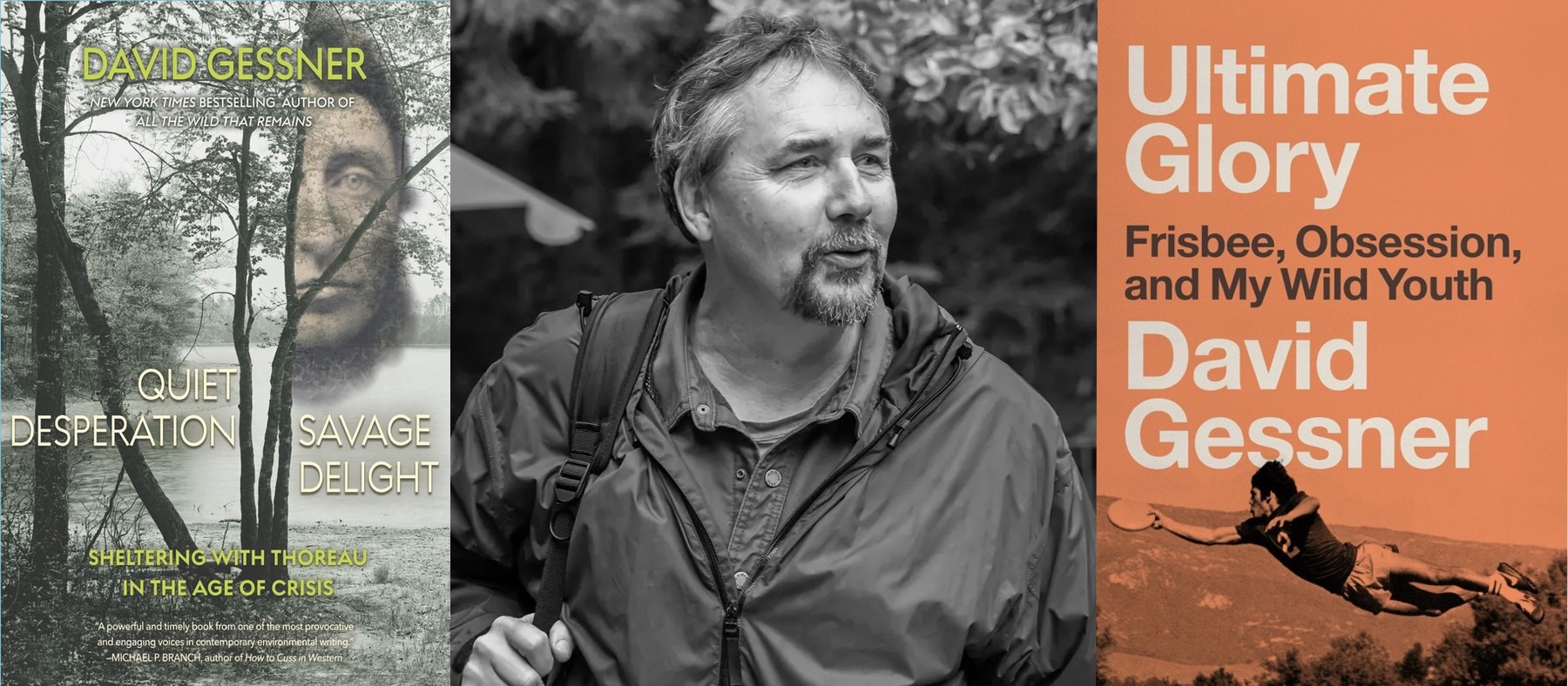
Virtual Event! In Conversation with David Gessner
Virtual Event! In Conversation with David Gessner
The uber-prolific David Gessner is at it again, this time with his excellent new book Quiet Desperation, Savage Delight: Sheltering with Thoreau in the Age of Crisis, which will be released to the masses on June 1, 2021.
I had the pleasure of reading an advanced copy and, in my humble opinion, it’s the perfect book for making sense of this nutty moment in history. If like me, you often gaze backward into history to help understand the modern-day world, then you’ll love this book– it’s David’s timely exploration of how we can apply Thoreau’s evergreen wisdom to help comprehend the pandemic, political upheaval, looming environmental catastrophes, and the ups and downs of everyday life.
I’ll be joining David on June 7, 2021, at 5 PM MDT for a free virtual conversation about the new book and much more. As many of you know, David is an annual fixture on the podcast, and it’s always impossible to predict which irreverent and hilarious direction the conversation will go. But for this event, odds are favorable that we’ll discuss at least a few of the following topics: Thoreau, TR, Montaigne, Ultimate Frisbee, Abbey, Stegner, the death and rebirth of The Shack, the writing life, the strenuous life, cartooning, and environmental activism.
This conversation is being facilitated by the good folks at Denver’s Tattered Cover Bookstore, so you can register through their website by pressing the button below:
I’ll look forward to seeing you there!
Praise for “Quiet Desperation, Savage Delight“
In a dynamic and illuminating exploration of the strange wilderness that has been a year of pandemic-induced seclusion, David Gessner succeeds brilliantly in using Henry Thoreau to make sense of the quarantine, and vice versa. While the signature Gessnerian humor, irreverence, and lyricism are all here, Gessner also offers a profound meditation on how we might live, write, and parent in a bewildering age of global catastrophe. Quiet Desperation, Savage Delight is a powerful and timely book from one of the most provocative and engaging voices in contemporary environmental writing. —Michael P. Branch, author of Rants from the Hill and How to Cuss in Western
Gessner vividly recounts his rich daily experiences of wildness, including walking, biking, kayaking, and bird-watching in North Carolina, his adopted home for the past 17 years…He also admits to wondering if it is too late to save the planet and to raise consciousness about the perils of materialism and anthropocentrism. Yet despite evidence that sometimes overwhelms him, Gessner, like Thoreau, finds hope in every new morning and joy in the world that Thoreau so eloquently extolled. —Kirkus Reviews
The havoc caused by the pandemic is only a mild foretaste of what climate disruption will bring, not merely for a year or two but for the foreseeable future. To imagine how we might preserve our humanity as the world unravels, you could start by reading this lively, captivating book by David Gessner. Drawn in part from his journal of what he calls ‘this endless night of a year,’ it weaves together memoir, natural history, travelogue, and literary homage to reveal a mindfully awake to our dire situation, yet able to relish birds and books, family and friends, and the living Earth. —Scott Russell Sanders, author of The Way of Imagination
Max Wenerstrom – Timeless Craftsmanship


Max Wenerstrom is a blacksmith and craftsman best known for creating hand-forged knives that balance a beautiful aesthetic with practical durability. Max started blacksmithing at the age of 15, became obsessed with the craft, and quickly demonstrated an elite talent for creating one-of-a-kind knives. His passion led him to study under a 17th-generation Japanese bladesmith, who began teaching Max the art of forging knives in the Japanese tradition– a labor-intensive, time-honored method of creating some of the world’s sharpest and most durable knives.
I was introduced to Max by my friends at Ranchlands, one of the West’s most respected ranch management companies. Max was participating in a residency at Ranchlands’ 87,000-acre Chico Basin Ranch, where he was offering blacksmithing demonstrations and forging a specific model of knife developed in partnership with Ranchlands. It’s a knife created specifically for ranchers– designed to be used on horseback for everyday work and high-stakes situations. So when the folks at Ranchlands told me about Max, I drove out, and we sat down for an inspiring conversation.
Max is only 21 years old, and as you’ll hear in the interview, I was blown away by his maturity, work ethic, and commitment to quality. But aside from my endless amazement with his age, we covered a ton of interesting topics. We chatted about his beginnings in the craft, and what led him to study with world-famous Japanese bladesmith Murray Carter. We discussed his dedication to creating the highest quality products, how he pushes himself to constantly improve his craft, and the hard work involved in both. We discuss how he started building his business during high school and how it has grown and evolved in recent years. We talked about his partnership with Ranchlands, the process of making a knife, his deep love of the West, and advice for anyone seeking to begin a deliberate practice of craftsmanship.
I really loved this conversation and appreciated Max taking the time to chat. Be sure to check out the episode notes for links to Max’s website and to the specific Ranchlands-inspired knife that we discussed. I hope you enjoy!
Photos by Claudia Landreville, courtesy of Ranchlands
—
Download on Apple Podcasts
—
Download on Spotify
—
Download on Google Podcasts
—
Download on Overcast
EPISODE NOTES
Topics Discussed:
- 3:15 – When Max started forging knives
- 11:35 – Why Max start smithing at such a young age
- 13:45 – When Max realized he had a talent for bladesmithing
- 16:30 – How Max ended up using his bladesmithing at Ranchlands
- 23:30 – Max discusses his mentality in bladesmithing, why he values quality in his knives, and how he pushes himself to improve his craft
- 26:00 – Max walks us through the process of making a knife
- 29:15 – Max talks about what you need if you are interested in starting bladesmithing
- 32:30 – Max discusses what made his teacher, Murray Carter, such a good teacher
- 34:15 – Max highlights other craft-makers he admires
- 37:30 – Max discusses his plans for the future of his craft
- 43:00 – Max discusses knife sharpening, care, and styles of knives
- 53:15 – Max identifies the West as a source of inspiration
- 1:00:45 – Max’s parting advice
Information Referenced:
- Wenerstrom Forge, LLC
- Murray Carter
- Carter Cutlery Journeyman Program
- Yoshimoto Bladesmithing
- Ranchlands
- Chico Basin Ranch
- Duke Phillips III
- Duke Phillips IV
- Neck Knives
- Field Knives
- Ranchlands-Inspired Remuda Knife
- Knife Anatomy
- Finger Choil
- Heel of the blade
- Alex Pole
- Seth Godin
- Whetstone
- Louis L’Amour
- Osaka
- Geoffrey Keating
Enjoy this episode? Then you might like these too:
- Duke Phillips III – A Vision for the New West
- Duke Phillips IV – Living with the Land
- Kate Kavanaugh – Regeneration & Restoration
- Chris Douglas – An Unexpected Artistic Journey
- Daniela Ibarra-Howell – Healing the Land Holistically
- Live in Bozeman – Cate Havstad, Jillian Lukiwski, Becca Skinner & Juanita Vero
- Jessica Lewis – Doing More With Less
VIRTUAL EVENT! Cutting-Edge Land & Water Conservation with Russ Schnitzer


I hope some of you can join me this Thursday, May 20th at 7:00 PM MDT for an exclusive live video conversation with past podcast guest Russ Schnitzer, Senior Program Officer at the Gates Family Foundation, professional photographer, and former smokejumper. The Gates Family Foundation has been a longtime supporter and thought partner of my employer– Palmer Land Conservancy— as well as one of Colorado’s most committed funders across a wide range of state-wide conservation initiatives.
You can expect a wide-ranging conversation about the many challenges and opportunities facing the communities and natural resources of southern Colorado. Topics to be discussed include:
- The Gates Family Foundation’s long-term interest in southeastern Colorado
- Palmer’s innovative Bessemer Farmland Conservation Project, and Gates’s support of that project
- The ecological and agricultural components that make southeastern Colorado such a high-priority area for conservation
- Gates’ framework for evaluating conservation opportunities throughout the state
- How COVID has demonstrated the urgent need for more agricultural conservation
- The goals for Palmer’s new office in Pueblo
- And ample time for Q&A from the viewers
This chat will hopefully provide a behind-the-scenes look into one of Palmer’s most valued partnerships and the strategies and tactics that both organizations use to achieve ambitious conservation goals.
This is an exclusive event only for Mountain & Prairie Patreon supporters and/or Palmer Land Conservancy members. I’m thrilled to be able to use Mountain & Prairie’s platform to help spread the word about Palmer’s innovative work, so I’ll look forward to seeing some of you there.
For those of you interested in becoming a Patreon supporter, click the button below to check out all the options, which start at as little as $2 per month.

A sincere thank you to everyone who has so generously supported the podcast through Patreon over the years– its means the world and has allowed me to expand the podcast in ways that I never thought possible!
Thanks to Russ for taking the time to share his wisdom with us. I’ll look forward to seeing you all on Thursday night.
In Conversation with Dr. Drew Lanham

In late April, I had the wonderful opportunity to interview Dr. Drew Lanham— birder, naturalist, hunter-conservationist, professor, poet, writer, and all-around inspiring human. He’s also the author of two excellent books that I recommended in my March-April book recommendations email: The Home Place: Memoirs of a Colored Man’s Love Affair with Nature and the brand new Sparrow Envy: Field Guide to Birds and Lesser Beasts.
This interview was a keynote for Colorado Parks and Wildlife’s 2021 Partners in the Outdoors conference, and Dr. Lanham and I had a great discussion about everything from birds to family, from current social issues to frameworks for evaluating the past.
And here’s a “visual map” of our conversation that I thought was super-cool and unique.

I hope you all enjoy the conversation as much as I did!
Dr. David Hewitt – The Science of Wildlife Conservation


Dr. David Hewitt is the Executive Director of the Caesar Kleberg Wildlife Research Institute, an organization widely recognized as the leading wildlife research organization in Texas. The Institute is located on the campus of Texas A&M – Kingsville, and its mission is to provide science-based information for enhancing the conservation and management of Texas wildlife. Dave and his team at the Institute are focused on applied science– research that is useful, actionable, and tightly focused on helping land managers meet their goals.
Dave was born and raised in Colorado and followed in his grandfather’s footsteps to become a wildlife biologist. After earning his undergraduate degree from Colorado State, his education and research took him to many different corners of the United States, and in 1996 he landed at the Caesar Kleberg Wildlife Research Institute. For the past 25 years, Dave has been fully focused on the flora and fauna of Texas, and many of his projects have positive ripple effects on land management throughout the American West and beyond. Whether discussing the management of ocelot, restoration of native grasslands, or the history of the Institute, Dave’s enthusiasm for the natural world is palpable and inspiring.
Dave and I had a fun discussion about the Institute’s past, present, and future, as well as his fascinating career path. We started out discussing the Institute’s namesake, Caesar Kleberg, and why Caesar is known as the father of Texas wildlife conservation. We then discussed why the huge proportion of private land in Texas makes the state so unique from a land and wildlife management perspective. We also dug into several of the Institute’s success stories, including its work with ocelots and native grasses throughout the state. Then we chatted about Dave’s personal background– his impressive educational journey, his love of teaching, and his vision for the future of the Institute.
If you enjoy learning about wildlife, native plants, and the people who have devoted their lives to protecting them, then you’ll love this episode with Dave. There’s a ton of fascinating information in this conversation, so be sure to check out the episode notes for links to everything we discuss. Enjoy!
Ocelot photo by Ben Masters. Headshot courtesy of David Hewitt.
—
Download on Apple Podcasts
—
Download on Spotify
—
Download on Google Podcasts
—
Download on Overcast
—
This episode is brought to you in partnership with EXPLORE RANCHES

Explore Ranches was born out of a desire to share some of the most wild and scenic places in the world with others. We offer authentic outdoor experiences and access to charming ranch homes on some of the world’s least explored private lands. In return for enabling access to these natural treasures, we are making new connections between our guests and land owning partners. In the process, we are all contributing to a network of open space that not only benefits wildlife but the very food we eat, water we drink and air we breathe. Whether you are one of our guests, a ranch partner or one of our guides, at Explore Ranches we are all on an endless journey to find our place in the wild.
—
EPISODE NOTES
Topics Discussed:
- 5:00—Dave discusses the story of Caesar Kleberg.
- 14:00—Dave explains the differences between land management in Texas and states Colorado or Montana.
- 16:30—Dave explains the type of research that goes on at the Caesar Kleberg Wildlife Research Institute.
- 19:30—Dave discusses victories during his tenure with CKWRI.
- 22:30—Dave discusses building trust with private landowners in wildlife conservation.
- 24:45—Dave dives deeper into the CCWRI Ocelot Program.
- 32:00—Dave discusses the varied opinions regarding the Endangered Species Act.
- 37:45—Dave discusses the CKWRI Grasslands program.
- 47:00—Dave walks us through his career path.
- 53:30—Dave explains how he balances his research with his teaching.
- 57:00—Dave projects where he thinks the CKWRI is headed in the future.
- 1:00:30—Dave’s book recommendations.
- 1:03:00—Dave’s parting words of wisdom.
Information Referenced:
- Dr. David G. Hewitt
- Caesar Kleberg Wildlife Research Institute
- Caesar Kleberg
- Cuero, TX
- Corpus Christi, TX
- Robert Kleberg
- King Ranch
- Texas Fish and Oyster Commission
- Richard Kleberg
- Caesar Kleberg Foundation for Wildlife Conservation
- Jay Kleberg
- Ferruginous Pygmy Owl
- Chihuahuan Desert
- Ocelot
- Dr. Micheal E. Tewes
- Laguna Atascosa Wildlife Refuge
- Yturria Ranch
- Raymondville, TX
- East Foundation
- Dr. Neil Wilkins
- Endangered Species Act (ESA)
- Old world bluestems
- Permian Basin
- Panhandle of Texas
- Eagle Ford Oil Clay
- Forbs (botany)
- Crowley County, CO
- Greeley, CO
- Uvalde, TX
- Fallow Deer
- Ruffed Grouse
- Tio Kleberg
- Dr. Duane Leach
- Andrea Wulf
- Dan Flores
Enjoy this episode? Then you might like these too:
- Teal Blake – On Being Authentic & Original
- Duke Phillips III – A Vision for the New West
- Duke Phillips IV – Living with the Land
- James Decker – Inspired Leadership in the New West
- Sara Dant – A Deep Dive Into the History of the West
- Jay Kleberg – True Dedication to Conservation, Adventure & Texas
- Allison Ryan – Connecting People With Place
- Jesse Womack – Land Stewardship is in His Blood
- Gabe Vasquez – Advocate for Equity in the Outdoors
NEW WEST DISPATCH – Marci McLean & Cora Neumann on COVID’s Impact on Native Communities

Marci McLean and Cora Neumann are joining me for another episode of my ongoing series called New West Dispatches. In each New West Dispatch, I break from the normal Mountain & Prairie format of discussing a guest’s personal experiences, influences, and life story, and instead we spend the hour diving deep into a specific, timely issue that is creating challenges in the American West. The goal of these episodes is to offer a clear-eyed examination of a pressing issue, then to highlight the people and ideas that are helping to solve these sometimes-overwhelming problems. These episodes are meant to educate and provide actionable information, while also offering hope and optimism in the face of challenges.
In today’s New West Dispatch, we’ll be discussing COVID’s impact on Native communities in Montana and throughout the American West. Marci and Cora are uniquely qualified to discuss this topic, as they have been on the front lines of Montana’s public health response to the devastating effects of COVID across tribal lands. Marci grew up on the Blackfeet Nation and currently serves as Executive Director of Montana Native Vote, an organization with the mission of building leaders in Montana’s Indian County. Cora Nuemann is a PhD-level public health expert and the founder of We Are Montana, an organization that supports public health leadership across rural and Native Montana. In early 2020, when it became clear that COVID was a true threat, Marci and Cora teamed up and took action, offering much-needed education, funding, and support to combat the virus in Native communities.
We had an enlightening and educational conversation, and I am so grateful to Marci and Cora for joining me to share their experiences and wisdom. We start out by discussing both Marci and Cora’s backgrounds, and how they decided to take action as the pandemic descended on Montana. We talk about the specific factors that made this pandemic so devastating to Native communities and why Native Americans suffered the highest death rates of any community in the United States. We discuss the Native response to the pandemic– what worked, what didn’t, and some specific success stories. And we also talk about vaccine rollout and how Marci and Cora see the next year playing out. Finally, they both offer up some excellent book recommendations on Native American history, culture, and current events.
The notes for this episode are even more robust than usual, so be sure to check them out for links to articles, resources, and further information on everything we cover. Thanks again to Marci and Cora for their hard work and focus on this important issue. I hope you enjoy and learn as much as I did!
Photos courtesy of Marci and Cora.
Download on Apple Podcasts
—
Download on Spotify
—
Download on Google Podcasts
—
Download on Overcast
—
EPISODE NOTES
Topics Discussed:
- 4:00 – Introductions
- 13: 15 – When did Cora and Marci know when COVID was going to be a big impact on their communities
- 20:45 – What worked in communicating public health in Cora and Marci’s community
- 24:00 – Reflections on how Indigenous communities responded to information coming from the Trump administration regarding COVID
- 27:15 – Why Indigenous communities are so vulnerable in pandemic scenarios like COVID
- 33:45 – Cora and Marci discuss the extensive work they have done in and around Indigenous communities in Montana regarding public health and COVID.
- 40:30 – The vaccine rollout progress in and around Indigenous Montana communities
- 42:00 – How do we get to the new normal
- 43:30 – How can people help in these efforts
- 47:45 – Book recommendations
- 51:15 – Parting words of wisdom
Information Referenced:
- COVID impacts on Indigenous Americans
- COVID impacts on Indigenous people in Montana
- Coverage of Cora and Marci’s work
- The 19th feature: As Montana’s tribal nations are threatened by COVID, women health leaders have stepped up
- Great Falls Tribune: Montana COVID-19 relief: Organizations help tribal communities
- Mansfield Center panel: Montana tribal leaders discuss fighting the pandemic | Local News | missoulian.com
- Intercept feature: Montana Tribes Hard-Hit by Covid-19 Brace for Republican Takeover Miranda Green
- Indian Country Today: Montana responds to local advocacy groups and adds American Indians in Phase 1B vaccine rollout
- Notes From The Field – COVID Local Blog – supporting Tribal leaders (this is work with the former White House pandemic team – who are now back in the White House!)
- New nonprofit aimed at tackling COVID-19 in Native, rural communities
- Social Media
- Vaccine rollout information:
- DPHHS report March 16th: Native Americans make up about 7% of Montana’s population, but represent 18% of reported COVID-19 related deaths in the state. COVID-19 was the 3rd leading cause of death in 2020.
- Blackfeet Nation is currently reporting 95% of eligible enrolled members are vaccinated—7,600 of 9,778
- More than 30% of the Crow Tribe’s eligible population had received at least one vaccine as of March 18.
- In Great Falls as of March 12, more than 75% of Indian Family Health Clinic (IFHC, an IHS-funded urban Indian organization) eligible patients had received their first dose of COVID-19 vaccine and 60% were fully immunized.
- Each week, the Centers for Disease Control and Prevention allocates COVID-19 vaccines to IHS, which then distributes them across their areas. IHS’ Billings-area location, which includes eleven Montana facilities, receives, on average, 1,200 Moderna doses, 1,170 Pfizer doses and 100 Johnson & Johnson doses each week. In the first eight weeks of distribution, every IHS site in Montana had a 100% vaccination rate, meaning no shots were wasted. So far, the IHS facilities across Montana have administered at least one dose to 29% of the eligible population, and 21% of the eligible IHS population is fully immunized.
- Blackfeet (Niitsitapi or Siksikaitsitapi)
- Medicaid expansion
- Two-spirit
- Montana Native Vote
- We Are Montana
- Indigenous Movements Interchange
- Elizabeth Cameron
- Crow Nation (Apsáalooke)
- Ember Singer
- CSKT Tribal Health
- Incident Command Center
- Food Sovereignty
- Roxanne Dunbar-Ortiz
- Percy Bullchild, Woody Kipp
- Sherman Alexie
- Joy Harjo
- Louise Erdrich
- David Treuer
- Chris La Tray
- One-Sentence Journal
- Becoming Little Shell (upcoming)
- Nick Estes
- Robin Wall Kimmerer
- Ruth Lister
- Jesmyn Ward
- Geoffrey Rose
- Paul Offit
Enjoy this episode? Then you might like these too:
- NEW WEST DISPATCH: Matt Skoglund – Ranching in the Age of COVID
- Juanita Vero, Part 2 – A Deep Desire to Serve
- Becky Edwards – Amplifying the Power of Women in the West
- Chris La Tray – Rediscovering His Past, Writing His Future
- Ivan McClellan – A New Look at the Old West
- Gabe Vasquez – Advocate for Equity in the Outdoors
- Len Necefer – Indigenous Advocate
- Carlos Fernandez – The Power of Partnerships
Brendan Leonard, Part 2 – On Running, Creating, and Other Irrational Passions


Brendan Leonard is a prolific writer and artist who is best known as the creator of Semi-Rad.com. He’s also the author of a brand new book titled I Hate Running and You Can Too: How to Get Started, Keep Going, and Make Sense of an Irrational Passion. The book offers motivation and witty insights into the sometimes-crazy pastime of running. And Brendan knows a thing or two about running irrational distances– he’s completed multiple 100-mile ultramarathons, ran 52 marathons in 52 weeks, directed the film How to Run 100 Miles, and co-hosts the Off The Couch Podcast, which features interviews with runners of all stripes.
Through his books, filmmaking, and writing on Semi-Rad.com, Brendan offers a unique perspective into the world of outdoor recreation and adventure. Rather than focusing on the mind-blowing feats of super-elite athletes, Brendan’s work highlights the passion and determination of regular people who enjoy pushing themselves hard in the outdoors. Brendan has also perfected the ability to draw larger life lessons from these outdoor adventures– lessons that can be applied to creative endeavors of any kind. You don’t have to be a runner or mountain athlete to glean actionable wisdom from Brendan’s work, and I personally credit Brendan’s influence with helping me to grow and evolve Mountain & Prairie.
Brendan and I connected a few days before the release of his new book and had a fun and wide-ranging conversation about everything from running to reading, from Ted Lasso to Matthew McConaughey. We started out by discussing his new book I Hate Running and You Can Too— how the book came to be, the process of writing it, and how its lessons can be applied to writing or other creative pursuits. We then discussed some of his own running achievements, including running 52 marathons over the course of 52 weeks and the life lessons he learned from that year-long commitment. We talked about the fallacy of looking for hacks in running or life, some of Brendan’s creative heroes, the importance of vulnerability, the process of finding his creative voice, recent good books, and much more.
If you’re the type of person who likes to push yourself creatively or physically, this episode is full of wisdom and insight that you can put to use immediately. I’d also encourage you to check out Brendan’s new book, and really all of his work– check out the links in the episode notes or just head to Semi-Rad.com. Huge thanks to Brendan, and I hope you enjoy.

Header image by Mile90 Photography; photo of Brendan and Rowlf courtesy of Brendan.
Download on Apple Podcasts
—
Download on Spotify
—
Download on Google Podcasts
—
Download on Overcast
—
EPISODE NOTES
Topics Discussed:
- 6:00 – Brendan discusses his latest book, I Hate Running and You Can Too
- 10:00 – Brendan discusses his progression as a runner
- 18:15 – Brendan talks about his experience running 52 marathons in 52 weeks
- 27:00 – The lessons Brendan learned from 52 marathon challenge
- 33:00 – Brendan explains how becoming a runner influenced other areas of his life
- 36:30 – Brendan discusses his claim that “there are no hacks” in running (or life)
- 42:00 – Who Brendan looks up to
- 50:30 – Brendan explores the process of finding his voice
- 55:30 – Brendan discusses vulnerability and the process of sharing his own experiences in his writing
- 1:02:30 – Brendan’s book recommendations
- 1:07:30 – Brendan’s parting words of wisdom
Information Referenced:
- Brendan Leonard
- On Instagram
- I Hate Running and You Can Too
- Sixty Meters to Anywhere
- The Camping Life (co-authored by Forrest Woodward)
- How to Run 100 Miles
- Off the Couch Podcast (co-hosted by Johnathan Ellsworth)
- Thanks for 10 years OR Finding A Voice
- Brendan’s first M&P episode
- Austin Kleon
- Run Rabbit Run
- Colfax Marathon
- Missoula Marathon
- New York City Marathon
- Strava
- Amelia Boone
- Ronny Coleman
- James Lucas
- The Voice
- American Idol
- Tim Ferris
- Aaron Draplin
- Adam J. Kurtz
- Judy Blunt
- Melissa Maerz
- Jay Rubin, Haruki Murakami
- Craig Mod
- Kevin Barry
- Andrew Forbes
- Road House
- Ted Lasso
- Do the Right Thing
- Heat
Enjoy this episode? Then you might like these too:
- Mike Foote – Perfection Is In the Process
- Anna Brones – Committed to Creativity
- Steve Casimiro – Voice of Adventure
- Chandra Brown – Fostering Creativity Through River Adventures
- Monte Burke – Exploring Obsession
- William deBuys – Sage of the Southwest
- Chris Burkard – The Art of Suffering
- Chris La Tray – Rediscovering His Past, Writing His Future
- Morgan Irons – Finding Her Muse
- Heather Hansman – Demystifying Water in the West
Virtual Event: Rivers, Writing, & Creativity with Chandra Brown


I hope you can join me this Wednesday evening, March 24, 2021 at 7:00 PM MDT for a video chat with Chandra Brown of the Freeflow Institute. Since Chandra and I chatted on the podcast back in February of 2019, the Freeflow Institute has continued to grow and evolve in exciting ways– Chandra and her team launched the Freeflow Foundation, recently started the Freeflow Podcast, are offering a fantastic lineup of courses for Summer 2021, and much more!
For all of you new listeners, the Freeflow Institute is a Montana-based organization that builds opportunities for creativity, space, and access to wild places for writers, artists, and leaders of all backgrounds. Freeflow eliminates the barrier between you, your ideas, and your environment by bringing emerging and established writers, leaders, artists, and communicators together into wild landscapes. The line-up of Freeflow instructors includes many guests of Mountain & Prairie, including Alexis Bonogofsky, Hal Herring, Bill deBuys, Brendan Leonard, Chris La Tray, and Heather Hansman.
Here’s a great Freeflow video featuring Chandra and the great Hal Herring that offers an excellent overview of the organization:
I’m very excited to catch up with Chandra, as we’ve got lots to discuss. We’ll obviously chat about all the Freeflow-related news, including their scholarship program, and then delve into some of the lessons she’s learned from working and adventuring alongside so many wonderful creative minds. We’ll also chat about books, creative inspiration, COVID’s effects on Freeflow’s work, and hopefully take some questions from the y’all.
This event is exclusively for Patreon Supporters, so Patreon supporters can access the Zoom registration link on the Mountain & Prairie Patreon Page.
For those of you interested in becoming a Patreon supporter, click the button below to check out all the options, which start at as little as $2 per month.
As usual, I will be recording this event and posting it for those who support at the Intense TR ($5) or more level– so if you can’t tune in live, keep an eye out here for the recording.
Thanks to Chandra for taking the time to join us. I’ll look forward to seeing y’all on Wednesday evening.
Thank you for your continued support.