Sammy Matsaw Jr. – Salmon, Sovereignty, and the Long Work of Healing


Sammy Matsaw Jr. is the Director of the Columbia Basin Program at The Nature Conservancy, where he works at the intersection of salmon recovery, tribal sovereignty, and large-scale river restoration across one of the most complex watersheds in North America. In this role, Sammy helps guide conservation strategies that span state lines, political boundaries, and cultural histories—while keeping people, relationships, and responsibility at the center of the work.
Sammy grew up on the Shoshone-Bannock Reservation, surrounded by salmon stories, land-based learning, and a deep sense of responsibility to place. He served in the U.S. military, including combat deployments overseas, before returning home to heal, reconnect, and rebuild—eventually earning advanced degrees in ecology, policy, and conservation science. Along the way, he’s navigated life as a soldier, scientist, ceremonial practitioner, husband, father, and now grandfather, carrying Indigenous knowledge forward while engaging directly with Western institutions and systems.
In this conversation, we talk about salmon restoration as a healing journey—not just for rivers, but for communities and cultures shaped by loss, displacement, and change. We dig into Indigenous knowledge alongside Western science, the role of humility and trust in conservation, and why Sammy believes real progress only happens through relationships and long-term commitment. We also explore his vision for the Columbia Basin, his leadership inside TNC, and what it means to show up—day after day—with curiosity, care, and what he calls “barefoot trust-building.”
This is a thoughtful, hopeful, and vulnerable conversation, and I greatly appreciate Sammy taking the time to chat with me. I hope you enjoy.
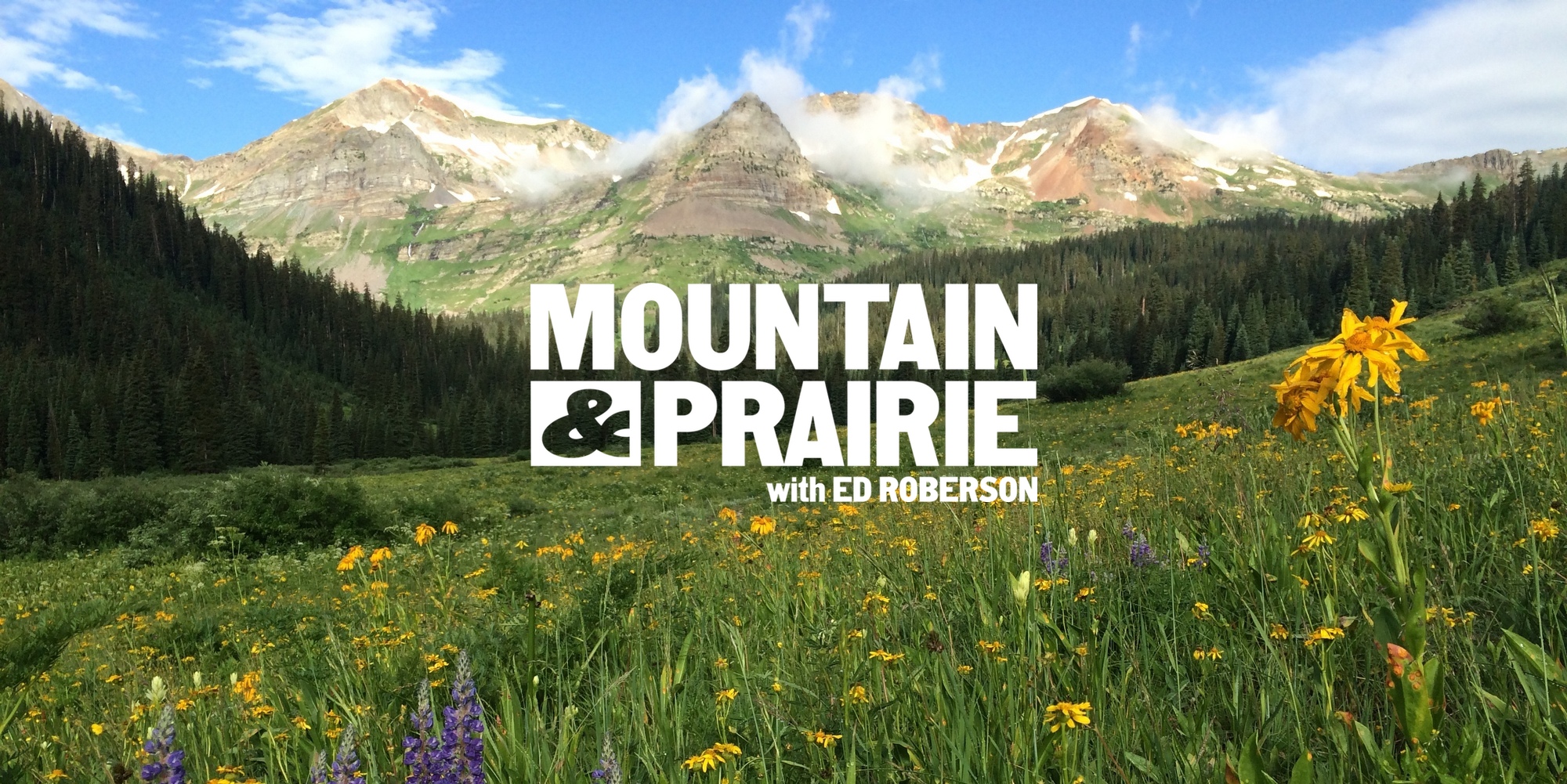
Photos courtesy of TNC: header © Ben Herndon, inset courtesy of River Newe
LISTEN & DOWNLOAD:
Apple Podcasts
Spotify
…or wherever you get your podcasts!
EPISODE PARTNER:

This episode is brought to you in partnership with the Colorado chapter of The Nature Conservancy and TNC chapters throughout the Western United States. Guided by science and grounded by decades of collaborative partnerships, The Nature Conservancy has a long-standing legacy of achieving lasting results to create a world where nature and people thrive.
During the last week of every month throughout 2025, Mountain & Prairie will be delving into conversations with a wide range of The Nature Conservancy’s leaders, partners, collaborators, and stakeholders, highlighting the myriad of conservation challenges, opportunities, and solutions here in the American West and beyond. You can access all of the episodes here.
To learn more about The Nature Conservancy’s impactful work in the West and around the world, visit www.nature.org
RESOURCES:
Topics Discussed:
- 3:00 – Intro, where and how Sammy grew up
- 10:03 – Sammy’s decision to join the military
- 15:34 – Readjusting to home
- 20:48 – What helps heal
- 24:58 – Sammy’s academic journey
- 32:12 – Salmon work
- 39:09 – Entry into TNC
- 43:55 – Salmon restoration as a healing journey
- 50:09 – Layers of the job
- 57:31 – Book recs
- 1:01:18 – Wrapping up
Information Referenced:
- Sammy Matsaw Jr.
- Shoshone-Bannock Tribes
- Indigenous people in the Vietnam War
- Columbia River Basin program
- River of Return, a film featuring Sammy and his wife, Jessica
- River Newe, Sammy and Jessica’s organization
- Book recs: How It Is: The Native American Philosophy of V. F. Cordova, King of Fish, Black Elk Speaks
Enjoy this episode? Then you might like these too:
- Elliot Ross: Where Landscape, Justice, and Storytelling Meet
- Helen Augare Carlson & Dylan DesRosier – Land, Language, and Stewardship in the Blackfeet Nation
- Mauricia Baca – An Empathetic Approach to Nevada’s Conservation Challenges
- Beatriz Soto – Bridging Cultural Divides & Building Equitable Communities
- Celene Hawkins & Izabella Ruffino – Tribal Partnerships, Indigenous Voices, Cutting-Edge Conservation
- Rebecca Clarren – “The Cost of Free Land”
- Lorelei Cloud – Solving Modern-Day Challenges with Ancient Tribal Wisdom
Visit the podcast page for a full list of episodes where you can filter episodes by topic and guests’ vocations.

Ed’s Appearance on “My Favorite Things”


Today’s episode is a bit of a departure from the usual format: I’m re-sharing a recent conversation I had on my friend Brendan Leonard’s new podcast, My Favorite Things. I’m sure most of yall are already familiar with Brendan’s work, but for those of you who aren’t, he’s an author, illustrator, filmmaker, and creator of Semi-Rad.
Brendan’s new podcast is built around a simple but fascinating premise: conversations about the books, films, art, and creative works that have helped shape a person’s life and career.
In this conversation, we spend less time on what I do, and more time on what’s influenced how I think and live — from Theodore Roosevelt and Sebastian Junger to a Winslow Homer painting and a movie that’s been oddly entertaining and instructive over the years. (I bet y’all can guess the movie.)
There are already several excellent episodes live featuring thoughtful, interesting people, and Brendan has created something both entertaining and instructive with this podcast. If you enjoy this conversation, I’d encourage you to subscribe, explore the rest of the episodes, and share the show with any of your friends who might enjoy it.Thanks so much for listening and here’s my appearance on My Favorite Things.
Ed’s Favorite Things:
- 1. Liner notes from Jimmy Buffett’s 1990s albums
- 2. The Rise of Theodore Roosevelt by Edmund Morris: Publisher’s page | Bookshop | Amazon
- 3. The Gulf Stream by Winslow Homer
- 4. Tribe by Sebastian Junger: Publisher’s page | Bookshop | Amazon
- 5. Road House (the original)
- Other things we mentioned:
- Jack Johnson’s cover of Jimmy Buffett’s A Pirate Looks at Forty
- The Rewatchables Road House episode
LISTEN & DOWNLOAD:
Apple Podcasts
Spotify
… or wherever you get your podcasts!
—
RESOURCES:
Topics Discussed:
- 2:10: Background — Mountain & Prairie, family, and the “strenuous life”
- 5:00: Favorite Thing #1 — Jimmy Buffett liner notes
- 11:30: Favorite Thing #2 — The Rise of Theodore Roosevelt
- 20:00: Favorite Thing #3 — Winslow Homer’s The Gulf Stream
- 28:15: Favorite Thing #4 — Tribe by Sebastian Junger
- 39:30: Favorite Thing #5 — Road House
- 52:15: Closing reflections
Enjoy this episode? Then you might like these too:
- Yvon Chouinard – The Perpetual Pursuit of Simplicity
- Nick Offerman – Empathy, Nuance, & Good Hard Work
- Kristine Tompkins – Nothing to Lose
- Hampton Sides Returns: The Wild and Tragic Tale of Captain James Cook
- Douglas Brinkley – Exploring the Past to Find Inspiration for the Future
- Joe Schobert – From NFL Pro Bowler to Western Conservation Advocate
- Scott Hulet: Reading + Writing + Surfing + Fishing + Traveling
- George Hodgin Returns – On Risk-Taking, Leadership, and the Future of Cannabis
Visit the podcast page for a full, searchable list of episodes

Mike Schaedel – Restoring Balance to Fire-Adapted Landscapes


Mike Schaedel is the Western Montana Forest Restoration Director for The Nature Conservancy, where he leads some of the most ambitious and collaborative forest restoration work happening anywhere in the West. Based in Missoula, Mike works at the intersection of science, community partnerships, and land stewardship—helping restore fire-adapted forests, reduce wildfire risk, and improve the health and resilience of landscapes across the region.
Mike’s career path is super interesting and anything but traditional. He grew up in Portland, fell in love with the mountains through rock climbing, and eventually landed in Missoula, where the combination of wild landscapes and a rich literary community drew him in. After earning an undergraduate degree in creative writing, he found his way into forestry and fire ecology through conservation corps work, hands-on restoration experience, and a graduate program focused on forest dynamics and fire.
In this conversation, Mike offers a clear overview of how Western Montana’s forests came to look the way they do today—shaped by millennia of tribal burning, transformed by railroad-era land grants and industrial logging, and altered further by a century of fire suppression. He explains why effective restoration now depends on combining mechanical thinning with prescribed fire and on working across ownership boundaries with partners ranging from local communities to tribes and federal agencies. We also discuss some of the innovative collaborative efforts underway in the region, as well as a memorable story of a prescribed burn that came together through quick problem-solving and deep trust.
This is a rich, informative, and hopeful conversation about what it takes to restore forests at scale—and why the future of these landscapes depends on both ecological understanding and strong community partnerships. Enjoy!
Photos courtesy of TNC: header © Steven Gnam, inset © Jeremy Roberts
LISTEN & DOWNLOAD:
Apple Podcasts
Spotify
…or wherever you get your podcasts!
EPISODE PARTNER:
This episode is brought to you in partnership with the Colorado chapter of The Nature Conservancy and TNC chapters throughout the Western United States. Guided by science and grounded by decades of collaborative partnerships, The Nature Conservancy has a long-standing legacy of achieving lasting results to create a world where nature and people thrive.
During the last week of every month throughout 2025, Mountain & Prairie will be delving into conversations with a wide range of The Nature Conservancy’s leaders, partners, collaborators, and stakeholders, highlighting the myriad of conservation challenges, opportunities, and solutions here in the American West and beyond. You can access all of the episodes here.
To learn more about The Nature Conservancy’s impactful work in the West and around the world, visit www.nature.org
RESOURCES:
Topics Discussed:
- 3:02 – Intro, Mike’s love for Missoula
- 6:04 – Getting a creative writing degree
- 8:21 – And fighting back into forestry
- 12:26 – Early writing influences
- 13:39 – Switching sides of the brain
- 15:32 – First job out of grad school
- 20:08 – And that work now
- 23:38 – Checkerboard landownership
- 33:04 – Conservation accomplishment
- 34:56 – Fitting in forest health
- 39:33 – Fire scars
- 45:52 – The Big Burn
- 52:59 – Fire playing a beneficial role
- 58:51 – And the role mill workers play
- 1:02:03 – Projects down the pipeline
- 1:12:00 – Book recs
- 1:13:49 – Parting words
Information Referenced:
- Michael Schaedel, Western Montana Forest Restoration Director
- Reserved Treaty Rights Lands Program: The Power of Partnership
- David James Duncan
- Gary Snyder
- Northwest Youth Core in Eugene, Oregon
- Montana Conservation Corps
- Dr. Andrew Larson at the University of Montana
- DJD on M&P
- Nick Triolo on M&P
- Thoreau and Emerson
- Beat poets
- TNC buying Plum Creek land in Montana’s Flathead Beacon
- Checkerboard landownership across the American West.
- A River Runs Through It, set in the Blackfoot Valley. (Norman Maclean had a cabin in Seeley Lake, Montana.)
- Blackfoot Challenge
- Montana Legacy Project
- The Big Burn by Timothy Egan
- Pyramid Lumber in Seeley Lake closing
- Book recs: Or, rather, a scientist rec: Steve Arno.
- Prescribed fire training camps hosted by TNC
Enjoy this episode? Then you might like these too:
- Kristine Tompkins – Nothing to Lose
- Carli Kierstead – Wyoming Forests and the Work of Keeping Water Flowing
- Celene Hawkins and Taylor Hawes – Navigating the Next Era of the Colorado River
- Rob Addington – A Deep Dive into Western Wildfires and Forest Health
- Matt Cahill – A Deep Dive into the Sagebrush Sea
- Chris Keyes – From Outside to RE:PUBLIC
- Yvon Chouinard – The Perpetual Pursuit of Simplicity
Visit the podcast page for a full list of episodes where you can filter episodes by topic and guests’ vocations.
SHED SESH: September & October 2025 Book Recommendations

This month marks ten full years of my Bimonthly Book Recommendations—a decade of weird little paragraphs about the books that grab my scattered attention. Whether you’ve been here since the beginning or signed up five minutes ago, thank you. I’m still baffled anyone reads these things, but I’m grateful all the same.
To mark the occasion, I recorded a late-night solo episode from The Shed, diving deeper into each of my September & October picks: why I chose them, what stayed with me, and the sometimes-unexpected lessons I gleaned from each of them. Or you could just describe it as a guy sitting in his garden shed talking to himself. Your choice.
You can read all of the recommendations below, or, if you’re clamoring to receive more emails, you can sign up for the list here:
Thanks for listening, thanks for reading, and here’s to 10 more great years of great books.
LISTEN & DOWNLOAD:
Apple Podcasts
Spotify
… or wherever you get your podcasts!
—
RESOURCES:
Books Discussed:
- 00:00 — Intro + 10 years of book-rec emails
- 05:45 — Burn by Peter Heller
- 11:00 — Jayber Crow by Wendell Berry (related rec)
- 11:45 — The Way Out by Devon O’Neil
- 17:10 — Simple Fly Fishing by Yvon Chouinard
- 21:50 — Pheasant Tail Simplicity by Yvon Chouinard
- 25:40 — Little Woodchucks by Nick Offerman
- 29:20 — Dirtbag Billionaire by David Gelles
- 35:00 — Shoe Dog by Phil Knight (related rec)
- 35:55 — Apple in China by Patrick McGee
- 40:45 — When McKinsey Comes to Town (related rec)
- 42:10 — The Devil’s Hand by Jack Carr
- 46:15 — Closing thoughts + how the book list began
The Book Recommendations:
Burn by Peter Heller – Back in the spring of 2019, I read Peter Heller’s The Dog Stars, which painted a way-too-vivid picture of life in Colorado after a global pandemic. I remember thinking, “Yeah, that’s pretty scary, but it could never happen.” Then one year later, in the spring of 2020, we all know what happened. When I finished Burn, an excellent-but-terrifying story of a violent societal uprising followed by the government’s brutal response, I thought, “Yeah, that’s scare and it could happen.” But I guess the sign of a good novel is that it actually makes you feel something, and, now, every time I make the mistake of looking at internet “news,” I think about Burn. As is the case with all of Heller’s novels, this one is action-packed, fast-paced, and full of memorable, flawed, complex characters. It’s a great read, and, for me at least, definitely worth the trade-off of a little extra anxiety. [If you want the opposite of anxiety, read Wendell Berry’s Jayber Crow.]
The Way Out: A True Story of Survival in the Heart of the Rockies by Devon O’Neil – If you listen to my podcast, then you’re already familiar with The Way Out. And if you’re a fan of Krakauer’s Into the Wild or Into Thin Air, or Junger’s The Perfect Storm, then you’ll love this book. It’s the story of a low-key backcountry ski trip gone horribly wrong, one epic survival story, one tragic death, and the tight-knit mountain community that has to come to grips with heartbreak and loss. This book is especially important for those of us who are drawn to adventure in wild places–and especially those of us who try to explain away the inherent risk that comes with spending time in potentially deadly environments. Devon was the perfect person to tell this story–the compassion and empathy he brings to his reporting is obvious, and his commitment to telling the story completely and fairly is a case study in responsible journalism. A very important book. [If you haven’t already, check out my conversation with Devon.]
Simple Fly Fishing and Pheasant Tail Simplicity by Yvon Chouinard, Craig Mathews, and Mauro Mazza – These two books (and the next one below) fall into the category of “You might think this is a book about X, but it’s actually about Y.” On the surface, these books seem to be about how to become a better fly fisherman–but not through buying a truckload of expensive gear or filling your vest with 2,000 fancy-looking flies. The authors, who are all more accomplished anglers than at least 99.99% of the people reading this email, insist that the secret to mastering the art of fly fishing is to SIMPLIFY. In the case of Simple Fly Fishing, throw away your reel. In the case of Pheasant Tail Simplicity, use only one type of fly. By applying constraints, embracing curiosity, and reducing the process to its purest essence, one can finally begin the journey of becoming a master. And whaddaya know, this idea of embracing simplicity can also be applied to all parts of our lives: from work to play, creative endeavors to interpersonal relationships. As society becomes increasingly complicated, the idea of simplification becomes increasingly attractive. [I had the great pleasure of chatting with Yvon Chouinard about simplicity in fishing and life–full of laughs, full of wisdom.]
Little Woodchucks: Offerman Woodshop’s Guide to Tools and Tomfoolery by Nick Offerman with Lee Buchanan – On the surface, this is a fun, funny, photo-filled instruction manual for teaching kids how to build things from wood, by hand. Nick covers everything from choosing your tools, to setting up your workspace, to completing 12 different projects, including a box kite, a little free library, and a toy truck. It’s real fun–the kind of rewarding undertaking that lets children use their brains, learn a skill, and create a real-world, tactile object that they can hold in their hands. But when you dig a little deeper, Little Woodchucks is about rejecting the brain-rotting pull of the internet, shunning the hypnotic pull of social media, and working alongside like-minded people to create useful, pride-inducing keepsakes. In my humble opinion, no matter our age, we will probably all benefit from a little less swiping and more real-world craftsmanship. (If you’re a bigger woodchuck who’s looking for more advanced projects and fun/wise Offerman-esque philosophy, check out Nick’s Good Clean Fun.]
Dirtbag Billionaire: How Yvon Chouinard Built Patagonia, Made a Fortune, and Gave It All Away by David Gelles – Even though I’d spent the past 20 years reading and watching pretty much everything about Yvon Chouinard and Patagonia, I learned a ton from this biography. Gelles is an accomplished New York Times journalist who, after ripping Jack Welch to shreds, turned his attention to Chouinard. (Spoiler alert: He seems to admire Yvon a lot more than Jack.) Gelles chronicles Chouinard’s life from rambunctious youngster to climbing icon to business innovator to super philanthropist who, in 2022, gave his multi-billion-dollar company away. While I loved the insights into Chouinard’s personality and vision, I especially enjoyed learning more about his colleagues and teammates who played invaluable roles in Patagonia’s success, particularly Kris Tompkins. Gelles paints a fair picture of the entire Patagonia enterprise, exploring the contradictions and paradoxes of building a high-impact consumer goods company that is also real-deal committed to making the world a better place. A good reminder that nothing is straightforward, everything is nuanced, and the most interesting people are complex. [The ethos of Nike founder Phil Knight couldn’t be further from Yvon’s, but Knight’s memoir Shoe Dog is one of my all-time favorite business memoirs.]
Apple in China: The Capture of the World’s Greatest Company by Patrick McGee – Back when I was in business school, my least favorite subject, hands down, was operations. Endless yammering about factories, assembly lines, “lean manufacturing,” “Six Sigma black belts,” and a bunch of other lingo that my brain seemed violently allergic to. So I was quite surprised to find myself completely engrossed by a 400+-page book about the global supply chain that produces iPhones. But seriously… it was fascinating. And at times… infuriating. The quick summary is that a small number of Chinese manufacturers patiently and ingeniously built a system that all but forced Apple to not only hire them to assemble its products, but also to build its factories, train its workers, and inject billions and billions of dollars of economic stimulus into the Chinese economy. And over the course of three or four decades, China grew into the economic and political powerhouse that it is today. Now that it’s finished helping China, perhaps Apple can figure out a way to inject a few hundred billion into its home country’s public schools and/or healthcare system. [Another head-spinning business book that I think of often is When McKinsey Comes to Town by Walt Bogdanich and Michael Forsythe.]
The Devil’s Hand by Jack Carr – You have probably noticed that Jack Carr novels have a seemingly permanent position in my book recommendations. This will continue until I have read them all. They’re not for everyone, but if you like movies like (or YouTube clips from) Rambo, Commando, Man on Fire, Taken, John Wick, The Equalizer, Bourne Identity, etc., I can guarantee you’ll love these books. [For a thoroughly hilarious take on the best of this type of movie, read Pain Don’t Hurt: 365 Meditations on Road House by Sean T. Collins. It’s a masterpiece.]
Enjoy this episode? Then you might like these too:
- Helen Rebanks – “The Farmer’s Wife” – Live at the Old Salt Festival
- Douglas Brinkley – Exploring the Past to Find Inspiration for the Future
- Yvon Chouinard – The Perpetual Pursuit of Simplicity
- Nicholas Triolo – What the Circuitous Path Reveals
- Cassidy Randall – The Untold Story of Denali’s First All-Women’s Ascent
- Scott Hulet: Reading + Writing + Surfing + Fishing + Traveling
- Mark Easter – Food, Soil, and Our Planet’s Future
- Kevin Grange – The Secret Lives of Grizzlies
Visit the podcast page for a full, searchable list of episodes
Devon O’Neil — On Nature’s Power and the Price of Adventure


Devon O’Neil is a journalist, author, and longtime friend of mine whose new book The Way Out: A True Story of Survival in the Heart of the Rockies is one of the best pieces of outdoor nonfiction I’ve read in years. The book tells the harrowing true story of a backcountry ski trip near Leadville, Colorado, that turned tragic—and the years-long process of understanding what really happened, and how a mountain town wrestled with loss, resilience, and the complicated relationship we all have with risk and wild places. It’s gripping, deeply reported, and beautifully written—equal parts survival epic, community portrait, and meditation on how we find meaning in the aftermath of tragedy.

Devon has spent more than two decades as a writer and reporter based in Summit County, Colorado, covering everything from adventure sports and avalanches to the cultural and emotional undercurrents of life in mountain towns. Before turning his attention to this book project, he worked in newspapers, wrote for Outside, Men’s Journal, and ESPN.com, and somehow managed to balance all of that with being a hardcore athlete and a dedicated dad and husband. He’s one of those rare writers whose empathy and endurance match the people that he writes about.
In this conversation, Devon and I dig into the story behind The Way Out—how he first heard about the tragedy, earned the trust of a close-knit community, and spent years piecing together a complete and compassionate account. We talk about the ethical tightrope of telling other people’s hardest stories, how his own brushes with danger shaped his perspective on risk, and what this project taught him about the fine line between adventure and recklessness. We also get into his childhood growing up on a sailboat in the Virgin Islands, his evolution as a journalist and athlete, and the hard-earned wisdom that comes from spending a lifetime chasing stories in the mountains.
The Way Out is available now wherever you get your books, so follow the links here to grab your copy. Big thanks to Devon for the chat, and thank you for listening. Enjoy!
—
Photos courtesy of Devon O’Neil
LISTEN & DOWNLOAD:
Apple Podcasts
Spotify
… or wherever you get your podcasts!
—
RESOURCES:
Topics Discussed:
- 2:23 – Intro and finding The Way Out story
- 6:59 – Making people comfortable
- 11:10 – The story in Devon’s words
- 16:29 – Mountain town people
- 20:48 – Lifestyle overlaps
- 24:20 – Devon’s own accidents
- 30:10 – It’s all great until someone gets hurt
- 33:03 – The bonds of risk
- 35:18 – Adjustments
- 39:22 – Growing up on islands
- 43:43 – How Devon got to Colorado
- 47:34 – Pros and cons of different types of writing
- 51:22 – Book writing advice
- 55:42 – Not just about getting it right
- 1:00:09 – Book and writer recs
Information Referenced:
- Devon O’Neil
- The Way Out: A True Story of Survival in the Heart of the Rockies by Devon O’Neil
- Silverton Avalanche School death, Devon’s story and one from The Colorado Sun
- 10th Mountain Division Huts
- Salida, Colorado
- Into Thin Air, The Perfect Storm
- Writer recs: Bill Gifford, Ted Conover, Hampton Sides, Mark Jenkins, Abe Streep, Hunter S. Thompson
- Book recs: Into the Wild, Hell’s Angels
Enjoy this episode? Then you might like these too:
- Yvon Chouinard – The Perpetual Pursuit of Simplicity
- Chris Keyes – From Outside to RE:PUBLIC
- Nicholas Triolo – What the Circuitous Path Reveals
- Helen Rebanks – “The Farmer’s Wife” – Live at the Old Salt Festival
- Cassidy Randall – The Untold Story of Denali’s First All-Women’s Ascent
- Scott Hulet: Reading + Writing + Surfing + Fishing + Traveling
- Mark Easter – Food, Soil, and Our Planet’s Future
- Kevin Grange – The Secret Lives of Grizzlies
Visit the podcast page for a full, searchable list of episodes
Carli Kierstead – Wyoming Forests and the Work of Keeping Water Flowing


Carli Kierstead is the Forest Program Director for The Nature Conservancy in Wyoming, where she leads efforts to understand and restore some of the West’s most critical—and often overlooked—ecosystems. From beetle kill and wildfire to drought, Wyoming’s forests face a range of challenges that ripple far beyond the state’s borders. These high-country forests are the headwaters of several major river basins, providing water to millions of people across the American West.
In this conversation, Carli and I dig into the past, present, and future of Western forests—how management philosophies have evolved over the decades, what’s threatening their health today, and what can be done to make them more resilient in a changing climate. We talk about her team’s groundbreaking work using snowtography—a deceptively simple but powerful way to study how forest structure affects snowpack and water supply—and how those findings could help guide future restoration across the Colorado River Basin.
Carli also shares her personal journey from growing up in San Diego to finding her calling in Wyoming’s wide-open landscapes, her insights on collaboration and trust-building in conservation, and a few book recommendations that shaped her path. It’s a hopeful, science-grounded conversation about water, forests, and how collaboration can shape a more resilient future for the West.
Thanks for listening, hope you enjoy!
Both photos by Drew Bennett Photo, courtesy of TNC
LISTEN & DOWNLOAD:
Apple Podcasts
Spotify
…or wherever you get your podcasts!
EPISODE PARTNER:
This episode is brought to you in partnership with the Colorado chapter of The Nature Conservancy and TNC chapters throughout the Western United States. Guided by science and grounded by decades of collaborative partnerships, The Nature Conservancy has a long-standing legacy of achieving lasting results to create a world where nature and people thrive.
During the last week of every month throughout 2025, Mountain & Prairie will be delving into conversations with a wide range of The Nature Conservancy’s leaders, partners, collaborators, and stakeholders, highlighting the myriad of conservation challenges, opportunities, and solutions here in the American West and beyond. You can access all of the episodes here.
To learn more about The Nature Conservancy’s impactful work in the West and around the world, visit www.nature.org
RESOURCES:
Topics Discussed:
- 2:34 – Intro and Wyoming forest health
- 7:16 – Beetle issues
- 8:30 – Why forest health?
- 12:35 – Economic benefit of forests
- 16:28 – Wyoming’s claim to water
- 17:10 – Snowtography
- 23:18 – Lessons from the snow
- 27:33 – On the ground impact
- 33:53 – How it scales
- 40:42 – Relationship building
- 46:08 – The tendrils of the Colorado River Basin
- 46:46 – Carli’s environment obsession
- 52:01 – How to build a relationship
- 55:10 – Book recs
- 58:38 – Last thoughts
Information Referenced:
- Carli Kierstead, Forest Program Director at The Nature Conservancy in Wyoming
- Wyoming forests + TNC
- Snowtography short film
- Forests for Freshwater factsheet
- The Big Burn
- Snowtography
- Carli’s book recs: The Solace of Open Spaces, Finding the Mother Tree
Enjoy this episode? Then you might like these too:
- Rob Addington – A Deep Dive into Western Wildfires and Forest Health
- Kristine Tompkins – Nothing to Lose
- Matt Cahill – A Deep Dive into the Sagebrush Sea
- Paul Hendricks – The Conservation Alliance and the Future of Public Lands
- Chris Keyes – From Outside to RE:PUBLIC
- Celene Hawkins and Taylor Hawes – Navigating the Next Era of the Colorado River
Visit the podcast page for a full list of episodes where you can filter episodes by topic and guests’ vocations.
Bex Frucht — Story Wrangler! Vibe Steward! One of a Kind!


Bex Frucht is a force of nature—a storyteller and community builder whose work blends performance, land, and small-town life in the American West. Based in Livingston, Montana, she’s the founder of TMI Live, a storytelling series that celebrates vulnerability, humor, and human connection, and for the past three years, she’s been the “vibe steward” of the Old Salt Festival, where her talent for bringing people together has become legendary. Whether she’s hosting a show, coaching storytellers, or emceeing a fundraiser, Bex radiates generosity, intelligence, and positivity in a way that elevates every room she’s in.
Like so many of my favorite people, her career path is as winding as it is fascinating: a Morehead-Cain Scholar at UNC Chapel Hill, she spent her early years in media and entertainment in New York and Los Angeles, then pivoted to environmental work before landing on a ranch in Colorado to learn about land stewardship from the ground up. Those years on the prairie, combined with her creative life in cities and her Southern roots, helped hone her rare ability to connect seemingly opposite worlds—artists and ranchers, movie stars and cowboys, locals and newcomers—through the shared power of story.
In this conversation recorded at her home in Livingston, we trace her inspiring journey and talk about the lessons she’s learned along the way: what it means to find your authentic voice, how storytelling can build bridges across divides, and why embracing your weirdness can be the key to a meaningful life. It’s a funny, authentic conversation that’s as instructive as it is entertaining. For anyone who’s ever wondered how to forge their own path, live creatively, and stay grounded in community, this episode is for you.
Be sure to check out the episode notes below for a full list of all the topics we discussed and links to everything. And give Bex a follow on Instagram to stay in the loop about her upcoming storytelling shows and appearances in Montana and beyond.
A big thanks to Bex for her friendship, encouragement, inspiration, and this conversation. And thank you for listening.
—
Header photo by the great Kyle Joe Turner, inset courtesy of the Old Salt Festival
LISTEN & DOWNLOAD:
Apple Podcasts
Spotify
… or wherever you get your podcasts!
—
RESOURCES:
Topics Discussed:
- 2:29 – Intro, where Bex grew up and how she got West
- 10:40 – Grade stress
- 14:21 – Being yourself so others can be themselves
- 16:11 – How Bex changed after college
- 24:11 – Lawyer land ethic to MTV
- 27:27 – NYC love
- 28:32 – LA freelancing and leaving MTV
- 32:49 – Live storytelling
- 37:24 – Oversharing is caring
- 42:54 – Starting with the person and Bex’s views on food systems
- 47:31 – It’s all messy
- 54:19 – Lessons from the ranch
- 1:00:44 – Vibe steward
- 1:03:52 – Bex’s job in Livingston
- 1:10:11 – Creatives and cowboys
- 1:19:30 – Relationship currency
- 1:24:39 – Valuing creatives
- 1:27:57 – Book recs
Information Referenced:
- Bex on Instagram
- Bex on LinkedIn
- Bex’s Seven Talk
- Julie of the Wolves, Bex’s connection to wolves
- Morehead-Cain scholarship
- Outward Bound program
- Glenna Patton, MTV
- The Moth
- Bill Ratner, Bex’s story telling fairy godfather
- Old Salt Co-op
- Chico Basin Ranch
- M&P episode from Old Salt, talking about meat supply chains with an introduction from Bex, in 2023.
- Last Best Comedy club in Bozeman
- Article about TMI Live
- Ed’s live in Bozeman event
- Book recs: Women Who Run with the Wolves
Enjoy this episode? Then you might like these too:
- Nick Offerman – Empathy, Nuance, & Good Hard Work
- George Hodgin Returns – On Risk-Taking, Leadership, and the Future of Cannabis
- Helen Rebanks – “The Farmer’s Wife” – Live at the Old Salt Festival
- Rick Wittenbraker – Humility, Generosity, and Building One-of-a-Kind Brands
- Logan Maxwell Hagege Returns – On Taking Action & Finding Balance
- Joe Schobert – From NFL Pro Bowler to Western Conservation Advocate
- Scott Hulet: Reading + Writing + Surfing + Fishing + Traveling
- Nicole Qualtieri – Charting a New Course in the Changing Landscape of Outdoor Media
- Betsy Gaines Quammen Returns – Myths, Curiosity, and Human Connection (Live at the Old Salt Festival)
Visit the podcast page for a full, searchable list of episodes
Yvon Chouinard – The Perpetual Pursuit of Simplicity


Yvon Chouinard needs no introduction. The founder of Patagonia, pioneer of clean climbing, co-founder of 1% for the Planet, and lifelong advocate for simplicity and wildness, he’s one of the world’s most influential environmental leaders. Now in his mid-80s, Yvon continues to live, work, and fish by the same principles that have guided him since his dirtbag climbing days: live simply, take responsibility for your impact, and keep finding meaning through deep, direct engagement with nature.
His newest book, Pheasant Tail Simplicity: Recipes and Techniques for Successful Fly Fishing, distills those philosophies into one of his lifelong passions—fly fishing. Co-authored with his longtime fishing buddies Craig Mathews and Mauro Mazzo, Pheasant Tail Simplicity begins as a guide to tying and fishing with only pheasant-tail flies, and becomes a case study in creativity, restraint, and how simplifying our pursuits can reconnect us to what really matters. You don’t have to be a hardcore angler to glean important lessons from the book—its insights can be applied to almost any part of life.

In this conversation, Yvon and I start out talking about fly fishing, of course—but we quickly veer into broader terrain: how constraints can become a path to freedom, how business can be a demonstration of ethics, and how pessimism can serve as a productive form of realism. He shares a ton of amazing stories—learning to fish with a tenkara master in Italy, teaching Crow Reservation children to fly fish, founding 1% for the Planet, why rebellious personalities make the best entrepreneurs, his love of regenerative agriculture, and why he still believes that action—no matter how small—is the cure for depression. It’s a wide-ranging, funny, and wise discussion with someone who’s spent a lifetime proving that the process is far more important than the outcome.
During our conversation, you’ll hear us reference several of Patagonia’s pioneers—Kris Tompkins, Rick Ridgeway, and Vincent Stanley—all of whom I’ve interviewed here on Mountain & Prairie. If you’d like to listen to those episodes or check out their books, click the links above.
A huge thank-you to Patagonia, Patagonia Books, Patagonia Fly Fishing, and of course Yvon for the opportunity to have this conversation. Like many of you listeners, I’ve been deeply influenced by Yvon’s work and worldview, so it was a dream come true to sit down with him for a long, relaxed conversation.
Be sure to check out Pheasant Tail Simplicity and the many other excellent titles from Patagonia Books. Thanks so much for listening—I hope you enjoy.
—
Photos courtesy of Patagonia: Header by Rich Crowder, inset by Stephanie Ridge
LISTEN & DOWNLOAD:
Apple Podcasts
Spotify
… or wherever you get your podcasts!
—
RESOURCES:
Topics Discussed:
- 2:50 – Intro, the blind fisherman in Labrador
- 5:37 – Why another book about flyfishing?
- 8:26 – The story of a Japanese tenkara rod
- 13:00 – It’s the action that counts
- 16:03 – Democratic fly fishing
- 17:37 – Fishing emergers
- 19:45 – No shortcuts
- 25:12 – Simplifying sports
- 26:30 – Seeking constraints
- 29:06 – Juvenile delinquent energy
- 31:46 – A bug’s life
- 36:05 – Origins of 1% for the Planet
- 40:16 – Yvon’s regenerative ag interest
- 44:15 – Fighting climate change with market forces
- 46:36 – A happy pessimist
- 48:34 – Fly fishing forever
- 53:47 – Action as the anecdote to depression
Information Referenced:
- Pheasant Tail Simplicity: Recipes and Techniques for Successful Fly Fishing by Yvon Chouinard, Craig Mathews, and Mauro Mazzo
- Monte Burke
- Monte Burke on M&P
- Simple Fly Fishing by Yvon, Craig, and Mauro
- Tenkara rod, the Japanese rod Yvon talked about.
- Greased Line Fishing for Salmon
- 180 South, a movie Yvon contributed to with the tagline: “It’s not an adventure until something goes wrong.”
- Kate Williams on M&P, 1% for the Planet
- Craig Mathew’s fly shop in West Yellowstone
- Dan O’Brien’s Buffalo for the Broken Heart
- The Blue Plate by Mark Easter
- Mark Easter’s M&P podcast
Enjoy this episode? Then you might like these too:
- Paul Hendricks – The Conservation Alliance and the Future of Public Lands
- Adam Cramer – Fighting for the Future of Public Lands
- Kris Tompkins – Nothing to Lose
- Kate Williams – Leadership Lessons from the CEO of 1% for the Planet
- Rick Ridgeway – Purpose-Driven Adventurer
- Nick Offerman – Empathy, Nuance, & Good Hard Work
- James Prosek – Art, Philosophy, & Our Natural World
- Vincent Stanley – Lessons Learned from Patagonia’s First Fifty Years
Visit the podcast page for a full, searchable list of episodes
Chris Keyes – From Outside to RE:PUBLIC


Chris Keyes is the Executive Director of RE:PUBLIC and the former longtime Editor in Chief of Outside magazine. During his decades-long career in journalism, Chris helped guide Outside through some of its most iconic years—publishing award-winning stories, mentoring top writers, and keeping the magazine’s adventurous spirit alive in an era of massive change across the media landscape. Earlier this year, after leaving Outside, he launched RE:PUBLIC, a new nonprofit newsroom dedicated to one of his lifelong passions: America’s public lands.
RE:PUBLIC was created to fill a growing gap in environmental journalism. At a time when newsroom budgets are shrinking and coverage of conservation and land management issues has nearly disappeared, Chris saw an opportunity to build a publication focused entirely on public lands—how they’re managed, who uses them, and why they matter. Structured as a nonprofit, RE:PUBLIC will publish deeply reported, narrative-driven stories that reach across political lines and help readers better understand the forces shaping the landscapes we all share.
In this episode, we talk about what inspired Chris to start RE:PUBLIC, why public lands deserve more consistent and credible coverage, and how he’s building a business model that protects editorial independence. We also discuss his years at Outside, the changing nature of journalism, the challenges of freelance writing, and why great storytelling still has the power to cut through the noise and connect people to big ideas.
Don’t forget to sign up for RE:PUBLIC’s free newsletter!!
Big thanks to Chris for the fun conversation, and thank you for listening.
—
Photos courtesy of Chris Keyes
LISTEN & DOWNLOAD:
Apple Podcasts
Spotify
… or wherever you get your podcasts!
—
RESOURCES:
Topics Discussed:
- 2:00 – Intro, two comments and a question
- 6:08 – From Outside to RE:PUBLIC
- 10:57 – Public lands in the mainstream
- 13:12 – Nonprofit model
- 18:41 – Preaching to the choir
- 24:11 – Managing conflict as a people pleaser
- 29:17 – Journalism institutions and its role today
- 33:20 – Where it’s all going
- 39:41 – The editing hierarchy
- 44:27 – How Chris discovered Outside
- 49:46 – Adding in some personal connection
- 51:52 – The plan at Duke
- 57:09 – Book recs
- 1:00:20 – Wrapping up
Information Referenced:
- LinkedIn post launching RE:PUBLIC
- RE:PUBLIC and the founder’s note
- Texas Tribune
- ProPublica’s coverage of Sen. Lee’s public lands sell-off bill.
- Floyd Landis
- Chris’s independent writers recs: Matthew Yglesias, Bill McKibben. (Producer’s recs: Kylie Mohr and John Stember.)
- Sign up for the RE:PUBLIC newsletter here.
- Texas Monthly
- Hampton Sides
- Nicholas Kristof on the creative process and his NYT columns.
- Book recs: The Snow Leopard and Killing Mister Watson by Peter Matthiessen
Enjoy this episode? Then you might like these too:
- Paul Hendricks – The Conservation Alliance and the Future of Public Lands
- Adam Cramer – Fighting for the Future of Public Lands
- Hal Herring Returns – Live at the Old Salt Festival
- Kristine Tompkins – Nothing to Lose
- Kate Williams – Leadership Lessons from the CEO of 1% for the Planet
- Rick Ridgeway – Purpose-Driven Adventurer
- Ivan McClellan Returns – From Behind the Lens to Center of the Arena
Visit the podcast page for a full, searchable list of episodes
Brad Johnson – Building Trust and Soil Health


Brad Johnson is the Senior Regenerative Agriculture Advisor for The Nature Conservancy, where he helps farmers across Idaho and beyond explore new ways of working the land that build healthier soils, stronger operations, and more resilient communities. Brad’s path into this work is deeply personal—he grew up on a multi-generational farm in northern Idaho, where as a teenager he saw firsthand how no-till practices could dramatically reduce erosion on the steep, fertile hills of his family’s farm. That early “aha moment” set him on a winding path through farming, ranching, research, and even a stint in agricultural sales, before eventually joining TNC in 2019.
In this conversation, Brad and I dig into the practical realities of regenerative agriculture—what it looks like on the ground, why it’s both promising and challenging to scale, and how trust and relationships are every bit as important as science and technology. He shares stories from TNC’s demonstration farms, where producers are experimenting with new biological practices that reduce reliance on fungicides and pesticides, and from high school programs where the next generation of Idaho farmers are already putting regenerative methods into practice.
Brad’s perspective is grounded in lived experience and a genuine respect for the farmers he works with. Whether you’re deep in the ag world or simply curious about how food systems can adapt to a changing climate, this episode offers a clear, hopeful look at what’s possible when conservation and agriculture work hand in hand.
—
Both photos by Neil Crescenti/TNC
LISTEN & DOWNLOAD:
Apple Podcasts
Spotify
…or wherever you get your podcasts!
EPISODE PARTNER:
This episode is brought to you in partnership with the Colorado chapter of The Nature Conservancy and TNC chapters throughout the Western United States. Guided by science and grounded by decades of collaborative partnerships, The Nature Conservancy has a long-standing legacy of achieving lasting results to create a world where nature and people thrive.
During the last week of every month throughout 2025, Mountain & Prairie will be delving into conversations with a wide range of The Nature Conservancy’s leaders, partners, collaborators, and stakeholders, highlighting the myriad of conservation challenges, opportunities, and solutions here in the American West and beyond. You can access all of the episodes here.
To learn more about The Nature Conservancy’s impactful work in the West and around the world, visit www.nature.org
RESOURCES:
Topics Discussed:
- 2:47 – Intro, 100 years in Idaho
- 4:52 – Bluegrass sod and Idaho’s land
- 6:53 – No-till drill
- 9:43 – Buying into no-till
- 10:54 – From no-till to regenerative
- 11:40 – Brad’s farmer life pre-TNC
- 14:45 – The TNC introduction
- 18:46 – Roadblocks to switching to regenerative
- 20:52 – Examples of regenerative farms
- 22:54 – Spray to no-spray
- 28:05 – Another regeneration demonstration farm
- 31:04 – Success stories
- 33:27 – Working with a high school
- 36:34 – Scalability
- 39:32 – Building trust
- 41:09 – Looking forward and first steps
- 43:57 – Podcast recs
- 45:43 – Wrapping up
Information Referenced:
- Brad Johnson
- Regenerative agriculture in Idaho, including the demonstration farms Brad talks about.
- Calibrated Agronomy, Jared’s YouTube channel
- The Spud Drive-In Theatre update from Teton Valley News
- Mark Easter on M&P
- The Regenerative Agriculture Podcast
Enjoy this episode? Then you might like these too:
- Live from SXSW – Farmer-Founded Brands Will Save American Fashion
- Helen Rebanks – “The Farmer’s Wife” – Live at the Old Salt Festival
- Matt Cahill – A Deep Dive into the Sagebrush Sea
- Matt Moorhead & Galen Guerrero-Murphy – Grasslands Conservation on the Southern High Plains
- Rob Addington – A Deep Dive into Western Wildfires and Forest Health
- Kristine Tompkins – Nothing to Lose
- Sean Claffey – A Resilient Vision for Sagebrush Country
Visit the podcast page for a full list of episodes where you can filter episodes by topic and guests’ vocations.
Paul Hendricks – The Conservation Alliance and the Future of Public Lands


Paul Hendricks is the Executive Director of The Conservation Alliance, a coalition of more than 270 businesses working together to protect wild places across North America. Founded nearly four decades ago by Patagonia, REI, The North Face, and Kelty, The Conservation Alliance has grown into one of the most important forces in conservation—pooling dollars, influence, and a collective business voice to support grassroots campaigns that keep public lands and waters healthy for generations to come. At a time when those places are under constant pressure, The Conservation Alliance is showing that businesses don’t have to sit on the sidelines—they can be a powerful part of the solution.
Paul’s own path to this role winds through some of the most interesting corners of the conservation and environmental worlds. After earning a few advanced degrees, he started at Global Greengrants Fund, working with grassroots activists around the globe. He then joined Patagonia’s legendary environmental team, where he learned firsthand how a company can weave values into every decision. From there, he helped build sustainability programs at Rivian, tackling the climate footprint of a car company from the inside. And woven through all of that is a through-line of humility, service, and adventure.
In this conversation, Paul and I talk about the roots of his love for the outdoors, the mentors and lessons that shaped his career, and what it’s like to step into the hot seat as a first-time executive director. We dig into The Conservation Alliance’s mission and why business advocacy matters, the current threats facing public lands, and how Paul stays grounded in turbulent times. We also talk about family, leadership, failure, and why hope is not just possible but necessary. It’s a candid, thoughtful conversation with someone who’s not only shaping the future of conservation, but doing it with humility, persistence, and just enough humor to keep it human.
I’ve had the privilege of knowing Paul for almost 15 years–we met when he first moved to Colorado, became running and climbing partners, and have logged more hours together in the mountains and had more meaningful conversations than I can count. Watching him grow into this role has been inspiring, both for the positions he’s held and for the way he’s carried himself along the way.
—
Photos courtesy of Paul Hendricks
LISTEN & DOWNLOAD:
Apple Podcasts
Spotify
… or wherever you get your podcasts!
—
RESOURCES:
Topics Discussed:
- 2:37 – Intro, Ed’s one running partner
- 4:03 – How the outdoors has shaped Paul’s career
- 6:48 – Plan post-college
- 12:41 – Sunk-cost fallacy
- 14:22 – Global Greengrants Fund
- 17:05 – Learning from Rick Ridgeway
- 20:23 – Lessons from Patagonia
- 24:25 – Ready for a new challenge
- 30:00 – Laid off at Rivian
- 36:02 – Being in charge
- 38:01 – The Conservation Alliance history
- 43:07 – TCA within public lands threats
- 48:58 – What’s missing from the public lands story?
- 51:49 – Paul’s role as a leader
- 56:14 – Role models
- 59:04 – Getting outdoors now
- 1:01:10 – Book recs
- 1:03:09 – 1% for the Planet collab
- 1:05:14 – Wrapping up
Information Referenced:
- Paul Hendricks
- The Conservation Alliance
- Alpinist magazine
- Sierra Trading Post magazine, originally with hand-drawn images for the items for sale.
- Backpacker magazine (The Outside version)
- Various books by Yvon Chouinard
- Global Greengrants Fund
- Rick Ridgeway on M&P
- Nick Saban (college football) on process over product
- Stoicism
- Vincent Stanley on M&P
- Rivian’s climate commitments
- Think Again
- Adam Cramer on M&P
- Protecting America’s Outdoors
- Roadless Rule changes
- Colorado College’s public lands sentiment poll, “State of the Rockies”
- Jocko Willink’s podcast, former Navy SEAL
- Extreme Ownership
- Book recs: Live Lived Wild, Leaders Eat Last, American Wolf
- 1% for the Planet M&P episode
Enjoy this episode? Then you might like these too:
- Kate Williams – Leadership Lessons from the CEO of 1% for the Planet
- Adam Cramer – Fighting for the Future of Public Lands
- Hal Herring Returns – Live at the Old Salt Festival
- Kristine Tompkins – Nothing to Lose
- Sonnie Trotter – On Flow, Family, and the Long Game
- Vincent Stanley – Lessons Learned from Patagonia’s First Fifty Years
- Rick Ridgeway – Purpose-Driven Adventurer
Visit the podcast page for a full, searchable list of episodes
Kate Williams – Leadership Lessons from the CEO of 1% for the Planet


Kate Williams is the CEO of 1% for the Planet, the global nonprofit that has turned a simple idea into a worldwide force for good: businesses committing 1% of their annual revenue to environmental causes. If you’ve ever spotted that little 1% for the Planet logo on a favorite brand, you’ve seen Kate’s work in action– under her leadership, the organization has grown to more than 4,400 members across more than 110 countries, certifying nearly a billion dollars in giving to date.

Kate’s path to this work is anything but conventional, though looking back, it all makes perfect sense. A NOLS course at age 18 opened up new horizons for Kate and gave her a crash course in leadership, responsibility, and the joy of working hard alongside passionate people with a shared purpose. That experience led her into outdoor education, then to leading the Northern Forest Canoe Trail, and eventually to 1% for the Planet. Along the way, she’s stayed grounded in service, humility, and a knack for seeing challenges as opportunities to grow.
In this conversation, Kate and I dig into her personal journey and the philosophy that drives her leadership. We talk about the growth of 1% for the Planet, the credibility it brings to a crowded sustainability space, and why she believes real leadership is built in “small, consistent, humble moments.” We also get into her outdoor roots, her parents’ influence, the importance of curiosity, and her belief that no matter where you are in life, “the journey continues.” It’s a wide-ranging, generous conversation with someone who’s helping to reshape how businesses and individuals show up for the planet. Enjoy!
—
Photos courtesy of Kate Williams
LISTEN & DOWNLOAD:
Apple Podcasts
Spotify
… or wherever you get your podcasts!
—
RESOURCES:
Topics Discussed:
- 2:00 – Intro, sharing NOLS love
- 5:11 – How NOLS shaped Kate as a leader
- 9:49 – Rescue in the wilderness
- 14:28 – Back to real life
- 19:01 – Post-college plan
- 21:06 – The black abyss
- 23:03 – Why business school?
- 27:04 – Northern Forest Canoe Trail
- 32:39 – Path to 1% for the Planet
- 37:21 – Person of action
- 39:47 – 1%’s impact
- 42:19 – Acceleration
- 45:46 – Marketing impacts
- 48:17 – Nonprofits and businesses
- 51:22 – 1% + The Conservation Alliance
- 54:21 – Leaders Kate admires
- 59:01 – Book recs
- 1:03:24 – Parting words
Information Referenced:
- Kate Williams
- 1% for the Planet
- NOLS
- High Country News
- Northern Forest Canoe Trail
- Trust for Public Land
- The Conservation Alliance
- Brands for Public Lands
- Book recs: Good to Great, Scaling Up, Bird by Bird, The Lighteaters
Enjoy this episode? Then you might like these too:
- Kristine Tompkins – Nothing to Lose
- Brady Robinson Returns – Grassroots Conservation on a Global Scale
- Elliot Ross: Where Landscape, Justice, and Storytelling Meet
- Sandy Colhoun – Building Leaders Through Outdoor Education
- Sonnie Trotter – On Flow, Family, and the Long Game
- Vincent Stanley – Lessons Learned from Patagonia’s First Fifty Years
- Rick Ridgeway – Purpose-Driven Adventurer
Visit the podcast page for a full, searchable list of episodes
Nicholas Triolo – What the Circuitous Path Reveals


Nicholas Triolo is a writer, endurance athlete, and educator whose life and work sit at the crossroads of ecology, activism, and storytelling. For years he’s been exploring what happens when we stop charging toward the summit and start paying attention to the circuitous paths that wind around it. His new book, The Way Around: A Field Guide to Going Nowhere, is the culmination of that exploration — a lyrical, wide-ranging meditation on movement, place, and the art of staying present.
In the book, Nick traces a series of pilgrimages: circling a sacred mountain in Tibet, exploring a culturally significant northern California hiking tradition, and walking the rim of one of Montana’s most infamous superfund sites. Each journey reveals something deeper — about endurance and restraint, about intimacy with landscapes and with ourselves, and about the courage to face environmental and cultural shadows without turning away. The book weaves together memoir, travel writing, and ecological inquiry, and in doing so, it asks us to reconsider how we measure meaning: not by miles logged or summits bagged, but by the depth of our attention and the generosity of our presence.
In this conversation, Nick and I dig into the ideas behind the book — the practice of circumambulation, the pitfalls of “summit fever,” and the possibility of finding beauty even in places scarred by extraction. We also talk about the creative process: how to find your authentic voice in a world full of (good and bad) influences, how to write with both intimacy and respect, and how stories can become tools for resilience and re-enchantment.
If you’ve ever sensed that the most interesting part of a long run, a wilderness trip, or a creative endeavor is what happens beneath the surface, this is a conversation for you. Nick has a gift for showing us how going “nowhere” can sometimes bring us closer to where we most need to be.
Check out the episode notes for links to everything. Hope you enjoy!

—
Header photo courtesy of UTMB Thailand, headshot by Rio Chantel.
LISTEN & DOWNLOAD:
Apple Podcasts
Spotify
… or wherever you get your podcasts!
—
RESOURCES:
Topics Discussed:
- 2:22 – Intro, when does curiosity become a book?
- 10:14 – Summits versus processes
- 12:31 – Western States
- 18:34 – Structure of Nick’s book
- 24:55 – In each round
- 28:32 – Butte, America
- 32:47 – Instruction manual for thinking clearly
- 35:09 – Nick reads from Widening Circles
- 38:01 – Putting so much personal out there
- 45:26 – Finding Nick’s voice (and Ed’s)
- 48:59 – Trusting curiosity
- 53:44 – Catering to the audience
- 56:04 – Finding the niche that needs you
- 59:44 – The Jasmine Dialogues
- 1:05:06 – Meeting your heroes
- 1:11:46 – Just do you
- 1:14:19 – Book recs
- 1:19:47 – Last thoughts
Information Referenced:
- Nick Triolo
- Nick’s book, The Way Around
- Western States Endurance Run
- Nick helped Death Cab For Cutie’s Ben Gibbard prep for Western States.
- Berkeley Pit in Butte, Montana
- Tribe, Freedom, Sebastian Junger books
- Holy the Firm by Annie Dillard
- Some circumambulation history, starting with the Mount Tamalpais tradition
- Mountains and Rivers Without End by Gary Snyder
- The Richest Hill, podcast about Butte’s history
- Pema Chödrön, Buddhist monk
- Rattlesnake Wilderness
- Widening Circles
- ”The canon”: Rob McFarland, Natalie Diaz
- Nick’s profile on Gregory Gourdet for Outside RUN
- David James Duncan
- Côa River rewilding project
- Nick’s piece in Emergence magazine on the Côa River
- Freeflow Institute
- The Jasmine Dialogues, Nick’s Substack
- Joe Grant on M&P
- The Mandorla Project, an offshoot of Nick’s Substack with a post specifically about meeting your heroes.
- Nick Offerman on M&P
- Orion magazine
- Book recs (otherwise known as burning house books): Paul Kingsnorth’s Against The Machine, Natalie Diaz’s Postcolonial Love Poem, Holy the Firm, Layli Long Soldier, Marilynne Robinson’s Gilead, In The Eye of the Wild by Nastassja Martin, Power by Linda Hogan and a variety of Robert MacFarlane books including Is A River Alive, Underland and The Old Ways
Enjoy this episode? Then you might like these too:
- Brendan Leonard Returns – On Writing, Teaching, and Staying Weird
- David James Duncan – Live at the Old Salt Festival
- Helen Rebanks – “The Farmer’s Wife” – Live at the Old Salt Festival
- Chris Dombrowski, Part 2 – “The River You Touch”
- Peter Stark – Tales of Adventure, Exploration, & Epic Battles
- James Prosek – Art, Philosophy, & Our Natural World
- John Vaillant – A Riveting Exploration of Fire
- Pete McBride Returns – Exploring & Documenting His Backyard River
- Mark Easter – Food, Soil, and Our Planet’s Future
Visit the podcast page for a full, searchable list of episodes
Kelly Beevers – Connection, Collaboration, Conservation


Kelly Beevers is the Grazing Lands Partner Strategy Lead with The Nature Conservancy, where she helps guide collaborative efforts to support ranchers, strengthen communities, and conserve some of the most threatened ecosystems in North America. Based in Montana, Kelly has built her career at the intersection of real estate, land stewardship, and community-driven conservation—first working in commercial real estate, then private equity and consulting, before finding her home at TNC. Today, she leads TNC’s work that champions rancher-led, peer-to-peer learning and innovation by strengthening, connecting, and activating all varieties of rancher networks.
In this conversation, Kelly and I talk about her unlikely journey from Texas A&M finance classrooms to Montana ranch kitchen tables, and how those experiences shaped her approach to building authentic partnerships. We dig into the power of peer-to-peer rancher networks, why local knowledge and community leadership are essential for durable conservation, and how initiatives like Women in Ranching are reshaping the future of stewardship. Along the way, Kelly shares lessons from her career pivots, stories of on-the-ground innovation, and the hope she draws from the people she works with every day. She also offers a ton of excellent book recommendations, so be sure the check out the episode notes for links to everything.
Kelly brings a rare mix of technical expertise, strategic vision, and deep human connection to her work, and I’ve had the privilege of calling her a friend for many years. It’s been a joy to watch her career evolve, and I know listeners will take away both inspiration and practical insight from this conversation. Enjoy!
Header photo by Emmie Sperandeo, photo with pups by Thewmatt Photography
LISTEN & DOWNLOAD:
Apple Podcasts
Spotify
…or wherever you get your podcasts!
EPISODE PARTNER:
This episode is brought to you in partnership with the Colorado chapter of The Nature Conservancy and TNC chapters throughout the Western United States. Guided by science and grounded by decades of collaborative partnerships, The Nature Conservancy has a long-standing legacy of achieving lasting results to create a world where nature and people thrive.
During the last week of every month throughout 2025, Mountain & Prairie will be delving into conversations with a wide range of The Nature Conservancy’s leaders, partners, collaborators, and stakeholders, highlighting the myriad of conservation challenges, opportunities, and solutions here in the American West and beyond. You can access all of the episodes here.
To learn more about The Nature Conservancy’s impactful work in the West and around the world, visit www.nature.org
RESOURCES:
Topics Discussed:
- 2:50 – Intro, Kelly’s early real estate history
- 6:39 – Next steps after real estate
- 9:23 – What drew Kelly to the West
- 14:30 – Specializing in listening
- 19:49 – From a company of one to a national nonprofit
- 24:41 – Kelly’s role at TNC
- 28:33 – Figuring out focus
- 36:23 – “All it took”
- 44:11 – How Kelly’s work fits into the broader TNC picture
- 54:35 – Women in Ranching
- 1:00:11 – Earning hope
- 1:05:58 – Book recs
- 1:10:42 – Wrapping up
Information Referenced:
- Kelly Beevers
- TNC Regenerative Grazing Lands, primarily focused on the Great Plains and the Western United States.
- North America’s grazing lands — including grasslands, shrublands and prairies — have been disappearing at an alarming rate. What remains is at risk from land conversion, extreme weather events and habitat loss, among other threats. The Nature Conservancy is working with producers, collaboratives, companies and government agencies to implement large-scale solutions to conserve these iconic lands and enhance the lives of the people who depend on them.
- TNC’s 2030 Goal: Increase the pace and impact of grazing land conservation. TNC is working to restore, improve and protect the ecological and economic condition of 240 million acres of grazing lands, which can influence how most of the 750 million acres of U.S. grazing lands are managed.
- The 240 million acres goal incorporates goals of other teams and work TNC is doing as well. Work is made up of principal (TNC in charge — lands, easements, projects delivering on public lands, etc.), direct (TNC in leading or having direct impact on direction of collaborative project) and indirect (TNC influencing or having a hand, but not in charge).
- TNC helps to shape policy to support regenerative grazing within the Farm Bill and public land management, creates supply chain incentives that support implementing regenerative practices and champions peer-to-peer networks, like Ranchers Leading Change.
- M&P Matt Cahill and the sagebrush sea episode
- M&P Matt Moorhead and Galen Guerrero-Murphy episode
- M&P Amber Smith episode
- Kris Tompkins on M&P
- Ed’s Good News newsletter for when you need some extra hope.
- What’s giving Kelly hope: rancher-led collaboratives, Department of Defense interest in agriculture, and the current administration forcing conversations within TNC to tell a more comprehensive story (ecology + economy + community).
- Women in Ranching
- Working Lands Collaborative in Wyoming
- Rancher-led collaboratives like the Ranchers Stewardship Alliance
- A revolving loan fund that raised $80,000 to loan to businesses in Winnett, Montana, population 500.
- Book recs: The Heart of Tracking by Richard Vacha, Never Whistle At Night: An Indigenous Dark Fiction Anthology, The Serviceberry, Becoming Animal by David Abram
Enjoy this episode? Then you might like these too:
- Matt Cahill – A Deep Dive into the Sagebrush Sea
- Matt Moorhead & Galen Guerrero-Murphy – Grasslands Conservation on the Southern High Plains
- Rob Addington – A Deep Dive into Western Wildfires and Forest Health
- Kristine Tompkins – Nothing to Lose
- Live from SXSW – Farmer-Founded Brands Will Save American Fashion
- Sean Claffey – A Resilient Vision for Sagebrush Country
- Helen Rebanks – “The Farmer’s Wife” – Live at the Old Salt Festival
Visit the podcast page for a full list of episodes where you can filter episodes by topic and guests’ vocations.
Cole Mannix & Andrew Anderson – The Hard Work of Building a Better Food System


This episode was recorded live on stage at the 2025 Old Salt Festival in Helmville, Montana, where I had the honor of sitting down with two of the people at the center of this ambitious experiment in food, land, and community: Cole Mannix who is the President and co-founder of the Old Salt Co-op and Andrew Anderson who is the manager of the J Bar L Ranch.
If you’ve been following Old Salt, you know it’s much more than a beef company. It’s a bold attempt to rethink how ranching families, local communities, restaurants, and consumers can work together to create a food system that’s resilient, regenerative, and deeply rooted in place. What strikes me most about Cole, Andrew, and the Old Salt team is just how hard they are working to make this vision a reality. They’re juggling ranching, processing, restaurants, and festivals—businesses that are notoriously difficult on their own—and somehow doing it all with an open spirit of generosity, collaboration, and humility.
In this conversation, we dig into the early days of Old Salt, the failures and lessons that shaped it, and the risks of scaling up in an industry designed to squeeze out small producers. We talk about why they chose to take the harder road of building restaurants and hosting a one-of-a-kind festival, how they measure success beyond the spreadsheet, and why they believe community is as important a product as the beef itself.
Even if you don’t work in food or ranching, the lessons here resonate for anyone trying to build a purpose-driven business. We cover everything from balancing mission and margins, to leading with vulnerability, to learning how to grow without losing sight of your values.
Cole and Andrew are quick to admit they don’t have it all figured out, but their candor, persistence, and vision make this a conversation I know you’ll find as inspiring as I did. Enjoy!
—
Header photo by Ed, headshots courtesy of Old Salt
LISTEN & DOWNLOAD:
Apple Podcasts
Spotify
… or wherever you get your podcasts!
—
RESOURCES:
Topics Discussed:
- 0:00 – Intro, spirit of generosity
- 3:38 – Starting at the beginning of Old Salt with Cole
- 6:51 – Getting to know Andrew with J Bar L
- 10:18 – Ranching families coming together
- 14:51 – Lessons learned
- 19:29 – Getting to the festival, controversies
- 24:37 – Measuring success
- 29:20 – Realities of meat processing
- 34:47 – Restaurant business
- 38:49 – What we need to know (empower producers!)
- 42:11 – Start of audience Q&A, snack sticks
- 44:14 – Q: How did you forge this path?
- 47:26 – Q: If not the festival, what would the community touch points be?
- 49:42 – Q: Succession planning
- 54:41 – Wrapping up and thank yous
Information Referenced:
- Old Salt Co-op
- Cole Mannix
- Mannix Family Beef
- Andrew Anderson
- J Bar L Ranch
- Old Salt Festival
- The Good Food Store in Missoula, Montana was an early Old Salt seller. Here’s where else you can get their products.
- Meat processing complications during covid-19, High Country News article
- Yellowstone Grassfed Beef
- Andrew Mace, with roots in the Seeley-Swan and Helena, Montana areas, is the chef behind Old Salt, who also has restaurants that were nominated in Portland’s top 10.
- The Union, an Old Salt restaurant, was nominated for a James Beard award in 2025 for best new restaurant.
- The Blackfoot Challenge
- Hyperlocal coverage of the Old Salt Festival from the Seeley Swan Pathfinder
- Helmville’s Copper Queen Bar, a local institution.
- Old Salt Outpost in Helena, Montana, the original Old Salt Co-op restaurant with burgers and beef tallow fries.
- Groundswell regenerative agriculture festival in the U.K.
Enjoy this episode? Then you might like these too:
- Nick Offerman – Empathy, Nuance, & Good Hard Work
- David James Duncan – Live at the Old Salt Festival
- Kristine Tompkins – Nothing to Lose
- Jesse Smith – A Regenerative Approach to Land and Life
- Helen Rebanks – “The Farmer’s Wife” – Live at the Old Salt Festival
- Anna Borgman – Obsession, Curiosity, and Purpose-Driven Work
Visit the podcast page for a full, searchable list of episodes
Brady Robinson Returns – Grassroots Conservation on a Global Scale


Brady Robinson is a lifelong climber, conservationist, and educator who currently serves as Director of Philanthropy for the Freyja Foundation. His career has spanned outdoor education, nonprofit leadership, and global conservation philanthropy, with past roles including Executive Director of both the Access Fund and the Conservation Alliance. These days, his work focuses on supporting high-impact land and water conservation efforts across South America, with a particular emphasis on Chilean Patagonia.
Brady and I go way back—he was my NOLS instructor in the fall of 1999, on a course that involved big mountains, a few navigational hiccups, and some life-long leadership lessons. That semester planted the seeds for much of what I’ve done professionally and personally—including starting this podcast—and Brady’s been a friend and mentor for going on 26 years. He was also one of the very first guests on this podcast in 2016, back when I had only one microphone and really didn’t know how to work it.
When Brady and I last spoke on the podcast, he was leading the Access Fund, and a lot has happened since then. In this conversation, we catch up on his career and dig into everything he’s working on now. We start out discussing our NOLS experience, Brady’s leadership in forming the Outdoor Alliance (alongside recent podcast guest Adam Cramer), his work on passing major climbing legislation, and the lessons he’s learned about collaboration, trust, and long-game thinking. We spend the second half of the conversation digging into his current work in Patagonia’s Cochamó Valley—a spectacular and at-risk landscape in southern Chile that Brady and his colleagues are working to protect through an ambitious multi-partner campaign. It’s a story of nimble, grassroots conservation work, smart philanthropy, and what’s possible when people align around a shared purpose.
If you’ve enjoyed my conversations with Kris Tompkins or Adam Cramer, then I know you’ll enjoy this one as well. Big thanks to Brady for his decades of support and mentorship—and another big thanks to you for listening. Enjoy!
—
Header photo by Jimmy Chin, headshot by Susannah Allen
LISTEN & DOWNLOAD:
Apple Podcasts
Spotify
… or wherever you get your podcasts!
—
RESOURCES:
Topics Discussed:
- 2:27 – Intro and how Ed and Brady met in 1999
- 9:06 – Access Fund
- 14:59 – Building a top-notch board
- 18:12 – Alignment
- 23:42 – Leaders Brady admires
- 30:07 – Getting to Patagonia
- 35:33 – Working with Kris Tompkins
- 40:57 – Main Freyja Foundation goals
- 43:48 – The Cochamó Valley
- 49:55 – Real estate rough
- 56:52 – The cool kids’ table
- 1:00:41 – All about the one-on-one
- 1:02:52 – Book recs
Information Referenced:
- Brady Robinson
- Freyja Foundation
- Brady’s first M&P episode
- NOLS rock climbing
- Outward Bound
- Access Fund
- The Explore Act and the Park Act were advocated for by the Access Fund. The Park Act officially designated the use of fixed anchors in wilderness.
- Adam Cramer M&P episode
- Outdoor Alliance
- Surfriders
- American Hiking Society
- American Alpine Club
- Outdoor Alliance timeline
- Stripping the public lands sale out of the “Big Beautiful Bill” coverage from Montana’s Flathead Beacon.
- Armando Menocal
- Charles Wilkinson
- Good to Great and Good to Great and the Social Sectors
- M&P Kris Tomkins episode
- Rewilding Argentina and Rewilding Chile
- Patagonia Park Argentina
- The Cochamó Valley
- Sapiens illustrated series
Enjoy this episode? Then you might like these too:
- Kristine Tompkins – Nothing to Lose
- Sonnie Trotter – On Flow, Family, and the Long Game
- Adam Cramer – Fighting for the Future of Public Lands
- Cassidy Randall – The Untold Story of Denali’s First All-Women’s Ascent
- George Hodgin Returns – On Risk-Taking, Leadership, and the Future of Cannabis
- Scott Hulet: Reading + Writing + Surfing + Fishing + Traveling
Visit the podcast page for a full, searchable list of episodes
Colorado River Day 2025 – Essential Books and Conversations

In honor of Colorado River Day 2025, I pulled together a stack of books and past Mountain & Prairie podcast episodes that dig into the Colorado River Basin. Some zoom in on the river itself; others take a wider look at the environmental, agricultural, historical, and cultural forces shaping the basin as a whole.
The whole point of Mountain & Prairie is to make these complex Western issues accessible, understandable, and—dare I say—fun. So think of this as a mini-library for better grasping the Colorado River’s outsized influence on everything west of the 100th meridian.
BOOKS
Desert Solitaire by Edward Abbey
The Secret Knowledge of Water by Craig Childs
Losing Eden by Sara Dant
The Emerald Mile by Kevin Fedarko
A Walk in the Park by Kevin Fedarko
Downriver by Heather Hansman
Encounters with the Archdruid by John McPhee
The Grand Canyon: Between River and Rim by Pete McBride
The Colorado River: Chasing Water by Pete McBride
Where the Water Goes by David Owen
Life After Dead Pool by Zac Podmore
Cadillac Desert by Mark Reisner
Brave the Wild River by Melissa L. Sevigny
This America of Ours by Nate Schweber
Beyond the Hundredth Meridian by Wallace Stegner
These are just a few of the books that either I have read or come highly recommended by podcast guests. If I missed any of your favorites, send me a message and I’ll add them in!
PODCASTS


Header photo by Ed.
Celene Hawkins and Taylor Hawes – Navigating the Next Era of the Colorado River


Celene Hawkins is the new Colorado River Program Director for The Nature Conservancy, stepping into the role after years of impactful work in tribal water policy and place-based conservation across the basin. She’s taking the baton from Taylor Hawes, who led the program for nearly 17 years and is now serving as the Colorado River Program’s Special Advisor. It’s a leadership transition at a critical moment for the Colorado River, and in this episode, I was lucky to sit down with both of them in person to talk through the handoff—what’s changing, what’s staying the same, and what the future of the river might look like.
This is both Celene and Taylor’s second time on the podcast, and we cover a lot of ground. We talk about the ongoing negotiations over new operating guidelines for the river—what’s on the table, why the stakes are so high, and what happens if the basin states can’t come to an agreement. We dig into tribal involvement—how things are (slowly) changing after decades of exclusion, and why stronger tribal participation is essential to any long-term solutions. We also explore how conservation groups are bringing new ideas, resources, and partnerships to the table, from modeling future scenarios to piloting creative water-sharing and resilience strategies across the West.
And beyond the policy, we talk about what it actually takes to lead in a time of uncertainty—how to stay grounded, keep teams motivated, and maintain momentum when the challenges feel overwhelming. As always, Taylor and Celene bring a clear-eyed sense of purpose and a refreshing mix of realism and optimism to the conversation.
We’re releasing this episode just ahead of Colorado River Day, which falls on July 25th. So if you care about the West, public lands, rivers, or just want to better understand one of the most important water and conservation challenges in North America, this is a great place to start.
Thanks for listening, I hope you enjoy!
Photos courtesy of TNC, header photo © Eloise Kendy
LISTEN & DOWNLOAD:
Apple Podcasts
Spotify
…or wherever you get your podcasts!
EPISODE PARTNER:
This episode is brought to you in partnership with the Colorado chapter of The Nature Conservancy and TNC chapters throughout the Western United States. Guided by science and grounded by decades of collaborative partnerships, The Nature Conservancy has a long-standing legacy of achieving lasting results to create a world where nature and people thrive.
During the last week of every month throughout 2025, Mountain & Prairie will be delving into conversations with a wide range of The Nature Conservancy’s leaders, partners, collaborators, and stakeholders, highlighting the myriad of conservation challenges, opportunities, and solutions here in the American West and beyond. You can access all of the episodes here.
To learn more about The Nature Conservancy’s impactful work in the West and around the world, visit www.nature.org
RESOURCES:
Topics Discussed:
- 3:02 – Intro, Taylor’s career shift
- 7:27 – Celene’s journey into Taylor’s old role
- 9:07 – What Taylor’s proud of
- 13:16 – Celene’s pitch for the job
- 15:21 – Exciting initiatives
- 17:18 – Overview of the Colorado River Basin negotiations
- 22:42 – Sticking points
- 23:54 – Finding the Indigenous voice
- 28:38 – Alternatives
- 31:37 – Work outside of negotiations
- 37:07 – Federal funding freeze impacts
- 39:04 – Effects of uncertainty
- 40:57 – Not getting bogged down
- 44:49 – What Celene’s learned from Taylor
- 46:28 – And how Taylor thinks Celene is well-positioned
- 47:22 – Book recs
- 51:37 – Wrapping up
Information Referenced:
- Taylor’s first M&P episode
- Celene’s first M&P episode
- TNC’s Colorado River Program
- Announcement of Celene’s new role as Director
- Jicarilla Apache Nation and Tribal water within the Colorado River Basin
- Maybell Diversion Project
- Pete McBride’s The Colorado River
- Colorado River Basin coverage: Inside Climate News, The Colorado Sun
- Endurance, By Alfred Lansing, about Ernest Shackleton
- Book recs: A Wrinkle In Time, Refuge, My Side of the Mountain, Hatchet, The Ministry for the Future, Braiding Sweetgrass
- Terry Tempest Williams NYT op-ed on public lands
- David Gessner M&P episode
Enjoy this episode? Then you might like these too:
- Pete McBride Returns – Exploring & Documenting His Backyard River
- Elliot Ross: Where Landscape, Justice, and Storytelling Meet
- Adam Cramer – Fighting for the Future of Public Lands
- Lorelei Cloud – Solving Modern-Day Challenges with Ancient Tribal Wisdom
- Frances Ashforth – Art, Water, and Wide-Open Spaces
- Rob Addington – A Deep Dive into Western Wildfires and Forest Health
Visit the podcast page for a full list of episodes where you can filter episodes by topic and guests’ vocations.
Helen Rebanks – “The Farmer’s Wife” – Live at the Old Salt Festival


This conversation with Helen Rebanks was recorded live and on stage at the 2025 Old Salt Festival, held on the Mannix Family Ranch in Helmville, Montana. If you were there, you know how special the moment was. If you weren’t—well, I’m glad you’re here now. Even though we were on a stage, in front of a crowd, the conversation had the quiet, reflective feel of two friends talking over a kitchen table—fitting, given how much of Helen’s story centers around that most sacred of domestic spaces.
Helen is the author of The Farmer’s Wife: My Life in Days, a beautiful and deeply grounded book about food, family, work, and the often invisible labor that holds it all together. In this wide-ranging conversation, we talk about the joys and struggles of farm life, raising kids, writing honestly without self-pity, and why the kitchen table might just be the most important place in the world. Helen shares stories from her own life and reads a few powerful passages from the book—including one that could double as the Old Salt manifesto.

A huge thank you to Cole Mannix, the Mannix family, and the Old Salt crew for making this event—and this conversation—possible. It’s not every day that a bestselling British author makes the trek to a working ranch in western Montana, but Helen did just that, along with her husband James and two of their four children, Molly and Tom. I’m so happy they made the journey, and I came away deeply grateful for the time we shared and the conversations we had.
Whether you’re a rancher, parent, reader, cook, or just someone trying to live a life of purpose and connection, Helen’s story has something for you. So give it a listen—and if you haven’t already, pick up a copy of The Farmer’s Wife. You’ll be glad you did.
Check out the episode notes for links to everything and thanks so much for listening.
—
Header photo by Imogen Whitely
LISTEN & DOWNLOAD:
Apple Podcasts
Spotify
… or wherever you get your podcasts!
—
RESOURCES:
Topics Discussed:
- 2:00 – Introducing Helen
- 4:04 – Helen reads from The Farmer’s Wife
- 6:49 – Structuring the book
- 9:46 – Real work
- 12:26 – Helen reads again, connecting to Old Salt
- 17:00 – Shiny individuals and self-autonomy
- 18:55 – Empathy and compassion
- 25:23 – Parenting advice from Helen
- 27:35 – Helen’s take on Montana
- 31:03 – Staying positive within the chaos
- 33:14 – Mums can change the world
- 36:23 – Beginning of audience Q&A
- 37:24 – Q: Did Helen ever regret her choices?
- 40:26 – Q: How do we get young people into this lifestyle?
- 44:10 – Helen and Wendell Berry
- 45:00 – Book recs (just read memoirs!)
- 46:39 – What would Helen tell her young self?
- 48:32 – Helen’s favorite recipes from the book
- 50:54 – Parting words
Information Referenced:
- The Farmer’s Wife: My Life in Days
- Old Salt Festival
- James Rebanks
- Succession planning for ranches
- No one can multitask.
- Wendell Berry’s Port William series.
- This One Wild and Precious Life
- Mary Oliver
- Producer’s memoir rec: Animal, Vegetable, Miracle.
Enjoy this episode? Then you might like these too:
- Nick Offerman – Empathy, Nuance, & Good Hard Work
- Kristine Tompkins – Nothing to Lose
- Curt Meine – Aldo Leopold’s Life, Work, and Enduring Legacy
- Jesse Smith – A Regenerative Approach to Land and Life
- Hal Herring Returns – Live at the Old Salt Festival
- Janie & Louise Roberson – Chatting It Up With Their Old Man
- Kami Bakken – How to Build a Life and Career in the West’s Wide-Open Spaces
Visit the podcast page for a full, searchable list of episodes
Brendan Leonard Returns – On Writing, Teaching, and Staying Weird


Brendan Leonard is back for his third appearance on the podcast—this time recorded in person at his house in Missoula. Brendan’s the creative mind behind Semi-Rad, and over the years, he’s become a good friend and one of my most trusted advisors when it comes to creativity and building a life around the things you care about. He’s a writer, illustrator, filmmaker, ultrarunner, teacher, and all-around creative machine—someone who’s carved out a career by doing things his own way, with a healthy dose of humor and generosity.
This episode is pretty much two friends sitting at a kitchen table having a laid-back chat about our long list of shared interests. We talk about everything from teaching writing and designing online courses, to the pros and cons of Substack, to how to market your work without feeling like a sellout. We dig into the practical side of creativity—how to make things, share them, and make a living—without losing the joy and weirdness that made you want to create in the first place.
We also get into self-publishing vs. traditional publishing, why Brendan makes funny books like 15-Second Recipes, and why he believes that generosity, self-deprecation, and consistency matter more than flash or perfection. There’s a lot here for anyone trying to make meaningful things in the margins of a busy life… or build a creative life from the ground up.
If you’re new to Brendan’s work, be sure to check out his website, newsletter, and his earlier podcast episodes. I’d also specifically encourage you to check out his most recent book Ultra-Something, his recent film The Seven Summits of My Neighborhood, and the podcast he co-hosts, which is called The Trailhead.
Brendan is one of the most thoughtful, practical, and humble voices out there when it comes to creative work, and I’m always better off after talking to him. Hope you enjoy.
—
All photos courtesy of Brendan Leonard
LISTEN & DOWNLOAD:
Apple Podcasts
Spotify
… or wherever you get your podcasts!
—
RESOURCES:
Topics Discussed:
- 2:11 – Brendan blowing out the speakers
- 3:47 – How Brendan got into teaching and early days at Freeflow
- 8:06 – Brendan’s teachers
- 11:09 – The Feynman technique
- 14:10 – Substack versus a website
- 17:54 – The necessity of marketing yourself
- 20:53 – Keeping the voice
- 25:00 – Moving Brendan’s writing course online
- 27:23 – Keeping it low-key
- 29:40 – Abundance vs. scarcity mentality
- 33:56 – Publisher vs. self-publishing
- 38:39 – Nickels and dimes of self-publishing
- 42:31 – Talking Seven Summits of My Neighborhood
- 50:23 – Digging into the niches
- 51:55 – Curing the male loneliness epidemic
- 55:44 – Helping people with humor
- 58:43 – Treating others with respect
- 1:00:07 – Book recs
Information Referenced:
- Brendan Leonard
- Freeflow Institute
- University of Montana J-School
- Dirtbag Diaries podcast
- The Feynman technique
- Ryan Holiday’s Perennial Seller
- What To Do When It’s Your Turn
- 15 Second Recipes by Brendan
- The New American Road Trip Mixtape by Brendan
- Sixty Meters to Anywhere by Brendan
- Ultra-Something by Brendan
- The Seven Summits of My Neighborhood, a classic.
- Local: A Search for Nearby Nature and Wilderness
- Book recs: The Dad Rock That Made Me A Woman, Penguin Classics box set of really short stories (or at least one of them.)
Enjoy this episode? Then you might like these too:
- Nick Offerman – Empathy, Nuance, & Good Hard Work
- Mike DeHoff – Exploring the Colorado River’s Reemerging Rapids
- Dr. Alan Townsend – Generosity & Curiosity in the Face of Tragedy
- Joe Schobert – From NFL Pro Bowler to Western Conservation Advocate
- Scott Hulet: Reading + Writing + Surfing + Fishing + Traveling
- George Hodgin Returns – On Risk-Taking, Leadership, and the Future of Cannabis
- Elliot Ross: Where Landscape, Justice, and Storytelling Meet
Visit the podcast page for a full, searchable list of episodes
Sean Claffey – A Resilient Vision for Sagebrush Country


Sean Claffey is the Southwest Montana Sagebrush Conservation Coordinator at the Nature Conservancy, a role that places him at the center of one of the West’s most overlooked but critically important ecosystems: the sagebrush steppe. Based in Dillon, Montana, Sean works across public and private lands to protect and restore this sprawling, foundational landscape that serves as habitat for countless species, supports rural economies, and connects the region’s valleys and mountain ranges. Through his leadership in the Southwest Montana Sagebrush Partnership—a collaborative effort uniting agencies, landowners, and nonprofits—Sean helps ensure that the health of this “land in between” doesn’t fall through the cracks.
In this conversation, Sean and I dig into the complex threats facing sagebrush country, from invasive grasses and wildfire to conifer encroachment and land conversion. We talk about how fire suppression and ecological shifts have allowed evergreens like Douglas fir and juniper to overtake sagebrush, and how Sean’s team is using a mix of prescribed burns, manual thinning, and innovative partnerships with local mills to restore balance to the landscape. He also shares how they’re engaging young people in hands-on restoration work, creating pathways for rural youth to connect with the land and gain meaningful employment.
Sean brings a unique blend of scientific insight, community-mindedness, and boots-on-the-ground experience to this work, and he’s quick to credit the collaborative culture of southwest Montana for making so much progress possible. From low-tech wet meadow restoration to building a more resilient restoration economy, this is a hopeful, grounded conversation about how conservation can succeed when it centers people, place, and purpose.
If you’re a new listeners and want to go deeper on this subject, I’d encourage you to go back and listen to my earlier episode with Matt Cahill who gives an excellent crash course on the Sagebrush Sea and the epsiode with Austin Rempel and Nancy Smith, who dig deep into riparian restoration in Montana.
But for this episode, be sure the check out the webpage and episode notes for some excellent videos about Sean’s work and links to everything we discuss. Thanks for listening.
Photos courtesy of Sean Claffey
LISTEN & DOWNLOAD:
Apple Podcasts
Spotify
…or wherever you get your podcasts!
EPISODE PARTNER:
This episode is brought to you in partnership with the Colorado chapter of The Nature Conservancy and TNC chapters throughout the Western United States. Guided by science and grounded by decades of collaborative partnerships, The Nature Conservancy has a long-standing legacy of achieving lasting results to create a world where nature and people thrive.
During the last week of every month throughout 2025, Mountain & Prairie will be delving into conversations with a wide range of The Nature Conservancy’s leaders, partners, collaborators, and stakeholders, highlighting the myriad of conservation challenges, opportunities, and solutions here in the American West and beyond. You can access all of the episodes here.
To learn more about The Nature Conservancy’s impactful work in the West and around the world, visit www.nature.org
RESOURCES:
Topics Discussed:
- 3:26 – Intro and Ed’s love of Dillon
- 4:14 – The Sagebrush Sea
- 7:19 – Pressures on the sea
- 9:42 – Conifer expansion, the main reason for grassland reduction
- 12:00 – Ecological, environmental, economical
- 17:52 – Working with the timber industry
- 21:59 – Southwest Montana Sagebrush Partnership, not just another NGO
- 26:41 – Sean’s first priorities with SW MT Sagebrush
- 30:11 – The way the water should flow
- 34:47 – Youth programming
- 40:53 – Cheatgrass, an actual cheater
- 43:47 – Containing cheatgrass
- 45:01 – Cheatgrass and fire
- 47:02 – Working with private landowners
- 52:58 – Connecting with the community
- 58:21 – A little more about Sean
- 1:01:10 – Career advice for people who want to make the world a better place
- 1:03:54 – Book recs and life recs
Information Referenced:
- Sean Claffey
- Matt Cahill M&P episode
- The Sagebrush Sea, the connective tissue between mountain ranges and valley bottoms.
- Working with a shutdown lumber mill in Dillon to support TNC conservation work.
- Bill Zeedyk, letting the water do the work.
- Nancy Smith and Austin Rempel M&P episode
- Youth Employment Program
- Conifer expansion
- Youth Corps
- Tribe by Sebastian Junger
- Rx fire, recent imagery
- Biomass utilization
- Wet meadow restoration
- Southwest Montana Sagebrush Partnership
- The River Why, David James Duncan
- David James Duncan M&P episode
Enjoy this episode? Then you might like these too:
- Adam Cramer – Fighting for the Future of Public Lands
- Chris Pague – Stories, Science, and the Southern High Plains
- Nancy Smith & Austin Rempel – A Surprisingly Simple, Effective, and Scalable Approach to Riparian Restoration
- Matt Cahill – A Deep Dive into the Sagebrush Sea
- Curt Meine – Aldo Leopold’s Life, Work, and Enduring Legacy
- The Partnership of Rangeland Trusts – 20 Years of Cooperation, Collaboration, and Conservation
Visit the podcast page for a full list of episodes where you can filter episodes by topic and guests’ vocations.
Adam Cramer – Fighting for the Future of Public Lands


Adam Cramer is the CEO of the Outdoor Alliance, a coalition that brings together human-powered outdoor recreation groups to protect public lands and waters. With a deep understanding of both policy and recreation, Adam has helped position the Outdoor Alliance as a powerful voice in the national conservation movement—bridging the gap between grassroots outdoor communities and high-level decision-making in Washington, DC.
Before launching into public lands advocacy, Adam spent years working as an attorney in DC. But outside the office, his life was centered on outdoor adventure—he started as a skateboarder, then became a climber, and eventually a whitewater kayaker. A chance encounter in a river parking area led to his first pro bono conservation case, and that spark ultimately evolved into his full-time vocation. Adam’s story is a testament to the idea that if you care deeply about a place, there’s a way to use your unique skills to help protect it.
In this conversation, we talked about the origins of the Outdoor Alliance, Adam’s evolution from attorney to coalition-builder, and why generosity—not dominance—is his guiding principle for leadership. We discussed why civic engagement matters more than ever, how outdoor recreation can build bipartisan bridges, and why showing up—even when it feels small—can make a real difference.
It’s worth noting that we recorded this conversation in early June 2025, just as a wave of new legislation and political turbulence was rolling across the public lands landscape. Since then, things have continued to change rapidly. If you care about the future of outdoor recreation and conservation in this country, I highly recommend signing up for the Outdoor Alliance’s newsletter or following them on social media to stay informed and involved.
Again, a big thanks to the Mighty Arrow Family Foundation for introducing me to Adam and another big thanks to Patagonia Denver for generously letting us use their community room to record this conversation. Enjoy!
—
Photos courtesy of Adam Cramer and the Outdoor Alliance
LISTEN & DOWNLOAD:
Apple Podcasts
Spotify
…or wherever you get your podcasts!
EPISODE PARTNER:

This episode is brought to you in partnership with the Mighty Arrow Family Foundation.
To whom much is given, much is expected. This value guides the philosophy behind the Mighty Arrow Family Foundation today.
Committed to its cause and infused with an entrepreneurial spirit, Mighty Arrow aims to invest in solutions that take action on climate change to build a more vibrant future, repair relationships from farm to market to table, heal our connection to the lands and waters we call home, and demand a more just and equitable society.
To learn more about Mighty Arrow’s forward-thinking, optimistic, and visionary work here in the American West and beyond, please visit www.mightyarrow.org.
RESOURCES:
Topics Discussed:
- 3:05 – Intro (with a jiu jitsu connection)
- 6:45 – Law school, then what?
- 8:01 – The individuality of skateboarding
- 10:38 – Billdering
- 11:45 – Beginning of kayaking and the end of a relationship
- 13:40 – A type of code switching
- 16:26 – Giving back to the places
- 23:03 – How Outdoor Alliance came together
- 27:51 – Sticking points
- 30:46 – Attorney mindset to strategy point-person
- 33:13 – Leadership inspiration
- 37:24 – A generous mindset
- 42:49 – Who’s pro selling off public lands?
- 45:21 – Guidepost goals
- 49:04 – The reason Adam got on the plane to Colorado, where he’s talking with Ed
- 48:14 – Why you should engage with your elected officials
- 58:30 – Evidence the world doesn’t totally suck
- 59:43 – Optimistic?
- 1:03:40 – How to get involved
- 1:05:06 – Book recs
Information Referenced:
- Adam Cramer
- Outdoor Alliance
- Outdoor Alliance – TAKE ACTION
- Sign up for Outdoor Alliance Action Alerts
- The latest from the Outdoor Alliance (as of 6.16.25)
- Outdoor Alliance on Instagram
- American Whitewater, a law firm that started the path of Adam’s giving back to a place.
- Upper Yough, what Adam decided to fight for. Background from American Whitewater.
- William Guerry, Adam’s former boss, who encouraged his early conservation advocacy.
- FLIPMA, federal law that, in essence, says the federal estate should remain intact.
- Advocacy Days exist for many different organizations. Here’s info on one for the Land Trust Alliance.
- Public Lands in Public Hands Act
- Book recs: The Fire Next Time by James Baldwin; Ezra Klein’s Abundance
Enjoy this episode? Then you might like these too:
- Kristine Tompkins – Nothing to Lose
- Sonnie Trotter – On Flow, Family, and the Long Game
- Aaron Citron: Crafting Conservation Policy in a Changing West
- Hal Herring Returns – Live at the Old Salt Festival
- Pete McBride Returns – Exploring & Documenting His Backyard River
- Sandy Colhoun – Building Leaders Through Outdoor Education
- Elliot Ross: Where Landscape, Justice, and Storytelling Meet
Visit the podcast page for a full list of episodes where you can filter episodes by topic and guests’ vocations.
Tony Bynum – Showing Up for the Land


Tony Bynum is a conservation photographer, scientist, and advocate who’s spent decades working at the intersection of public lands, Indigenous rights, and environmental storytelling. Based in Montana, his images have helped shape national conversations around energy development, landscape protection, and the cultural importance of the Northern Rockies. His work has been published widely and used by countless conservation organizations to make the case for protecting wild places.
Before photography became his profession, Tony spent many years working for the Yakama Nation as a senior scientist, eventually landing in Washington, D.C., where he helped shape tribal environmental policy at the highest levels of government. But his path was never linear. A born-and-bred Westerner, he’s been a cowboy, a fly fishing guide, a federal program manager, and a backcountry wanderer. His guiding principle—“Don’t just love something, do something for it”—has carried him through an unconventional but deeply impactful career.
In this episode, Tony tells us about his winding path and the values that have guided him along the way. We dig into his time in D.C., his decision to walk away from a conventional career, and the beginnings of his conservation photography—especially his long-running effort to document proposed energy development on the Blackfeet Reservation and the edge of Glacier National Park. As you’ll hear, I stepped back a little bit in the conversation and let Tony tell his story in his own words, and the result is a thoughtful and unfiltered look at what it means to live a life rooted in land and responsibility.
Thanks so much for listening, hope you enjoy!


—
All photos by Tony Bynum
LISTEN & DOWNLOAD:
Apple Podcasts
Spotify
… or wherever you get your podcasts!
—
RESOURCES:
Topics Discussed:
- 2:02 – Intro, where Tony grew up
- 6:21 – Cue, photography in the early days
- 9:15 – Just doing interesting things
- 13:13 – Indigenous and Western takes on science
- 18:35 – Family dynamics
- 21:24 – Where the work ethic came from
- 23:14 – Where Tony didn’t tread
- 25:48 – Cue, bureaucracy
- 31:07 – Lessons from the copy room
- 36:17 – Tony’s purpose in DC
- 39:01 – And why he had to leave
- 40:41 – Restarting in Montana
- 42:46 – Full-time photography
- 47:07 – A diverse portfolio
- 50:16 – Film to digital and internet access
- 56:05 – Finding conservation
- 58:18 – Energy development near Glacier and the Blackfeet Indian Reservation
- 1:02:52 – The importance of having a visual context
- 1:04:04 – Describing the oil and gas map
- 1:09:51 – Book recs
- 1:18:04 – Final words
Information Referenced:
- Tony Bynum
- Cosmos, Carl Sagan
- A Short History of Nearly Everything
- Podcast episode on the Badger Two-Medicine conversation
- NYT coverage of Tony’s oil and gas boom map focused on east Glacier
- Book recs: Crossing the Next Meridian, This America of Ours, The Rise of the American Conservation Movement
- Spoiler alert about an upcoming new Hal Herring book!
- Cadillac Desert
Enjoy this episode? Then you might like these too:
- Hal Herring Returns – Live at the Old Salt Festival
- Rusty Bell & Justin Loyka – Economics, Energy, and Community Pride
- Helen Augare Carlson & Dylan DesRosier – Land, Language, and Stewardship in the Blackfeet Nation
- Elliot Ross: Where Landscape, Justice, and Storytelling Meet
- Jesse Smith – A Regenerative Approach to Land and Life
- Nichole Barger – Science as a Catalyst for Human Connection
- Mark Easter – Food, Soil, and Our Planet’s Future
Visit the podcast page for a full, searchable list of episodes
Jackie Miller and Carlos Fernández – A Breakthrough Moment for Colorado Conservation


Jackie Miller is the Executive Director of Great Outdoors Colorado (GOCO), and Carlos Fernández is the Colorado State Director for The Nature Conservancy. Both are highly respected leaders in Colorado’s conservation community, and they’ve played pivotal roles in shaping the state’s approach to protecting land, water, wildlife, and outdoor access. While Carlos has joined me on the podcast several times before, this is Jackie’s first appearance, and I was honored to have them both on to discuss one of the most significant conservation developments in recent memory.

Just a few weeks ago, the State of Colorado announced the launch of its Outdoors Strategy—a comprehensive, collaborative roadmap designed to align the state’s conservation, outdoor recreation, and climate resilience efforts for decades to come. Developed through years of planning, dialogue, and consensus-building across hundreds of organizations and communities, the Strategy addresses some of the most pressing challenges facing Colorado’s landscapes and communities. It’s not just a plan—it’s a shared vision backed by actionable goals, clear metrics, and powerful tools for implementation at the local and statewide levels.
In this wide-ranging conversation, we discuss the origin of Colorado’s Outdoors Strategy, the urgency behind its creation, and the unique collaborative process that brought it to life. Jackie shares how GOCO’s long-standing community partnerships and flexible funding model positioned the organization to lead at a statewide scale, while Carlos explains how the Strategy dovetails with The Nature Conservancy’s science-based goals and priorities. We also explore the Strategy’s “North Star” goals, the innovative Resource Hub that supports on-the-ground action, and the importance of regional implementation and tribal engagement. It’s a timely, inspiring look at how Colorado is setting a national standard for coordinated, community-driven conservation.

Photos courtesy of TNC and GOCO
LISTEN & DOWNLOAD:
Apple Podcasts
Spotify
…or wherever you get your podcasts!
EPISODE PARTNER:
This episode is brought to you in partnership with the Colorado chapter of The Nature Conservancy and TNC chapters throughout the Western United States. Guided by science and grounded by decades of collaborative partnerships, The Nature Conservancy has a long-standing legacy of achieving lasting results to create a world where nature and people thrive.
During the last week of every month throughout 2025, Mountain & Prairie will be delving into conversations with a wide range of The Nature Conservancy’s leaders, partners, collaborators, and stakeholders, highlighting the myriad of conservation challenges, opportunities, and solutions here in the American West and beyond. You can access all of the episodes here.
To learn more about The Nature Conservancy’s impactful work in the West and around the world, visit www.nature.org
RESOURCES:
Topics Discussed:
- 3:03 – Intros, Carlos then Jackie
- 5:09 – Explaining Great Outdoors Colorado
- 8:51 – How Jackie got to GOCO
- 11:37 – Carlos on GOCO
- 15:29 – Challenges and opportunities that led to Colorado’s Outdoors Strategy
- 19:04 – Opportunities that the Strategy will address
- 21:33 – Jackie’s executive summary
- 27:01 – How the Strategy aligns with TNC’s other goals
- 29:59 – North stars and measuring success
- 33:22 – The TNC tools Carlos is excited about
- 36:34 – Creating urgency to execute a plan
- 40:14 – Face-to-face
- 42:51 – Carlos’s thoughts on execution
- 45:49 – How the plan affects the layperson
- 47:25 – What did we miss? First Jackie
- 51:29 – Then Carlos
- 53:31 – Book recs
- 57:42 – Wrap up words of wisdom
Information Referenced:
- Jackie Miller
- Carlos Fernandez
- Colorado’s Outdoors Strategy
- Colorado’s Outdoors Strategy Video
- Book recs: Prodigal Summer, Abundance, A Walk in the Park, American Wolf
- Quote that Carlos shared in the wrap-up.
Enjoy this episode? Then you might like these too:
- Elliot Ross: Where Landscape, Justice, and Storytelling Meet
- Chris Pague – Stories, Science, and the Southern High Plains
- Nichole Barger – Science as a Catalyst for Human Connection
- Ivan McClellan Returns – From Behind the Lens to Center of the Arena
- Kevin Grange – The Secret Lives of Grizzlies
- Nick Mott – A Masterclass in Nuanced Storytelling
Visit the podcast page for a full list of episodes where you can filter episodes by topic and guests’ vocations.
Sonnie Trotter – On Flow, Family, and the Long Game


Sonnie Trotter is a world-renowned rock climber, father, husband, writer, and the author of the new book Uplifted: The Evolution of a Climbing Life. For the past three decades, Sonnie has built a career as one of the most accomplished climbers of his generation— pushing standards, putting up first ascents, and bringing a sense of creativity, humility, and grit to every project he tackles. His new book, Uplifted, is part memoir, part meditation on movement and meaning, and it’s one of the most thoughtful and grounded climbing books I’ve read in a long time.
In this wide-ranging conversation, Sonnie and I talk about the unexpected ways writing has shaped his life, how his approach to climbing has evolved over the years, and what it’s been like to move from living out of a van to raising a family in the mountains of Canada. We also discuss how he’s stayed grounded throughout his career, his relationship with sponsors like Patagonia, and why gratitude—not rage or ego—has been the driving force behind his decades of commitment to climbing.
Sonnie also opens up about how parenting has shifted his perspective on adventure, freedom, and ambition—and how he and his wife are raising their kids in a way that emphasizes curiosity, effort, and joy. Whether you’re a climber, a writer, a parent, or just someone trying to live a meaningful life, there’s a ton of wisdom in this one.
Sonnie’s new book Uplifted is out now, and I highly recommend picking up a copy—you’ll find a link in the episode notes, along with links to everything else we discussed. Hope you enjoy both this conversation and the book. Thanks for listening.

—
Photos courtesy of Patagonia: Header by Ben Moon, Family shot by Sonnie Trotter
LISTEN & DOWNLOAD:
Apple Podcasts
Spotify
… or wherever you get your podcasts!
—
RESOURCES:
Topics Discussed:
- 1:55 – Intro, how Sonnie got into writing
- 4:58 – Influences
- 8:30 – Why write this book now
- 12:40 – Stumbling into the climbing world
- 17:45 – Into the unknown
- 20:27 – Origins of drive
- 25:07 – Climbing’s darkness
- 27:11 – The road to Patagonia
- 32:23 – Parent perspectives
- 36:54 – Becoming a parent
- 42:35 – Getting kids active (a jiu jitsu segway)
- 48:13 – Training, nutrition, and getting older
- 52:47 – Race to 9A
- 56:31 – Book recs
- 59:29 – Final words of wisdom — get back to work
Information Referenced:
- Sonnie Trotter
- Uplifted: The Evolution of a Climbing Life by Sonnie Trotter
- Sonnie’s writing influences including John Long, Lynn Hill and Matt Samet.
- Race to 9A, an accountability challenge for some of America’s top climbers as they age.
- My Side of the Mountain, a Sonnie and Ed top-shelf pick.
- Sonnie’s top three reading recommendations: The Power of One, The Old Man and the Sea and My Side of the Mountain from above.
Enjoy this episode? Then you might like these too:
- Rick Ridgeway – Purpose-Driven Adventurer
- Kristine Tompkins – Nothing to Lose
- Nick Offerman – Empathy, Nuance, & Good Hard Work
- Pete McBride Returns – Exploring & Documenting His Backyard River
- Joe Schobert – From NFL Pro Bowler to Western Conservation Advocate
- George Hodgin Returns – On Risk-Taking, Leadership, and the Future of Cannabis
- Elliot Ross: Where Landscape, Justice, and Storytelling Meet
- Chris Burkard, Part 2 – Seeking Beauty Through Adventure
- Jesse Griffiths – Humility, Curiosity, and Creative Cuisine
Visit the podcast page for a full, searchable list of episodes
Cassidy Randall – The Untold Story of Denali’s First All-Women’s Ascent


Cassidy Randall is a journalist and author whose work explores the intersections of adventure, history, and the natural world. Her new book, Thirty Below: The Harrowing and Heroic Story of the First All-Women’s Ascent of Denali, tells the gripping true story of six women who, in 1970, became the first all-female team to summit North America’s tallest mountain. It’s a meticulously researched, beautifully written account that brings long-overlooked voices to the forefront of mountaineering history.
As someone with a deep personal interest in Denali, I was especially excited to read this book and speak with Cassidy. In our conversation, we talk not only about the origins of Thirty Below and the individual women at the heart of the story, but also about Cassidy’s career as a journalist— how she got started, the path she’s carved through the world of longform storytelling, and how she approaches writing with such clarity, depth, and purpose. She also shares insights into her research process, the challenge of shaping complex narratives, and the broader importance of telling stories that have too often been overlooked or dismissed.
Whether or not you’ve ever set foot on a glacier, Thirty Below offers a deep dive into universal themes— resilience, purpose, and the human desire to explore. It’s a story about ambition and endurance, but also about complexity, contradiction, and the ways women have long carved space for themselves in places that often excluded them. Cassidy brings these histories to life with nuance and empathy, honoring the individuality of each woman while raising timeless questions about legacy, belonging, and what drives us to push beyond our limits.
Thanks to Cassidy for writing the book and for taking the time to chat. I hope you enjoy.
—
Photos courtesy of Cassidy Randall
LISTEN & DOWNLOAD:
Apple Podcasts
Spotify
… or wherever you get your podcasts!
—
RESOURCES:
Topics Discussed:
- 2:06 – Intro, how did Cassidy get into Denali?
- 8:28 – Getting to know Grace
- 13:08 – Landscape of women in climbing
- 18:16 – Margaret and her journey with multiple sclerosis
- 22:39 – Why do people climb mountains?
- 25:38 – Grace at 88, any discontent?
- 28:08 – Ed on his experience climbing Denali
- 31:02 – The process of climbing
- 37:39 – Adventure for the sake of adventure
- 42:23 – Writing advice on structure
- 45:41 – Source change
- 47:07 – Book writing compared with magazine work
- 50:36 – Early creativity threads
- 53:28 – Shifts in the writing industry
- 55:24 – What is journalism’s role anymore?
- 1:00:17 – It’s alive! (The content we’re consuming.)
- 1:01:19 – Denali or McKinley?
- 1:04:37 – Writer recs
- 1:08:03 – Pro tips on being a writer
- 1:10:17 – Wrapping it up
Information Referenced:
- Cassidy Randall
- Cassidy’s Substack: The Wilder Path
- Thirty Below: The Harrowing and Heroic Story of the First All-Women’s Ascent of Denali
- Two books that do Denali justice, according to Ed. Club Denali by Jon Krakauer (from Eiger Dreams) and then Cassidy’s book above.
- The 50th anniversary celebration of the first all-women climb up Denali from the NPS that Cassidy’s agent sent her asking, “Is this a story?”
- Grace Hoeman, one of the protagonists of Thirty Below
- The Denali Damsels
- The Wilcox expedition, the deadliest Denali expedition with winds up top estimated at 300 mph. (Not a typo, Cassidy says.)
- Wild by Cheryl Strayed
- Classic outdoor adventure books: The Wager and Into Thin Air
- Letter to Outside by writers wanting off the masthead.
- Jessica Yellin’s News Not Noise, journalist on Substack and Instagram that Cassidy loves.
- Writer recs: John Branch at the New York Times, Kevin Fedarko and the Emerald Mile, Caroline Van Hemert and The Sun Is A Compass, Tom Robbins, Kevin Barry and The Heart in Winter, Maggie Shipstead
- John Branch on M&P
Enjoy this episode? Then you might like these too:
- Hampton Sides Returns: The Wild and Tragic Tale of Captain James Cook
- Kami Bakken – How to Build a Life and Career in the West’s Wide-Open Spaces
- Sandy Colhoun – Building Leaders Through Outdoor Education
- Mike DeHoff – Exploring the Colorado River’s Reemerging Rapids
- Pete McBride Returns – Exploring & Documenting His Backyard River
- Scott Hulet: Reading + Writing + Surfing + Fishing + Traveling
- Jenna Pollard – Timber Framing, Organic Farming, Community, and Purpose
- John Vaillant – A Riveting Exploration of Fire
Visit the podcast page for a full, searchable list of episodes
Sara Domek – The Science and Story of Wyoming’s Wildlife Migration


Sara Domek is Wyoming’s Migration Program Director for The Nature Conservancy. Sara grew up in the small town of Kemmerer and later moved to Pinedale, giving her a rare, firsthand perspective on Wyoming’s working landscapes— both from a natural resources and a conservation standpoint. Her upbringing, paired with years of experience working in nonprofits, agencies, and boots-on-the-ground conservation, makes her uniquely suited to lead TNC’s efforts to protect Wyoming’s world-renowned wildlife migrations.
If you’ve spent any time driving through Wyoming, you’ve probably cruised past some of the most important migration corridors in North America—maybe without even realizing it. Sara and her team are working to keep those landscapes permeable, helping mule deer, pronghorn, elk, and other species continue the seasonal journeys they’ve been making for thousands of years. We talk about the science behind migration, how seemingly small barriers like fences can create big challenges for wildlife, and how collaborative conservation— between landowners, agencies, and nonprofits— can create real, lasting wins.
Sara also shares some fascinating details about Wyoming’s longest mule deer migration, the importance of building trust with local communities, why cheatgrass is a bigger villain than it looks, and how carefully designed wildlife crossings can benefit both animals and people. We also get into her favorite books, why she’s hopeful about the future, and, once again, the simple but powerful idea that success in conservation often comes down to strong relationships.
This is a thoughtful and inspiring conversation with someone who truly embodies the spirit of collaborative, community-driven conservation. I hope you enjoy!
Header photo courtesy of TNC and by Scott Copeland, headshot by Sara Domek
LISTEN & DOWNLOAD:
Apple Podcasts
Spotify
…or wherever you get your podcasts!
EPISODE PARTNER:
This episode is brought to you in partnership with the Colorado chapter of The Nature Conservancy and TNC chapters throughout the Western United States. Guided by science and grounded by decades of collaborative partnerships, The Nature Conservancy has a long-standing legacy of achieving lasting results to create a world where nature and people thrive.
During the last week of every month throughout 2025, Mountain & Prairie will be delving into conversations with a wide range of The Nature Conservancy’s leaders, partners, collaborators, and stakeholders, highlighting the myriad of conservation challenges, opportunities, and solutions here in the American West and beyond. You can access all of the episodes here.
To learn more about The Nature Conservancy’s impactful work in the West and around the world, visit www.nature.org
RESOURCES:
Topics Discussed:
- 2:50 – Intro, growing up in Wyoming, and valuing natural resources
- 6:09 – Pinedale and the Wind Rivers
- 7:15 – Plan after high school
- 10:37 – Finding TNC
- 14:16 – Sara describes her job
- 17:21 – Mule deer and pronghorn migration corridors
- 21:57 – Fencing and migration
- 26:25 – Getting the word out about fencing
- 29:27 – Migration primer: distance, predators, and collisions
- 35:54 – Valley of the warm winds
- 42:37 – RCPP programs
- 45:27 – Cheatgrass 101
- 48:54 – Important partners
- 51:08 – Prioritizing projects
- 54:40 – What Sara’s looking forward to
- 57:57 – Where to learn more
- 1:00:22 – Book recs
- 1:03:04 – Parting words
Information Referenced:
- Rusty Bell and Justin Loyka on M&P talking about the coal industry
- Youth Conservation Corps NPS program
- National Bighorn Sheep Center in Dubois, Wyoming
- Wyoming Migration Initiative
- Red Desert to Hoback mule deer migration, the world’s longest mule deer migration
- Wild Migrations: Atlas of Wyoming’s Ungulates
- Dubois = the Valley of the Warm Winds. Though Ed and Sara don’t tend to always agree with the “warm” part.
- Big Game Partnership, which supports migration work in Wyoming, Idaho and Montana
- Some of Justin Loyka’s work on blending migration with industry in a way that’s safer for migrating ungulates.
- Sublette County Conservation District, which focuses on wildlife-friendly fence work
- Wyoming Sagebrush Sea’s native plants work related to maintaining habitat for wildlife, including traveling ungulates
- Yellowstone migration photos by Joe Riis
- TNC’s “Impacts of Roadways on Wildlife” report from 2022, a general overview
- Wyoming’s Department of Transportation animal collision cost estimates. Human fatality costs for collisions with moose is over $13,000.
- WY Game and Fish Department migration information
- Wyldlife Fund and Greater Yellowstone Coalition and the Dubois crossings project
- A series on wildlife crossings in Montana
- Absaroka Fence Initiative
- An example of an RCPP program application. And this is just the how-to.
- Cheatgrass
- TNC and the University of Wyoming’s fencing prioritization tool
- Book recs: The Solace of Open Spaces, Ordinary Wolves
Enjoy this episode? Then you might like these too:
- Rob Addington – A Deep Dive into Western Wildfires and Forest Health
- Emilene Ostlind – Storytelling for the New West
- Matt Cahill – A Deep Dive into the Sagebrush Sea
- Chris Pague – Stories, Science, and the Southern High Plains
- Douglas Brinkley – Exploring the Past to Find Inspiration for the Future
- John Vaillant – A Riveting Exploration of Fire
Visit the podcast page for a full list of episodes where you can filter episodes by topic and guests’ vocations.
Cody Wellema – After the Fire, Before What’s Next


(photo by Farhad Samari)
Cody Wellema is a master hatmaker and the founder of Wellema Hat Co., a highly regarded, California-based custom hat business. For over a decade, Cody built a reputation as one of the country’s premier craftspeople in the art of traditional hatmaking, creating heirloom-quality hats by hand, using vintage tools and techniques that harken back to a slower, more intentional era. His work has been worn by artists, ranchers, musicians, and everyday folks alike, and his shop became not only a destination for finely made hats, but a gathering place rooted in community and craft.
On January 8th of this year, Cody and his family lost their Altadena storefront and workspace in the Eaton Canyon Fire, one of the many devastating fires that destroyed a large part of the greater Los Angeles area in early 2025. In the aftermath, he has navigated an overwhelming combination of grief, logistics, and uncertainty—yet throughout it all, he has maintained a sense of gratitude, humility, and forward-looking optimism that is as rare as it is inspiring. As he puts it, the fire forced a kind of reset—one that, while painful, has given him a blank page and the opportunity to reimagine the next chapter of his creative life.
In this conversation, we talk about Cody’s early entrepreneurial spirit, his deep appreciation for vintage craftsmanship, and how he taught himself the trade by deconstructing old hats and learning from the past. We also explore the role of presence in parenting, the importance of community, and the creative possibilities that can emerge when the old path is unexpectedly cleared. Cody’s story is one of resilience, creativity, and deep care– for people, for his craft, and for doing things the right way.
I was so inspired by Cody’s optimism and gratitude, and I know you will be too. Be sure to check out the episode notes for links to everything we discussed, including a GoFundMe page that was set up to support Cody and his family during this unexpected time of chaos.
Thanks for listening, I hope you enjoy!
—
Photos by Farhad Samari
LISTEN & DOWNLOAD:
Apple Podcasts
Spotify
… or wherever you get your podcasts!
—
RESOURCES:
Topics Discussed:
- 3:30 – Intro, how’s Cody doing?
- 7:04 – His default wiring is optimism
- 8:49 – Setting an example for the kids
- 10:52 – Roots
- 12:41 – Cody’s evolution
- 17:33 – Heading out on his own
- 19:31 – Getting to hats
- 25:50 – Taking apart old hats
- 28:33 – Monetization
- 30:59 – Hindsight and going all in
- 34:41 – The fear of diving in
- 38:33 – Time to define
- 41:14 – More than just hats
- 46:29 – Blessing in the bad
- 51:59 – Moving on
- 56:00 – Cody’s first time voicing his new idea
- 1:04:59 – Taking the compliments
- 1:08:56 – Figuring out a blank slate
- 1:13:00 – Inspiration recs
- 1:18:16 – Final words of wisdom
Information Referenced:
- Wellema Hat Co
- GoFundMe for the Wellemas
- Cody on Instagram
- NY Times article about Wellema Hat Co. and the Eaton Fire
- Cool video about Cody
- Teal Blake, rancher and creator. One of Cody’s hat-making inspirations.
- Havstad Hat Company
- Duckworth, born in Montana.
- M&P episode with woodworker Geoffrey Keating
- Cody’s profiles of other hat makers.
- Cody’s reading recs: Lonesome Dove series, William Boyd, Rick Rubin’s The Creative Act, Picasso’s War.
Enjoy this episode? Then you might like these too:
- Logan Maxwell Hagege Returns – On Taking Action & Finding Balance
- Beau Alexander – Paying Homage to the Past, While Focusing on the Future
- Christy Sing Robertson – On Grit, Hard Work, & Going All In
- Anna Borgman – Obsession, Curiosity, and Purpose-Driven Work
- Jenna Pollard – Timber Framing, Organic Farming, Community, and Purpose
- Ivan McClellan Returns – From Behind the Lens to Center of the Arena
- Jesse Griffiths – Humility, Curiosity, and Creative Cuisine
Visit the podcast page for a full, searchable list of episodes
Live from SXSW – Farmer-Founded Brands Will Save American Fashion


This is a special live episode recorded this past March at SXSW in Austin, Texas, and it features a conversation I had the honor of moderating with two powerhouse guests: Cate Havstad-Casad of Range Revolution and Daniel Mouw of Duckworth.
The title of the panel was Farmer-Founded Brands Will Save American Fashion. At first glance, that might sound like a bold claim, but these two are actually doing the work to make it real. Cate is a designer, hatmaker, and regenerative rancher whose company Range Revolution is turning discarded cattle hides into regenerative high-end leather goods. Daniel is the president of Duckworth, a Montana-based wool company that’s rebuilding the American supply chain– one sheep, sweater, and ranch at a time.

Together, we dug into some big questions: What happened to American-made textiles? Why are most of us walking around wearing plastic? And what would it look like to rebuild rural economies from the ground up, using natural fibers like leather and wool, raised and processed responsibly, here in the United States? It might sound like we’re talking fashion and manufacturing trends—but this is really a conversation about values, ecosystems, and the future of rural America.
Cate and Daniel are funny, deeply thoughtful, and grounded in the realities of both agriculture and business. They bring hard-earned optimism to a conversation that too often gets bogged down in doom and gloom. And they make a compelling case for why fashion can be a vehicle for stewardship, beauty, and connection to the land. We also had a sharp, engaged audience that asked some truly insightful questions– you’ll hear a few of those toward the end.
Thanks to Cate and Daniel for the amazing conversation, thanks to SXSW for inviting us, and thank you for listening.
LISTEN & DOWNLOAD:
Apple Podcasts
Spotify
… or wherever you get your podcasts!
—
RESOURCES:
Topics Discussed:
- 2:10 – Introductions
- 6:35 – A history lesson in US fiber production
- 10:22 – Current supply chain challenges facing producers
- 16:17 – Why natural fibers are superior to synthetics
- 19:17 – The true cost of synthetics and fast fashion
- 23:17 – How Range Revolution and Duckworth are restoring economic power to ag producers
- 27:36 – The unique role of for-profit businesses in solving these challenges
- 33:13 – Positivity as a strategic business decision
- 37:09 – How do you scale this regenerative fashion movement?
- 40:32 – Embracing natural characteristics in design
- 42:06 – How to capture attention in today’s information age
- 46:13 – What would an ideal community support system look like?
- 50:26 – Fabric frequencies!
- 52:53 – How to convert standard retail buyers into regenerative buyers
- 56:40 – Any collaboration with the EU fashion industry?
Information Referenced:
- SXSW
- Range Revolution
- Casad Family Farms
- Duckworth
- Maverick Ski Hill
- Woolrich
- American Flannel: How a Band of Entrepreneurs Are Bringing the Art and Business of Making Clothes Back Home by Steven Kurutz
- Externalities
- Women in Ranching
- Veja shoes
- American Wool Council
- Jenessa Leone
- Fibershed
- Another Tomorrow
- Shop Zero
Enjoy this episode? Then you might like these too:
- Cate Havstad-Casad, Part 2 – Building Businesses for the Greater Good
- George Hodgin Returns – On Risk-Taking, Leadership, and the Future of Cannabis
- Nick Offerman – Empathy, Nuance, & Good Hard Work
- Kristine Tompkins – Nothing to Lose
- Kelsey Molloy & Angel DeVries – Fortifying Grasslands and Communities on the Northern Great Plains
- Jesse Smith – A Regenerative Approach to Land and Life
- Ivan McClellan Returns – From Behind the Lens to Center of the Arena
- Elliot Ross: Where Landscape, Justice, and Storytelling Meet
Visit the podcast page for a full, searchable list of episodes
Elliot Ross: Where Landscape, Justice, and Storytelling Meet


(by Miguel DeLeon, 2020)
Elliot Ross is a photographer and writer whose work focuses on the intersection of landscape, identity, and justice in the American West. His images have appeared in Time, National Geographic, and The New York Times, and he’s known for deeply researched, long-term projects that combine striking visual storytelling with a journalist’s rigor. Whether he’s documenting water access on the Navajo Nation or tracing the contours of Glen Canyon as it reemerges, Elliot brings a rare mix of artistry, empathy, and precision to every assignment.
Born in Taiwan and raised on the eastern plains of Colorado, Elliot grew up between cultures and landscapes—an experience that shaped both his worldview and his creative path. He picked up a camera early, inspired by his grandmother’s family albums, and later earned a full-ride to the Savannah College of Art and Design. After college, he cut his teeth in New York City, assisting some of the most high-profile portrait and fashion photographers in the industry. All the while, he was quietly dreaming about building a career on his own terms—one rooted in storytelling, purpose, and the landscapes he still called home.

In this episode, we talk about the early experiences that shaped his artistic voice, the evolution of his career, and how he’s learned to navigate the demands of both commercial and documentary work. Elliot shares the backstory of his recent Time magazine cover story on water equity in the West, a project that involved years of reporting, deep community ties, and even a return to the classroom. We also discuss his thoughts on creative endurance, working across political divides, and the role of photography in fostering empathy and connection.
I’d encourage you to visit Elliot’s website and dig deeper into all of his work, especially his project A Question of Balance, which became the Time magazine feature. You can find links to everything in the episode notes. Thanks to Elliot for the inspiring and timely conversation, and thank you for listening.
Photos courtesy of Elliot: Header by Max Lowe, headshot by Miguel DeLeon
LISTEN & DOWNLOAD:
Apple Podcasts
Spotify
…or wherever you get your podcasts!
EPISODE PARTNER:
This episode is brought to you in partnership with the Mighty Arrow Family Foundation.
To whom much is given, much is expected. This value guides the philosophy behind the Mighty Arrow Family Foundation today.
Committed to its cause and infused with an entrepreneurial spirit, Mighty Arrow aims to invest in solutions that take action on climate change to build a more vibrant future, repair relationships from farm to market to table, heal our connection to the lands and waters we call home, and demand a more just and equitable society.
To learn more about Mighty Arrow’s forward-thinking, optimistic, and visionary work here in the American West and beyond, please visit www.mightyarrow.org.
RESOURCES:
Topics Discussed:
- 3:05 – Elliot growing up in Taipei and how his parents met
- 6:00 – Few but vivid memories of Taipei
- 7:09 – The culture shock of moving to eastern Colorado
- 8:25 – How photography came into Elliot’s life
- 10:29 – Reading influences
- 13:16 – Travel bug
- 16:22 – Savannah College of Art and Design
- 18:07 – The Asian parents pressure
- 19:49 – Credit to high school art teachers
- 20:54 – Figuring out photography
- 27:47 – No wavering
- 29:54 – Moving into independent business
- 33:29 – Pitching Carhartt
- 37:03 – Nat Geo ups and downs
- 42:10 – Near-death experiences
- 45:44 – Approaching long-term projects
- 49:35 – Pulling on threads
- 51:45 – Humans and landscapes
- 56:35 – Curiosity as the most authentic de-escalator
- 58:05 – Writing and shooting and doing it all
- 1:02:45 – Response to the Time story
- 1:07:35 – A tale of two places
- 1:13:45 – Using water in the West
- 1:16:35 – The Desiderata creed
- 1:17:05 – Book recs
- 1:23:05 – Parting words
Information Referenced:
- Elliot Ross
- Time Magazine piece
- My Side of the Mountain by Jean Craighead George
- Robert Adams, American West photographer
- The “new topographics” movement. Elliot defines it as a revisionist way of looking at landscape. Instead of beauty and splendor, there’s more analysis of the changes that humans brought upon a place.
- Annie Leibovitz, a portrait photographer Elliot interned for.
- Mark Seliger, Elliot was his Second Assistant.
- Philip-Lorca diCorcia, a portrait photographer Elliot didn’t intern for, but stalked until he said no.
- Martin Schoeller, another portrait photographer Elliot worked for.
- Elliot’s The Reckoning Days
- Robert Clark, Nat Geo features photographer
- American Backyard, Elliot’s examination of the U.S./Mexico border
- An interview with Elliot about his experience talking with John Ladd, amongst other things, in Deseret News.
- E.W. Scripps environmental reporting fellowships and internships
- A Question of Balance, another project of Elliot’s
- Elliot’s Geography of Hope Exhibition
- The Glen Canyon Institute
- The Desiderata, Elliot’s daily creed.
- Book recs: John Steinbeck’s East of Eden and Grapes of Wrath; Cormac McCarthy’s (when Elliot’s feeling dark) Blood Meridian and All The Pretty Horses: Border Trilogy 1; Craig Childs’ The Secret Knowledge of Water and House of Rain
Enjoy this episode? Then you might like these too:
- Pete McBride Returns – Exploring & Documenting His Backyard River
- Mike DeHoff – Exploring the Colorado River’s Reemerging Rapids
- Kristine Tompkins – Nothing to Lose
- Mauricia Baca – An Empathetic Approach to Nevada’s Conservation Challenges
- Joe Schobert – From NFL Pro Bowler to Western Conservation Advocate
- Jesse Smith – A Regenerative Approach to Land and Life
Visit the podcast page for a full list of episodes where you can filter episodes by topic and guests’ vocations.