

Tyler Sharp – The Sportsman Storyteller


Tyler Sharp is an adventurer, sportsman, conservationist, and world traveler with a gift for telling stories through images and the written word. While he may be best known for his photography focusing on Americana and Western lifestyle, travel, and adventure, Tyler has built an impressive resume that includes filmmaking, directing, writing, and creative strategy. His work has taken him to some of the most spectacular and far-flung regions of the globe, with an emphasis on East Africa, Montana, and his home state of Texas.
As a devoted hunter and fisherman, Tyler has chased game in some of the world’s wildest regions, giving him a global perspective on the importance of natural resources, game management, and sustainable hunting practices. As you’ll hear in our conversation, Tyler has thought deeply about the practical and ethical implications of hunting and fishing both abroad and here in the American West. His sincere devotion to conservation and adventure shines through in his work and has made him the go-to photographer for iconic brands such as Filson, Cabelas, and Stetson, to name a few.

Tyler and I met up in Estes Park, Colorado, just outside of Rocky Mountain National Park, for a fun conversation that could have gone on for hours. We discussed his beginnings as a professional photographer, which started in earnest when he moved to East Africa just out of college—he’s got some intense stories from his travels that include run-ins with lions and leopards. We covered his thoughts on conservation, and how his time traveling abroad has given him a clearer understanding of conservation issues facing the American West. Then the conversation took an unexpected but interesting turn when we chatted about his commitment to Kung Fu (yes, Kung Fu!), meditation, and eastern philosophy.

Be sure to check out the episode notes for the full list of topics covered, because we touch on a lot. This is a wide-ranging conversation that takes many surprising twists and turns. Hope you enjoy!
All photos courtesy of Tyler Sharp
Click Here to Download on iTunes
—
Click Here to Download on Google Play
—
Click Here to Download on Stitcher
—
—
Episode Notes
Topics Discussed
Information Referenced
- Tyler Sharp
- Tyler on Instagram
- Absoroka Ranch
- USC Film School
- Stephen Smith interview
- Nicholas Coleman interview
- Camrin Dengel interview
- Filson
- Filson Life
- Stetson
- Cabelas
- Modern Huntsman on Instagram
- Drop Cap Design
- Kung Fu
- Joseph Campbell
- The Power of Myth
- The Hero with a Thousand Faces
- Bill Moyers and Joseph Campbell documentary
- The Hero’s Journey
- Lord of the Rings
- Star Wars
- Emigrant, Montana
Connor Coleman – How to Build a Meaningful Life in the West


Connor Coleman is the founder of Resiliency Lands, a progressive, conservation-minded land management and advisory group committed to promoting ecological and resource resiliency. Prior to starting Resiliency Lands, he held a variety of positions closely connected to the land, jobs that would be on the wish-list of anyone who loves adventure and the American West—wildland firefighter, cowboy, bison manager, and conservationist, just to name a few. Connor is currently based in Colorado’s Roaring Fork Valley, and he resides on a spectacular ranch just outside of Carbondale.
You may be surprised to learn that Connor was not born and raised in the West or on ranches. On the contrary, he grew up in Ohio, went to college in North Carolina, and after paying his dues in east coast conservation and earning two master’s degrees from Duke University, he headed West to focus his energy on western landscapes. Thanks to an insatiable curiosity, a rock-solid work ethic, a service mindset, and a willingness to insert himself into new and uncomfortable situations, Connor has carved out a professional niche for himself in Colorado doing rewarding, exciting, and important work.

Connor’s education and unconventional career path can serve as a great blueprint for anyone who loves the American West and wants a life centered around land, conservation, and natural resources. When I was in my early twenties, I would’ve loved to meet a guy like Connor who could point me in the right direction. So in this episode, we talk in depth about his career and his ability to “put himself out there” to create exciting professional opportunities. We dig deep into his thoughts on conservation in the West, as well as issues related to forest fires throughout the country. Connor loves to read and learn, so he also has tons of great book and film recommendations.

We cover a ridiculous amount of information, so be sure to check out the episode notes below for the full list of topics we discuss. Enjoy!
All photos courtesy of Connor Coleman
Click Here to Download on iTunes
—
Click Here to Download on Stitcher
—
—
Episode Notes
Topics Discussed
Information Referenced
- Connor Coleman – LinkedIn, Facebook, and Instagram
- Catawba College
- Duke University
- Aspen Valley Land Trust
- Nature Conservancy
- Chico Basin Ranch
- Zapata Ranch
- Land Trust for Central North Carolina
- Jim Howell podcast interview
- For the Love of Land by Jim Howell
- Allen Savory’s TED talk
- 5 Point Film Festival
- Longleaf Pine
Connor’s Book Recommendations
- Fire a Brief History – Stephen Pyne
- The Big Burn: Theodore Roosevelt and the Fire that Saved America
- Fire on the Mountain – John Maclean
- Young Men and Fire – Norman Maclean
- Living with Fire: Fire Ecology and Policy for the 21st Century
- The Fire Line: The Story of the Granite Mountain Hotshots (Yarnell Fire)
- American Buffalo: In Seach of a Lost Icon – Steven Rinella
- Call Me Ted
- Last Stand: Ted Turner and His Quest to Save a Troubled Planet
- The Wilderness Warrior: Theodore Roosevelt and His Crusade for America – Douglas Brinkley
- Anthill: A Novel – E.O. Wilson
- My Side of the Mountain – Jean Craighead George
- Adventures of Tom Sawyer
- Adventures of Huckleberry Finn
- Cradle of Forestry in America – Carl Schenck
- Wild Idea: Buffalo and Family in a Difficult Land
Connor’s Film Recommendations
Taylor Keen – Tribal Truth Seeker


Taylor Keen is a teacher, community builder, and Native American thought leader based out of Omaha, Nebraska. His back story is as diverse as it is impressive—he’s a member of both the Omaha Tribe and the Cherokee Nation, attended Dartmouth College (BA) and Harvard University (Masters of Public Policy, MBA), and enjoyed a successful stint in corporate America before returning to Nebraska to teach entrepreneurship and management at Creighton University. His most recent undertaking is Sacred Seed, a project with the goal of preserving Native American heritage and history through collecting, growing, and spreading the seeds of corn and other traditional Native American foods.

The writer Wallace Stegner theorized that people generally fit into one of two categories—“Boomers” or “Stickers.” Boomers are “those who pillage and run” and want “to make a killing and end up on Easy Street.” Stickers are just the opposite—they are “motivated by affection, by such a love for place and its life that they want to preserve it and remain in it.”1 Taylor is the walking embodiment of a Sticker. Given his drive, intelligence, and education, he could’ve followed the path of the Boomer and pursued any number of careers. But a deep love of his Native American heritage and his community called him back home to teach, lead, and live a life devoted to service of others. It’s an inspiring story.

I could’ve talked to Taylor for hours and I only asked about a third of the questions I had prepared, but we still managed to dig into a wide variety of fascinating topics. We discussed the history and mission of Sacred Seed and where he sees the project going in the future. We talked about his path from the West to the Ivy League, the decisions that led him to transition from corporate America to higher education, and some very interesting Native American history. One of my favorite parts of our conversation was Taylor’s recounting the advice he received from his grandfather soon after graduating from Harvard Business School.
This was a very enlightening conversation for me, and I greatly appreciate Taylor taking the time to chat. I encourage you to visit the Sacred Seed website and watch the video—you can find links to everything we discuss in the episode notes on the webpage. Enjoy!
All photos courtesy of Taylor Keen
1 Wendell Berry, It All Turns on Affection (2012)
Click Here to Download on iTunes
—
Click Here to Download on Stitcher
—
—
Episode Notes
Topics Discussed
Information Referenced
- Taylor Keen – Creighton University
- Sacred Seed
- Taylor on Facebook and Instagram
- Sacred Seed article in the Omaha World Herald
- Sacred Seed video
- Omaha Tribe
- Cherokee Nation
- Corn Among the Indians of the Upper Missouri by George Francis Will and George E. Hyde
- Bury My Heart at Wounded Knee: An Indian History of the American West by Dee Brown
- Custer Died for Your Sins: An Indian Manifesto by Vine Deloria, Jr.
- God is Red: A Native View of Religion by Vine Deloria, Jr.
- Braiding Sweetgrass: Indigenous Wisdom, Scientific Knowledge and Teachings of Plants by Robin Wall Kimmerer
- Mitakuye Oyasin: We Are All Related by A.C. Ross
Camrin Dengel – Slow Living in the American West

Camrin Dengel – Slow Living in the American West
Camrin Dengel is a professional lifestyle photographer who lives and works on the quiet side of the Teton Mountain Range in Teton Valley, Idaho. Her work focuses on a broad range of subjects, with an emphasis on sustainable agriculture, hunting, fishing, and life in and around her mountain community. In her work and leisure, Camrin is a devoted proponent of slow living, and she strives to approach her profession and life in a manner that is intentional, simple, meaningful, and positive.

Growing up in Valdez, Alaska gave Camrin a unique perspective and toughness (she calls it “stubbornness”) that have allowed her to pursue her passion for art full time, while staying true to her ideals and enjoying a slow-living lifestyle. She attended college on a running scholarship with the intention of becoming an engineer, but decided midway through that art and photography were her true calling. After graduation, she moved straight to Teton Valley where she has built a life and business centered around documenting the people and places that make the American West such a special place to live.

I’ve spent a lot of time in Teton Valley and can honestly say that Camrin’s work captures the landscapes and lifestyle more authentically than any artist I’ve ever seen. She is obviously a talented photographer, but she is also a super-interesting person who has managed to sidestep a good deal of the “busyness” and distractions that dominate many of our lives. In our conversation, we discuss her career trajectory, and also her love for the community of Teton Valley. We dig deep into the idea of slow living, and she offers some thoughts on ways for people to adopt a slower, more intentional lifestyle. As usual, we discuss favorite books, documentaries, and challenges and opportunities facing the American West.

This is a really fun episode full of lots of great info. Be sure to check out the episode notes for links to everything we discuss. Hope you enjoy!
All photos courtesy of Camrin Dengel
Click Here to Download on iTunes
—
Click Here to Download on Stitcher
—
—
Episode Notes
Topics Discussed
Information Referenced
- Camrin Dengel
- Camrin’s Instagram and Facebook
- Teton Valley, Idaho
- Filson Life – Depth in the Field: Out West with Camrin Dengel
- Filson
- Gabe Rogel
- Humbolt State University
- Alaska Marine Conservation Council
- Forest Woodward
- Rocky Mountain School of Photography
- Mike Tittel
- Turn Here Sweet Corn: Organic Farming Works by Atina Diffley
- The Noisy Plume
- Unbranded
- Ed’s Ben Masters interview
- Unbroken Ground
- McCarthy, Alaska
- Mt. Marathon
- Mt. Marathon video
- The End of Plenty: The Race to Feed a Crowded World by Joel K Bourne
Jason Schlarb – Service, Adventure, and Ultra-Endurance

Jason Schlarb is a champion ultrarunner whose notable achievements include winning the Hardrock 100 (2016) and Run Rabbit Run 100 (2013 & 2015), as well as finishing as the top American in the Ultra Trail du Mont Blanc (4th place, 2014). He is also an accomplished adventurer who, among other things, has skied the entire Hardrock 100 course in winter and explored remote regions of Patagonia and New Zealand, all while filming his exploits and then creating engaging, authentic films though his company Schlarb-Wolf Productions. Most impressively, Jason is a veteran who served for 10 years as an officer in the United States Air Force, which included a five-month deployment to Iraq and his earning the rank of Major.

A competitive soccer player for most of his youth, Jason made the switch to running relatively late in the game when he joined the cross country team as a high school senior. But his natural talent for endurance combined with a relentless competitive streak allowed him to walk on to a Division I cross country team, where he excelled throughout his college career. After years of focusing exclusively on road races ranging from 10Ks to marathons, he made the switch to trail running and has never looked back. Jason, his wife Maggie, and son Felix have shaped their lives around the pursuit of a purpose-driven, rewarding, and adventurous lifestyle, and they currently reside on the southern end of Colorado’s San Juan Mountains, just outside of Durango.
Jason is a fascinating guy with an infectiously positive attitude, which made for a fun and in-depth conversation. We cover a broad range of topics, including his athletic background, his journey to ultrarunning, and some of his adventures around the world. We discuss his time in the military and how those 10 years of service affect his outlook and approach to sports and life. We chat about his thoughts on competition, mental toughness, and the benefits of positive thinking. Whether you’re an athlete or not, there are huge amounts of wisdom to be gleaned from Jason’s experiences and perspective.
This was a fun conversation and I really appreciate Jason taking the time to chat. I hope you enjoy it as much as I did!
Photo courtesy of Jason Schlarb – Top photo by Eduardo Castro
Click Here to Download on iTunes
—
Click Here to Download on Stitcher
—
—
Episode Notes
Topics Discussed
Information Referenced
- Jason Schlarb
- Jason’s Instagram and Facebook
- Schlarb-Wolf Productions films on Vimeo
- Altra
- Hardrock 100
- San Juan Mountains
- Handies Peak
- Shoe Dog: A Memoir by the Creator of Nike by Phil Knight
- Montana State University
- United States Air Force
- Kilian Jornet
- North Face Endurance Challenge
- Run Rabbit Run 100
- Jason’s iRunFar interview discussing postive thinking
- Maggie Schlarb
- Jason and Maggie’s Coaching Services
- Joel Wolpert
- Noah Howell
- Monkey Wrench Gang by Edward Abbey
- Into the Wild by Jon Krakauer
- Fight Club
- 180 South
- Meru
- Touching the Void: The True Story of One Man’s Miraculous Survival by Joe Simpson
- Into Thin Air: A Personal Account of the Mt. Everest Disaster by John Krakauer
- Diagonale des Fous
- Ultra Trail du Mont Blanc (“UTMB”)
Larry Yaw – Creating a Sense of Place in the New West


Larry Yaw is a renowned architect based in Colorado’s Roaring Fork Valley whose work connects people with nature using contemporary, sustainable, conservation-focused designs. Growing up in rural Montana gave Larry a deep appreciation for the utilitarian character of ranch homes and their thoughtful integration into the landscape, aspects that form the foundation of much of his work today. Through his design, Larry has demonstrated a unique ability to pay homage to the past while boldly pushing beyond preconceived notions of architecture in the American West.
If I had to use one word to describe Larry it would probably be “adventurous”—a quest for adventure seems to guide all aspects of his professional and personal lives. As you’ll hear in our conversation, Larry has traveled the world many times over, sometimes with his full family in tow, seeking out enriching experiences everywhere from the South Pacific to the Swiss Alps. He is also intellectually adventurous, as evidenced by his deep knowledge of history, conservation, Native Americans, and many other subjects related to the West and beyond. Physical adventures are a daily occurrence for Larry, whether it’s pedaling single track, stalking trout with his fly rod, hiking in the high mountains around Aspen, or shooting birds on the Montana prairies. All of these experiences provide the fuel that keeps Larry’s professional creative engine firing at turbo speed, decade after decade.
This was a super-fun conversation, and I came away from it inspired and enlightened. We discussed a broad range of topics including Larry’s architecture, his creative process, and how he has managed to stay consistently creative for so long. We chatted about his early years in Montana, some of his adventures around the world, and his thoughts on conservation in the American West. Larry is a true student of the West, so he had plenty of book recommendations. There is a lot of great information in this interview, so don’t forget to check the episode notes for links to everything we discuss.
Photo courtesy of Larry Yaw
Click Here to Download on iTunes
—
Click Here to Download on Stitcher
—
—
Episode Notes
Topics Discussed
Information Referenced
- Cottle Carr Yaw Architects
- Great Falls, Montana
- Aconcagua
- The Architect Explorer by Lindsay Yaw Rogers
- Roaring Fork Conservancy
- The Heart of Everything That Is: The Untold Story of Red Cloud, An American Legend by Bob Drury and Tom Clavin
- Empire of the Summer Moon: Quanah Parker and the Rise and Fall of the Comanches, the Most Powerful Tribe in American History by S.C. Gwynne
- Blood and Thunder: The Epic Story of Kit Carson and the Conquest of the American West by Hampton Sides
- Citizens of London: The Americans Who Stood with Britain in Its Darkest Hour by Lynee Olson
- Pete McBride
- Pete McBride’s films
- The Emerald Mile: The Epic Story of the Fastest Ride in History Through the Heart of the Grand Canyon by Kevin Fedarko
- Yvon Chouinard
Pat O’Toole – Six Generations of Balanced Ranch Stewardship

Pat O’Toole is a rancher who, along with his family, owns and operates the Ladder Ranch, a large-scale cattle and sheep operation that straddles the Colorado-Wyoming border. Pat’s wife Sharon’s family established the ranch in the Little Snake River Valley back in 1881, and now, six generations later, the family’s hard work, thoughtful vision, and a deep respect for the land have made the Ladder Ranch a shining example of the combined effect of productive agriculture and land conservation.

Pat’s background is far outside of the norm for many multi-generational ranchers—he grew up in south Florida, majored in philosophy in college, and just before he and his wife enrolled in law school, they decided to return to her family’s land to continue in the family business of ranching. Since then, the O’Tooles have not only run a financially successful operation, but they have simultaneously improved wildlife, bird, and fish habitat throughout the ranch. By thinking outside the box and partnering with both non-profit and governmental organizations, the Ladder Ranch has set a new standard for conservation, creative problem solving, and sustainable land stewardship.
We had a fun, in-depth conversation that covered a wide variety of topics that will be of interest to anyone who loves the West, whether you’re involved in ranching or not. We discuss Pat’s thoughts on cooperation between ranchers and environmentalists, and how the relationship between the two groups is getting stronger and more positive every year. We chat about water in the West, and why it is important to keep water on ranches rather than being sold off to municipalities. We also dig into Pat’s unconventional background, his thoughts on the future of land conservation, and of course, favorite books, history, and his favorite location in the West.
Pat is an interesting guy who has thought very deeply on issues related to the American West, including conservation, water, and agriculture. There’s a lot of great information in this interview, so I hope you enjoy!
Photo courtesy of Pat O’Toole
Click Here to Download on iTunes
—
Click Here to Download on Stitcher
—
—
Episode Notes
Topics Discussed
- Ladder Ranch
- Lonesome Dove by Larry McMurtry
- Homestead Acts
- In depth discussion of water rights – Spencer Williams podcast
- National Audubon Society
- Rotational grazing
- George R. Salisbury, Jr. (Pat’s father-in-law)
- Confessions of a Maverick: An Autobiography by Farrington Carptenter
- Erik Glenn – Saving Colorado One Ranch at a Time
- Senator Larry Hicks
- Sand County Foundation
- Ladder Ranch’s Leopold Conservation Award
- Family Farm Alliance
- Partners for Conservation
- Theodore Roosevelt in the Badlands: A Young Politician’s Quest for Recovery in the American West by Roger Di Silvestro
- Jefferson’s America: The President, the Purchase, and the Explorers Who Transformed a Nation by Julie Fenster
- The Wilderness Warrior: Theodore Roosevelt and the Crusade for America by Douglas Brinkley
- The Apache Wars: The Hunt for Geronimo, the Apache Kid, and the Captive Boy Who Started the Longest War in American History by Paul Andrew Hutton
- Blood and Thunder: The Epic Story of Kit Carson and the Conquest of the American West by Hampton Sides
- Lonesome Dove movie
Joe Grant – Self-Powered Alpine Adventurer

Joe Grant is a highly accomplished professional ultra-runner and all-around endurance athlete who has completed some of the endurace world’s most challenging events—several Hardrock 100s, UTMB 100, Western States 100, and Bighorn 100, as well as the Arizona Trail Race (750 miles on mountain bike), Iditarod Trail Invitational 350, and many, many more. He most recently completed the “Tour de 14ers,” a solo, self-supported and self-powered link-up of all of Colorado’s 14,000-foot mountains, by bicycle and on foot. For those of you counting, that’s climbing 57 fourteeners, accessed all by bike, in 31 days.

But Joe’s career as a professional athlete makes up only a small portion of his personal identity. He is a talented writer and photographer, as well as a voracious reader. He was born in England and grew up in France, so he has a global perspective that gives him a unique point of view. He is obviously driven to pursue challenging goals, yet he has always been focused more on the process than the end result. Joe’s athletic achievements seem to combine his desire for continued personal growth with a genuine love of wild places and a strong conservation ethic.
Because he has such a depth of knowledge on so many interesting subjects, talking with Joe solely about running would only begin to scratch the surface. So after a rundown of his recent 14er adventure, we went deep into his thoughts on adventure, endurance, and pushing one’s personal boundaries. He talked about his upbringing and how family and friends have helped shape his outlook on life, giving him the confidence to pursue an unconvential, yet extremely fulfilling lifestyle. We of course talked a lot about books, as well as goal setting, daily practices, and his thoughts on conservation.

I’m obviously biased, but I loved this conversation and really appreciate Joe taking the time to chat. I encourage you to check him out on social media (Instagram, Facebook, Twitter), and read some of his columns. If you like people who are passionate, humble, deep-thinking, and all-around interesting, you’ll enjoy getting to know Joe. Enjoy!
All photos courtesy of Joe Grant
Click Here to Download on iTunes
—
Click Here to Download on Stitcher
—
—
Episode Notes
Topics Discussed
- Joe Grant
- Joe’s Instagram, Facebook, Twitter
- Joe’s iRunFar column: From My Doorstep
- Tour de 14ers
- Hardrock 100
- Colorado 14ers – 14ers.com
- Scarpa
- REEB Cycles
- iRunFar interview – smiling during running
- Geoff Roes
- Satish Kumar – Resurgence
- No Destination: Autobiography of a Pilgrim by Satish Kumar
- Gary Snyder
- The Abstract Wild by Jack Turner
- Shadows of the Koyukuk: An Alaskan Native’s Life Along the Riverby Sidney Huntington
- Hubert Selby Jr.
- David Gessner
- All the Wild that Remains: Edward Abbey, Wallace Stegner, and the American West by David Gessner
- The Prophet of Dry Hill: Lessons from a Life in Natureby David Gessner
- Articles about the sale of public lands: Here, here, here, and here
Ben Masters – Conservation Through Innovative Filmmaking

Ben Masters is a filmmaker and conservationist whose work explores some of the most important conservation challenges facing the American West today. He was the mastermind behind the award-winning documentary Unbranded, which tells the story of Ben and his three buddies who ride wild mustangs from Mexico to Canada as part of an epic five month-adventure. The film also examines the Bureau of Land Management’s Wild Horse Program, a well-intentioned, but now controversial, government program created to protect the wild horses that roam the western U.S. For those who love the American West, Unbranded is one of the best documentaries in recent memory—it combines hardcore adventure with important conservation issues, all while accurately capturing the true beauty of the American West.
Conservation is the common theme running through all of Ben’s work, and his passion is fortified with a deep knowledge of natural history, public lands, and policy issues related to the American West. His expertise recently earned him a spot on the BLM’s Wild Horse and Burro Advisory Board, the group tasked with solving the challenging issues surrounding the program he profiled in Unbranded. His most recent film, Pronghorn Revival, is the story of Texas wildlife biologists capturing and relocating a struggling herd of pronghorns (i.e. antelopes). Not one to rest on his laurels, Ben is working hard on more conservation projects to be revealed in the coming months.
 When we recorded this episode, Ben was less than a day away from leaving on a multi-week guiding trip to the area around Yellowstone National Park, so I really appreciated him making the time to chat. In just under an hour, we managed to cover a wide range of conservation-related topics: the BLM’s Wild Horse Program, invasive species in the American West, thoughts on hunting, as well as Ben’s personal background, favorite books, favorite documentaries, and a crazy horse stampede story… with plenty of other intesting subjects thrown in.
If you haven’t already, be sure to check out Unbranded. You’ll love it. In the meantime, enjoy my conversation with Ben Masters.
All photos courtesy of Ben Masters
Click Here to Download on iTunes
—
Click Here to Download on Stitcher
—
—
Episode Notes
Topics Covered
Information Referenced
- Ben Masters
- Unbranded
- Pronghorn Revival
- BLM Wild Horse and Burro Program
- Wild Free Roaming Horse and Burro Act
- Professor Douglas Slack
- The Wilderness Warrior – Theodore Roosevelt and the Crusade for America by Douglas Brinkley
- Gifford Pinchot
- The Big Burn – Teddy Roosevelt and the Fire That Save America by Timothy Egan
- Invasive species
- Pronghorn
- Yeti
- The Emerald Mile – The Epic Story of the Fastest Ride in History Through the Heart of the Grand Canyon by Kevin Fedarko
- The Song of the Dodo: Island Biogeography in an Age of Extinction by David Quammen
- The Naturalist – Theodore Roosevelt, A Lifetime of Exploration, and the Triumph of American Natural History by Darrin Lunde
- Almost Sunrise
- Heroes and Horses
- Phill Baribeau and Korey Kaczmarek
- Yellowstone National Park
Stephen Smith – Adventures in Photography, Motorcycles, and Ranches

Stephen Smith – Adventures in Photography, Motorcycles, and Ranches
Stephen Smith is an agrarian, adventure, and lifestyle photographer who has successfully combined his love of ranches, farms, motorcycles, and travel into a full-time career in professional photography. Thanks to his artistic eye, hard work, persistence, and willingness to take risks, Stephen has successfully created a niche for himself in the crowded arena of professional photography. (Check him out on Instagram.)
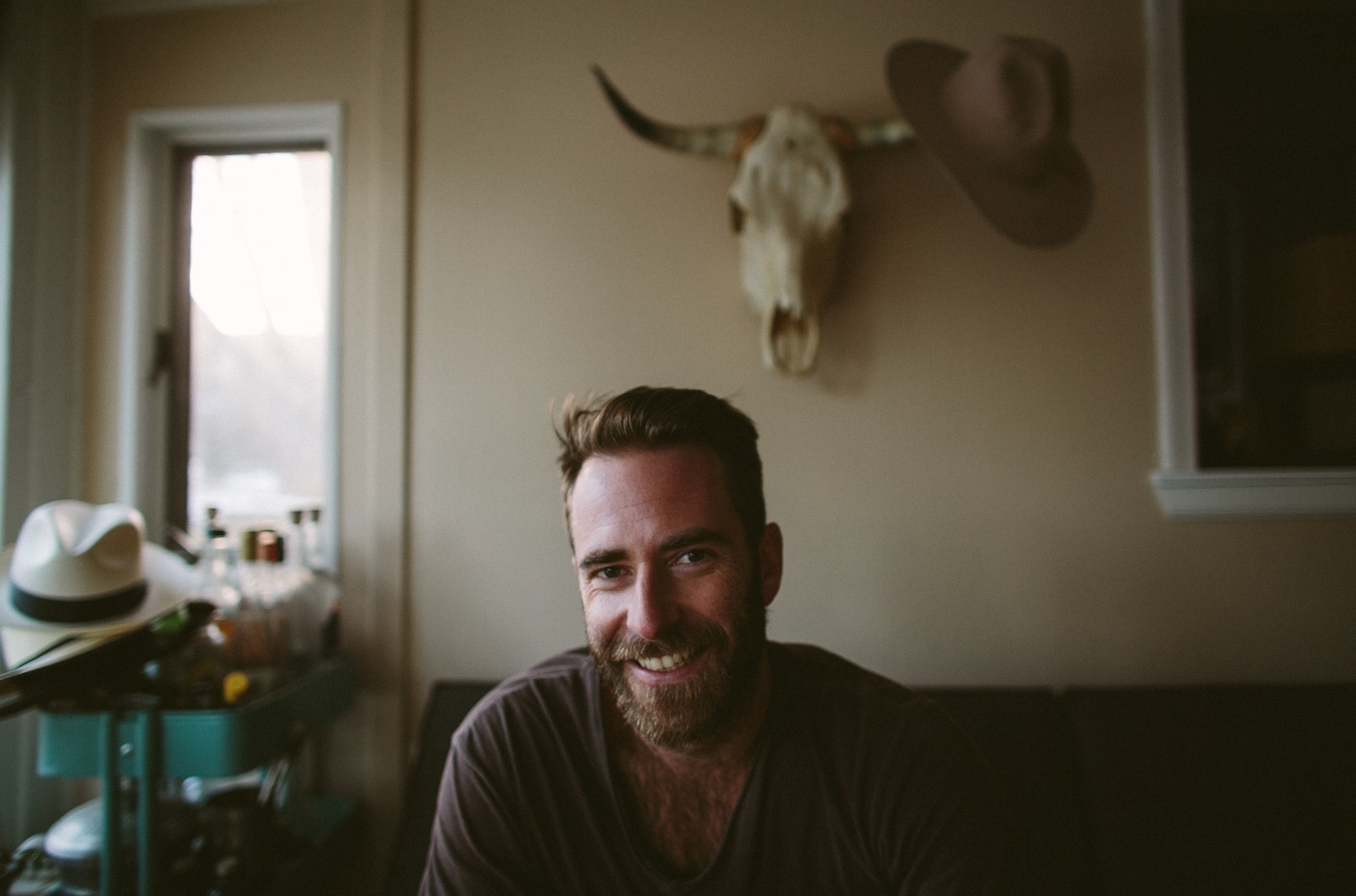
He is obviously a naturally talented artist, but it seems that a great deal of Stephen’s success can be traced back to the fact that he is committed to putting himself in unique—often difficult, uncomfortable, or scary—situations that allow him to capture one-of-a-kind experiences and perspectives. Among other things, he has worked on a 90,000-acre Colorado cattle ranch, taken a five-month solo motorcycle trip through South America, and put in time at several California and Colorado vineyards, all while constantly shooting photos and refining his craft.
Stephen’s solid understanding of agriculture and years of adventure are evident in his work. His images are as authentic as they are artistic, and he knows how to capture the true spirit of a person, place, animal, or experience in a fresh style that creates a genuine connection with the audience. I came across Stephen’s agricultural photography several years ago and was immediately drawn in. (And keep in mind, I can be a bit jaded when it comes to ranch photos—I look at them all day as part of my job.) I have been a fan of his work ever since.
I was super-excited to finally meet Stephen and learn more about his work and personal story. We had a fun (and funny) conversation and covered a wide range of interesting topics. We dug into his connection to agriculture and talked in depth about how ranches and farms play an important role in land conservation. We talked about motorcycles and some of his adventures. We discussed the importance of international travel and his lessons learned from immersion in foreign cultures. We obviously chatted in detail about photography, as well as an insane bear story that you definitely need to hear.
Cool guy. Thoughtful conversation. Crazy stories. Great episode!
All photos courtesy of Stephen Smith
Click Here to Download on iTunes
—
Click Here to Download on Stitcher
—
—
Episode Notes
Topics Covered
Information Referenced
- Stephen Smith website
- Stephen on Instagram – @iamstephensmith
- Mendoza, Argentina
- Olivia Brion
- Peak Spirits
- Jack Rabbit Hill Farm
- White Oak Pastures
- Savory Institute
- Jim Howell podcast
- For the Love of Land: Global Case Studies of Grazing in Nature’s Image by Jim Howell
- Responsible Grazing – The Foundation of a Healthy Ranch Ecosystem by Ed Roberson
- Epic Bar
- Holistic Management
- Overland Journal
- Stephen’s Overland Journal cover shot
- BMW Scrambler
- Sinuhe Xavier
- Grapes of Wrath by John Steinbeck
- Long Way Round
- Long Way Down
- Sycamore Brewing
- Rule of Thirds
- Gov’t Mule
Nicholas Coleman – Painting the Heritage and History of the American West

Nicholas Coleman – Painting the Heritage and History of the American West

Nicholas Coleman is an ultra-talented, hard-working artist based out of Provo, Utah, and he paints some of the most interesting and beautiful works I’ve ever seen. His primary subject matter is the American West, with a focus on landscapes, natural history, wildlife, Native American culture, and exploration. I came across Nick’s work on Instagram of all places—in the midst of the app’s thousands of images, noise, and distractions, one of Nick’s images boldly stood out from all the rest. It stood out so much that I wanted more, so I went to his website and was blown away by his work. The more I learned about Nick, the more impressed I became—he is a multifaceted individual with a fascinating back story.
Nick is not your stereotypical artist. He is a devoted hunter, fisherman, and trapper, and he’s also a voracious reader who probably knows more about western history than many college professors. He has a focused and disciplined approach to his art, working six days a week and never sitting around waiting to “get in the mood” to paint. With his deep love of art and the West, combined with his rock solid work ethic, it’s no surprise that he has been able to build a stellar reputation in the super-competitive and challenging world of professional art.

I could’ve talked to Nick for hours, because so many of his interests overlap with mine. We did manage to dig into the details of his art and artistic process. We chatted about his international travels to South America, Africa, and New Zealand, as well as his thoughts on how those adventures have influenced his life and work. We discussed his education as an artist, as well as his advice for those aspiring to make art a full-time career. We also talked a lot about Teddy Roosevelt, which is always fun. See below for the full list of topics covered.
Thanks to Nicholas Coleman for joining me on the podcast. I hope you enjoy!
All photos courtesy of Nicholas Coleman
Click Here to Download on iTunes
—
Click Here to Download on Stitcher
—
Click Here to Download on Google Play
—
—
Episode Notes
Topics Covered
Information Referenced
- Nicholas Coleman Art
- Nicholas on Instagram
- Nicholas on Facebook
- Theodore Roosevelt
- The Naturalist: Theodore Roosevelt, A Lifetime of Exploration, and the Triumph of American Natural History by Darrin Lunde
- Carl Akeley
- An African Obsession: The Life and Legacy of Carl Akeley by Penelope Bodry-Sanders
- Michael Coleman (Nicholas’s father)
- War of Art: Winning the Inner Creative Battle by Stephen Pressfield
- Indian Y Stories by Frank B Linderman
- Crowfoot: Chief of the Blackfeet by Hugh A Dempsey
- Vital Ground
- Theodore Rex by Edmund Morris
- The Rise of Theodore Roosevelt by Edmund Morris
- Man Meets Gizzly by F.M. Young
- Death in Yellowstone: Accidents and Foolhardiness in the First National Park by Lee H Whittlesey
- National Geographic – Lewis and Clark – Great Journey West
- Wild Russia
- Maynard Dixon: Art and Spirit
- Long Way Round
- Yosemite National Park
- Adirondacks
Ann Johnston – Protecting Crested Butte’s Spectacular Landscapes


Ann Johnston is Executive Director of the Crested Butte Land Trust (CBLT), a conservation organization that protects land in Crested Butte and Gunnison County, Colorado. Given the focused geographic area in which CBLT operates, Ann and her team must be creative and nimble, and they use a variety methods to protect a diverse array of landscapes, from large-acreage rural ranches to small in-town parcels. CBLT must also balance the competing priorities of Gunnison County’s various stakeholders—ranchers, hikers, bikers, skiers, businesses, and tourists, just to name a few. In an area of the West that is becoming more and more popular, CBLT’s work has never been more important.
I’ve long admired Ann’s ability to think outside the box and effectively execute her plans, so I was excited to get a chance to sit down with her in CBLT’s Crested Butte office. We had a fun conversation in which we discussed her personal connection to conservation, the challenges and opportunities of operating in such a tight-knit community, conservation success stories, specific methods for saving land, advice for aspiring conservationists, and much more– see below for a full list of the topics we discussed. Enjoy!
Click Here to Download on iTunes
—
Click Here to Download on Stitcher
—
—
Episode Notes
Topics Covered
Information Referenced
- Peanut Lake conservation project
- Lower Loop
- Snodgrass Trailhead
- Elevation Outdoors Snodgrass article
- Ed’s Snodgrass Trailhead photos
- Promontory Ranch
- Great Outdoors Colorado (GOCO)
- Colorado conservation tax credits
- Colorado Coalition of Land Trusts (CCLT)
- Quiet: The Power of Introverts in a World That Can’t Stop Talking by Susan Cain
- The Time Traveler’s Wife by Audrey Niffenegger
- Author Nick Hornby
- 180 South
- Let My People Go Surfing: The Education of a Reluctant Businessman by Yvon Chouinard
- Ed’s list of documentaries
- 401 trail
- Oh Be Joyful trail
- Outside Magazine’s backstory on the captain of The Bounty
- CBLT calendars and gear
Andrew Skurka – Blazing a New Trail Across the West


Andrew Skurka is a highly accomplished adventure athlete who is most well known for his long-distance solo backpacking trips, including the 4,700-mile Alaska-Yukon Expedition, the 6,875-mile Great Western Loop, and the 7,775-mile Sea-to-Sea Route. He has also completed countless fast and light trips throughout the Sierras, Wind River Range, Zion National Park, and Appalachian Trail, just to name a few. Andrew has been named “Adventurer of the Year” by both Outside Magazine and National Geographic Adventure, as well as “Person of the Year” by Backpacker Magazine.
Andrew is also a published author, having written The Ultimate Hiker’s Gear Guide: Tools & Tips to Hit the Trail, and he is close to finishing the manuscript for the book’s second edition. He also writes extensively on his personal blog, which is full of detailed, information-rich articles about backpacking, gear reviews, and other endurance-related content. On top of everything else, Andrew is a guide, speaker, and accomplished ultra-runner, having placed second in the Leadville 100 and third in the Run Rabbit Run 100. Just this past weekend (6/25/16), he placed fourth at the San Juan Solstice 50-Mile Trail Run, one of the most difficult 50-milers in the country.
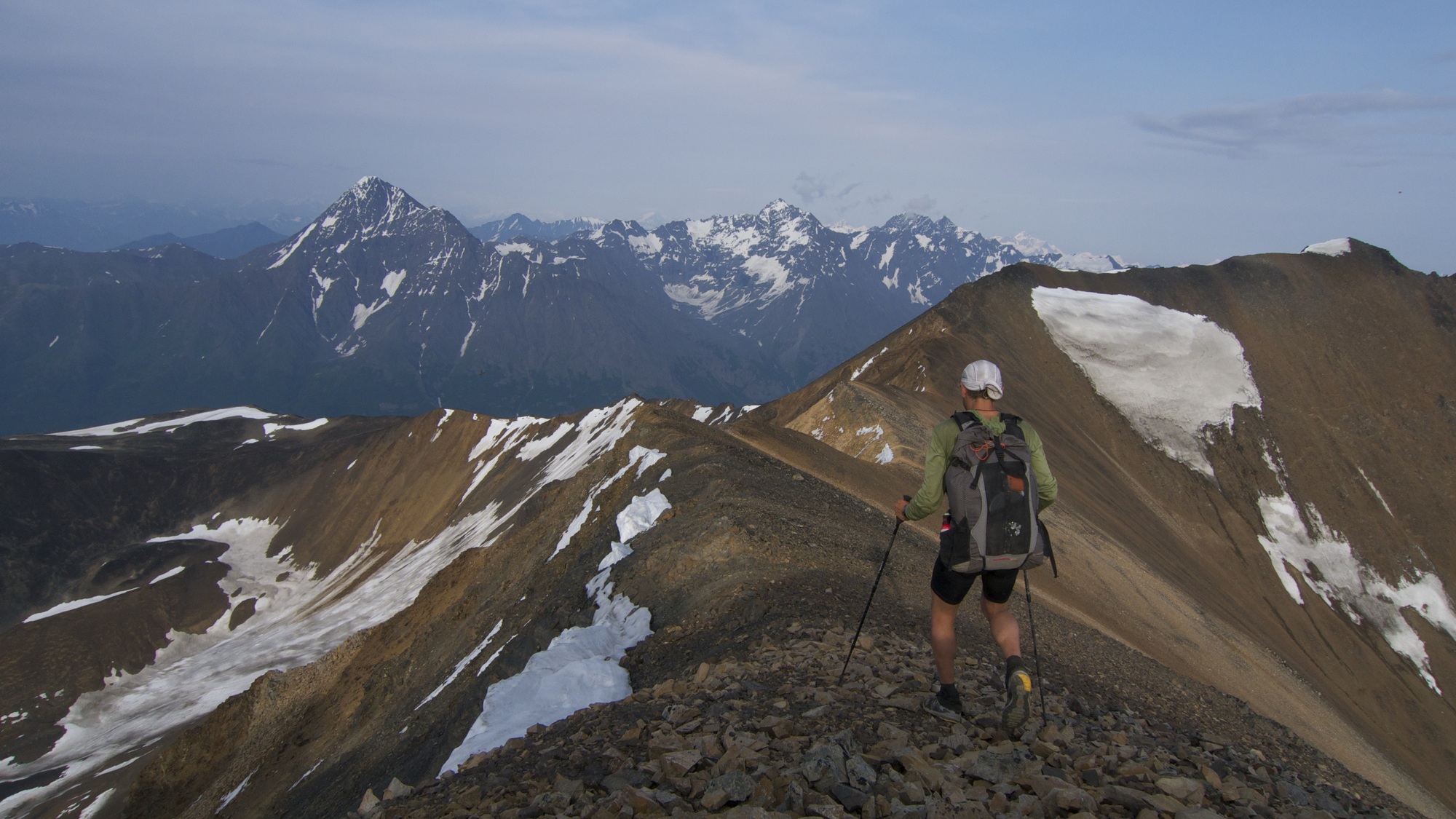
Andrew is a great guy, and we had a very fun conversation. We obviously talk a lot about many of his long-distance backpacking adventures, but we also dig into some of the mental and emotional aspects of traveling through such remote areas for long periods of time completely alone. We talk about his personal background and how he became interested in adventure sports, and also about his decision to forgo a traditional career in finance or consulting to carve out a career centered around the outdoors and adventure. As usual, I ask about his favorite books, favorite documentaries, and favorite locations in the West.
Thanks to Andrew for joining me, and thanks to you for listening to the podcast. Enjoy!

All photographs courtesy of Andrew Skurka
Click Here to Download on iTunes
—
Click Here to Download on Stitcher
—
—
Episode Notes
Topics Covered
Information Referenced
- Andrew Skurka
- Alaska-Yukon Expedition
- Great Western Loop
- Sea-to-Sea Route
- Full list of Andrew’s adventures
- The Ultimate Hiker’s Gear Guide: Tools & Tips to Hit the Trail by Andrew Skurka
- Sierra Designs
- Tussocks
- Tribe: On Homecoming and Belonging by Sebastian Junger
- Duke University
- Camp Carolina
- Appalachian Trail (A.T.)
- 10,000 Hour Rule
- Wind River Range High Route Guide by Andrew Skurka
- Kings Canyon High Basin Route Guide by Andrew Skurka
- Leadville 100
- Run Rabbit Run 100
- San Juan Solstice 50 Mile Trail Run
- The Horizontal Everest: Extreme Journeys on Ellesmere Island by Jerry Kobalenko
- 30 For 30
- Steve Rattner’s blog
- High Country News
- Bedrock & Paradox
- Sierra Nevada Range
- Wind River Range
- Grand Staircase-Escalante National Monument
- Boulder’s Skyline Traverse
Jim Howell – Conserving and Restoring the World’s Grasslands


Jim Howell is the CEO of Grasslands LLC, which is the land management arm of the Savory Institute, an organization that Jim co-founded. Both Grasslands and Savory focus on conserving and restoring the world’s grasslands through what they call “Holistic Management.” We discuss the details of Holistic Managment in the interview, but the basic idea is that the world’s grasses evolved to be grazed, and they need to be grazed in a natural manner to be healthy and resilient.
Jim and his team use livestock to mimic natural grazing patterns from hundreds of thousands of years ago, long before the world’s grasslands were covered with people, fences, houses, and cities. Savory and Grasslands’ results speak for themselves—after just a few years of holistic managment, their ranches are measurably healthier, more productive, more biodiverse, and more financially successful.
Even if you have absolutely no interest in grazing or ranches, you still need to listen to this interview, because the work Jim and his team are doing has a positive effect on land, people, plants, animals, and communities all around the world. Anyone who considers themselves to be conservation-minded and loves the outdoors needs to understand Jim’s work. I have no doubt that you’ll gain a new appreciation for the role that livestock needs to play in conserving grasslands around the world. Even if you’re a vegan living in New York City, you’ll gain some valuable insights from Jim’s point of view.
Jim is also an experienced world traveler, an avid reader, and an author, having written one of the best books I’ve read on land and conservation in the West and beyond: For the Love of Land: Global Case Studies of Grazing in Nature’s Image. And on top of all of that, he finds the time to run ultra-marathons and has completed some of the most challenging 50-mile trail races in Colorado.
Between Jim’s professional and personal interests, we had a lot to discuss. It was a fun conversation filled with valuable information, so I hope you enjoy.

Click Here to Download on iTunes
—
Click Here to Download on Stitcher
—
Click Here to Download on Google Play
—
—
Episode Notes
Topics Covered
Information Referenced
- Grasslands LLC
- Savory Institute
- For the Love of Land: Global Case Studies of Grazing in Nature’s Image by Jim Howell
- Holistic Managment: A New Framework for Decision Making by Allan Savory
- Born to Run: A Hidden Tribe, Superathletes, and the Greatest Race the World Has Never Seen by Christopher McDougall
- Knowledge Rich Ranching by Allan Nation
- Stockman Grass Farmer
- No Risk Ranching: Custom Grazing on Leased Land by Greg Judy
- Natural Born Heroes: How a Daring Band of Misfits Mastered the Lost Secrets of Strength and Endurance by Christopher McDougall
- Senna
Brady Robinson – Climber, Educator, Outdoor Advocate


Brady Robinson is the Executive Director of the Access Fund, a conservation and advocacy organization that helps to protect climbing areas throughout the United States. Despite being a relatively small non-profit, the Access Fund’s work has a broad ripple effect far beyond the climbing community and extends into areas of conservation, public lands policy, and general outdoor recreation, just to name a few. Under Brady’s leadership, the Access Fund has been incredibly effective, and as climbing becomes more popular, the its work will only become more important.


Even if you’re not a climber, you’ll gain some solid insights from this interview, so I hope you enjoy.
All photos courtesy of Brady Robinson
Click Here to Download on iTunes
—
Click Here to Download on Stitcher
—
—
Episode Notes
Topics Covered
Information Referenced
- Brady Robinson
- The Access Fund
- Wilderness Act
- Devil’s Tower National Monument
- The Outdoor Alliance
- Land Trust Alliance
- Outdoor Industry Association
- Brady’s TED talk
- “The Solace of Vertical Places” by Brady Robinson
- Outward Bound
- National Outdoor Leadership School (NOLS)
- VIDEO: 2001 K7 Expedition with Conrad Anker and Jimmy Chin
- Jimmy Chin
- Conrad Anker
- Galen Rowell
- Alex Lowe
- Longs Peak Triathlon
- Mountain biking the Colorado Trail
- Jim Collins
- Good to Great for the Social Sectors by Jim Collins
- Memoirs of the Second World War by Winston Churchill
- The Fog of War
- More info on proposed public lands transfer via Outdoor Alliance
This episode is brought to you by Mountain Khakis. Rugged. Authentic. Reliable. Timeless. What started as a casual conversation at the Shady Lady Saloon in Jackson Hole, WY has become a top-performing mountain-inspired lifestyle apparel brand. Established in 2003, Mountain Khakis quickly became a staple in the wardrobe of everyone from ranch hands to golf pros, those who travel by jet, as well as those who travel by thumb. The Mountain Khakis brand story continues to resonate as it connects to the enthusiast who believes that freedom and rugged adventure is a way of life. Join the conversation @MountainKhakis and www.mountainkhakis.com

Lloyd Athearn – Protecting and Preserving Colorado’s Highest Peaks


Lloyd Athearn is the Executive Director of the Colorado Fourteeners Initiative (CFI), a non-profit organization whose mission is to protect and preserve the natural integrity of Colorado’s 14,000-foot peaks through active stewardship and public education. CFI’s work includes building and maintaining trails, educating hikers and climbers on best practices in the high country, conserving the native alpine tundra ecosystem, and generally helping to ensure that these popular mountains are not inadvertently “loved to death” through overuse.
Much of Lloyd’s career has centered around mountains, so we had a fun and wide-ranging conversation with topics including 14ers, climbing adventures, ecology, books, advice to first-time hikers, and plenty more. Lloyd is a super interesting guy who’s doing very important work, so I hope you enjoy the conversation as much as I did!
Click Here to Download on iTunes
—
Click Here to Download on Stitcher
—
—
This episode is brought to you by Mountain Khakis. Rugged. Authentic. Reliable. Timeless. What started as a casual conversation at the Shady Lady Saloon in Jackson Hole, WY has become a top-performing mountain-inspired lifestyle apparel brand. Established in 2003, Mountain Khakis quickly became a staple in the wardrobe of everyone from ranch hands to golf pros, those who travel by jet, as well as those who travel by thumb. The Mountain Khakis brand story continues to resonate as it connects to the enthusiast who believes that freedom and rugged adventure is a way of life. Join the conversation @MountainKhakis and www.mountainkhakis.com
Episode Notes
Topics Covered
Information Referenced
- Colorado Fourteeners Initiative (CFI)
- CFI – Facebook
- CFI – Youtube
- CFI – Instagram
- CFI – Twitter
- 14ers.com
- Trail Inventory Example: Capitol Peak
- CFI Partner – REI
- CFI Partner – Osprey
- Cielo Vista Ranch / Culebra Peak
- American Alpine Club
- Astoria: John Jacob Astor and Thomas Jefferson’s Lost Pacific Empire: A Story of Wealth, Ambition, and Survival by Peter Stark
- Antartica – A Year on Ice
- Tuolumne Meadows
- Leave No Trace
Connie Sciolino – Building Stronger & Tougher Outdoor Athletes


Connie Sciolino is the owner and head coach at The Alpine Training Center in Boulder, Colorado. The ATC is a no-frills gym on the outskirts of town that helps outdoor athletes become better skiers, climbers, runners, and bikers through strength training. Connie trains everyone from professional athletes to weekend warriors, including one of the climbers in the hit mountaineering documentary, Meru.
The workouts are grueling, both physically and mentally. But her clients’ results speak for themselves—committed athletes leave the gym stronger, tougher, more resistant to injury, and better equipped to tackle the challenges of the high mountains. Thanks to her diverse collection of educational, professional, athletic, and outdoor experiences, Connie is setting a new standard for training for mountain-focused sports.
Click Here to Download on iTunes
—
Click Here to Download on Stitcher
—
—
This episode is brought to you by Mountain Khakis. Rugged. Authentic. Reliable. Timeless. What started as a casual conversation at the Shady Lady Saloon in Jackson Hole, WY has become a top-performing mountain-inspired lifestyle apparel brand. Established in 2003, Mountain Khakis quickly became a staple in the wardrobe of everyone from ranch hands to golf pros, those who travel by jet, as well as those who travel by thumb. The Mountain Khakis brand story continues to resonate as it connects to the enthusiast who believes that freedom and rugged adventure is a way of life. Join the conversation @MountainKhakis and www.mountainkhakis.com
Episode Notes
Topics Covered
- The Alpine Training Center
- ATC – Facebook
- ATC – Instagram
- Mountain Athlete
- Sandbag Getups
- Curtis Ps
- Exum Guides
- The Grand Traverse
- Gym Jones
- Meru
- Training for the New Alpinism: A Manual for the Climber as Athlete by Steve House
- Beyond the Mountain by Steve House
- Excellent Yosemite Videos
- Valley Uprising – Yosemite’s Rock Climbing Revolution
- The Access Fund
Spencer Williams – From River Guide to Water Innovator

Spencer Williams spent his summers as a river guide in Colorado’s Upper Arkansas River Valley, and those experiences on the water led him to law school and into a career as a water rights attorney. He now works for Ponderosa Advisors, advising clients on water rights and water markets across the American West. Spencer also works with Ponderosa’s new software platform Water Sage, an innovative software program that is redefining water research across the West.
In this episode, we dig into the details of water in the West—What exactly a what right is, how water rights can be severed from the land, and the history of water as a property right. We talk about water as an investment, and how big money is currently rushing into the West’s water markets. We discuss Spencer’s work at Ponderosa and Water Sage, and we also tell some stories from his days as a river guide. It was a fun and informative conversavation about an important topic. I hope you enjoy!
Click Here to Download on iTunes
—
Click Here to Download on Stitcher
—
—
This episode is brought to you by Mountain Khakis. Rugged. Authentic. Reliable. Timeless. What started as a casual conversation at the Shady Lady Saloon in Jackson Hole, WY has become a top-performing mountain-inspired lifestyle apparel brand. Established in 2003, Mountain Khakis quickly became a staple in the wardrobe of everyone from ranch hands to golf pros, those who travel by jet, as well as those who travel by thumb. The Mountain Khakis brand story continues to resonate as it connects to the enthusiast who believes that freedom and rugged adventure is a way of life. Join the conversation @MountainKhakis and www.mountainkhakis.com
Episode Notes
Topics Covered
- Ponderosa Advisors
- Water Sage
- Upper Arkansas River Valley
- Mount Princeton
- The Emerald Mile: The Epic Story of the Fastest Ride in History Through the Heart of the Grand Canyon by Kevin Fedarko
- Colorado Water Law for Non-Lawyers by P. Andrew Jones
- Cadillac Desert: The American West and its Disappearing Water by Marc Reisner
- The Grapes of Wrath and East of Eden by John Steinbeck
- 30 for 30
Erik Glenn – Saving Colorado, One Ranch at a Time

Erik Glenn is the Executive Director of the Colorado Cattlemen’s Agricultural Land Trust, a land conservation organization that has protected over 465,000 acres of working ranches throughout the state of Colorado. In this episode, Ed and Erik discuss a wide array of topics including the importance of keeping ranches in agricultural production, the basics of land conservation in the West, Colorado’s role as a leader in national land conservation, Erik’s family history as ranchers, and much more.

Erik was the perfect first guest for the podcast, so I hope you enjoy the conversation as much as I did!
Click Here to Download on iTunes
—
Click Here to Download on Stitcher
—
—
This episode is brought to you by Mountain Khakis. Rugged. Authentic. Reliable. Timeless. What started as a casual conversation at the Shady Lady Saloon in Jackson Hole, WY has become a top-performing mountain-inspired lifestyle apparel brand. Established in 2003, Mountain Khakis quickly became a staple in the wardrobe of everyone from ranch hands to golf pros, those who travel by jet, as well as those who travel by thumb. The Mountain Khakis brand story continues to resonate as it connects to the enthusiast who believes that freedom and rugged adventure is a way of life. Join the conversation @MountainKhakis and www.mountainkhakis.com
Episode Notes
Topics Covered
- Colorado Cattlemen’s Agricultural Land Trust
- Colorado Cattlemen’s Association
- The Worst Hard Time: The Untold Story of Those Who Survived the Great American Dust Bowl by Timothy Egan
- For the Love of Land: Global Case Studies of Grazing in Nature’s Image by Jim Howell
- Responsible Grazing – The Foundation of A Healthy Ranch Ecosystem by Ed Roberson
- Great Outdoors Colorado (“GOCO”)
- Lessons from an Anti-Boomer by Ed Roberson
- Video on the Greater Sage Grouse conservation effort
- River of Doubt: Theodore Roosevelt’s Darkest Journey by Candice Millard
- Atlas Shrugged by Ayn Rand
- How to Win Friends and Influence People by Dale Carnegie
- Unbranded
- Nothing Daunted: The Unexpected Education of Two Society Girls in the West by Dorothy Wickenden
- Forever Colorado